

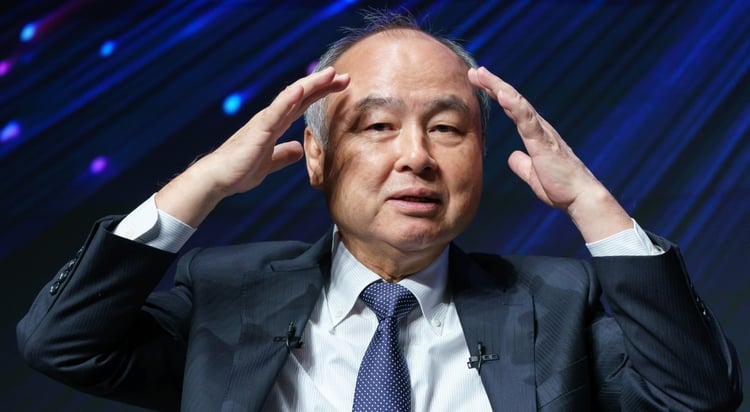
SoftBank’s Masayoshi Son, a notorious high-stakes tech investor, publicly dismissed Elon Musk‘s ambitious plans for orbital AI data centers, questioning their practicality and timing amid the breakneck race for artificial intelligence supremacy. Son highlighted that electricity costs represent only about 7% of data center operations on Earth, arguing that the added complexities of space—such as launch expenses, maintenance, and latency—outweigh any solar power benefits, preferring instead to focus on rapid, ground-based infrastructure buildout to secure first-mover advantages in AI models, chips, robotics, and supporting systems.
Sources
- https://www.wsj.com/tech/why-one-of-techs-biggest-gamblers-is-betting-against-elon-musks-ai-vision-7529f5c2
- https://www.bloomberg.com/news/articles/2026-06-23/masa-son-dismisses-musk-s-space-data-center-as-an-ai-race-winner
- https://www.livemint.com/global/why-one-of-tech-s-biggest-gamblers-is-betting-against-elon-musk-s-ai-vision-11782553914450.html
Key Takeaways
- Masayoshi Son’s skepticism underscores a short-term, Earth-bound mindset that underestimates Musk’s proven track record of turning “impossible” physics-based innovations into reality, from reusable rockets to profitable electric vehicles.
- While critics fixate on immediate hurdles like costs and timelines, Musk’s orbital data center strategy addresses the exploding energy demands of AI that terrestrial grids and regulators increasingly obstruct through NIMBYism and bureaucratic red tape.
- The clash reveals broader tensions in the AI race, where bold, long-term visionaries like Musk prioritize fundamental breakthroughs over hasty execution that risks building on flawed foundations.
In-Depth
In the cutthroat world of artificial intelligence development, where government overreach, energy shortages, and regulatory hostility increasingly stifle progress on Earth, Elon Musk’s vision for placing data centers in orbit stands as a quintessential example of American ingenuity confronting entrenched skepticism. Masayoshi Son, the SoftBank chief known for his own audacious bets that sometimes spectacularly falter, recently poured cold water on the idea during investor discussions. Son contended that the marginal savings on electricity—admittedly a smaller slice of overall expenses—hardly justify the logistical nightmares of space operations, urging a laser focus on terrestrial infrastructure to dominate the AI sweepstakes in the coming years rather than betting on decade-out orbital solutions.
This critique, echoed across financial outlets, misses the deeper truth that has defined Musk’s career: constraints on Earth are not immutable laws but challenges to be engineered around through first-principles thinking. Musk has repeatedly demonstrated that what naysayers deem impractical often yields transformative results. SpaceX‘s reusable rockets slashed launch costs dramatically, proving orbital ambitions viable where governments long stagnated. Similarly, Tesla turned electric vehicles from niche curiosities into market disruptors despite endless predictions of failure. Orbital data centers leverage abundant solar energy in space, bypassing the grid bottlenecks, environmentalist lawsuits, and left-leaning regulatory capture plaguing U.S. data center projects. With AI’s insatiable hunger for compute power threatening to overwhelm terrestrial resources, Musk’s approach isn’t escapism—it’s strategic necessity.
Son’s preference for speed on the ground reflects a common investor mindset prioritizing near-term wins and massive capital deployments into established players, including hefty stakes in competitors like OpenAI. Yet history favors those who solve root problems rather than patching symptoms. Musk’s integrated empire—spanning SpaceX for launches, Tesla for energy and robotics synergies, and xAI for cutting-edge models—positions him uniquely to execute where others dabble. Detractors overlook how space-based systems could mitigate latency through advanced networking while delivering unmatched power efficiency, freeing innovation from dependence on unreliable politicians and fickle utility companies beholden to green mandates.
Moreover, Son’s dismissal arrives at a moment when Big Tech faces mounting backlash for its earthbound excesses, from voracious power consumption to cozy relationships with censorious regimes. Musk’s willingness to challenge these paradigms, even courting short-term ridicule, embodies the risk-taking ethos that built America’s technological edge. While Son bets on incremental acceleration, Musk engineers the future’s infrastructure. The AI race will reward not just the swift but the substantively correct—those who grasp that true breakthroughs demand transcending earthly limits. As hyperscalers grapple with mounting opposition to new facilities, Musk’s orbital gambit may soon prove prescient, vindicating the visionary over the cautious gambler once again. In an era of bureaucratic sclerosis, such unapologetic ambition is precisely what conserves American leadership against complacency and foreign rivals.