

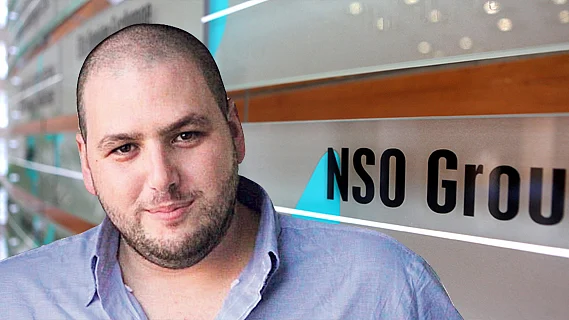
Israeli entrepreneur Shalev Hulio, best known as the co-founder of the controversial NSO Group and its Pegasus surveillance software, is attempting a dramatic reinvention through Dream, an artificial intelligence-driven cybersecurity company focused on defending governments and critical infrastructure from nation-state cyberattacks. The rapidly growing firm recently secured $260 million in new funding at a $3 billion valuation and claims to have helped thwart sophisticated cyber threats originating from adversarial states including China, Russia, Iran, and North Korea. Hulio argues that future geopolitical power will be determined as much by control and protection of data as by traditional military strength, positioning Dream as a key player in what he describes as an emerging era of AI-powered cyber warfare. While critics remain skeptical because of his NSO background, supporters view the company’s success as evidence that expertise developed in offensive cyber operations can be redirected toward national defense.
Sources
- https://www.thetimes.com/business/technology/article/shalev-hulio-dream-cybersecurity-vmh5kl355
- https://www.reuters.com/technology/israeli-cyber-startup-dream-raises-260-million-valued-3-billion-2026-06-18
- https://www.businessinsider.com/how-sebastian-kurz-built-a-3-billion-cybersecurity-startup-2026-6
Key Takeaways
- Artificial intelligence is rapidly transforming cybersecurity into a strategic national-security priority, with governments increasingly seeking AI-powered defenses against hostile nation-state cyber operations.
- Shalev Hulio’s transition from offensive cyber capabilities at NSO Group to defensive cybersecurity at Dream reflects a broader shift toward protecting critical infrastructure rather than exploiting vulnerabilities.
- The strong investor interest and $3 billion valuation suggest that sovereign cybersecurity solutions are becoming a major growth sector as geopolitical tensions and cyber threats continue to escalate.
In-Depth
The rise of Dream underscores a reality that many policymakers have been slow to acknowledge: future conflicts will not be fought solely with tanks, aircraft, and missiles. Increasingly, the battle for national security will be waged through data networks, artificial intelligence systems, and the digital infrastructure that powers modern economies. Governments that fail to secure those assets risk suffering devastating consequences without a single shot being fired.
That reality helps explain why investors are pouring money into companies like Dream. Founded by Shalev Hulio after his departure from NSO Group, the company has positioned itself as a defender of governments and critical infrastructure against increasingly sophisticated attacks from hostile states. According to company executives, cyber threats from China, Russia, Iran, and North Korea are becoming more aggressive and more capable as artificial intelligence lowers barriers to launching complex operations.
From a conservative perspective, Dream’s growth highlights the importance of technological self-reliance and strong national defense. Nations that depend entirely on foreign technology providers may find themselves vulnerable during periods of geopolitical instability. Dream’s emphasis on sovereign AI and national cyber resilience reflects a growing recognition that cybersecurity is no longer merely an IT function but a core component of state power.
The lingering controversy surrounding Hulio’s NSO legacy will continue to attract scrutiny. Yet supporters argue that individuals with firsthand experience understanding how sophisticated cyber threats operate may be uniquely qualified to build effective defenses against them. Whether Dream ultimately fulfills its ambitious vision remains to be seen, but its rapid ascent demonstrates that cybersecurity has become one of the defining strategic and economic battlegrounds of the modern era.