

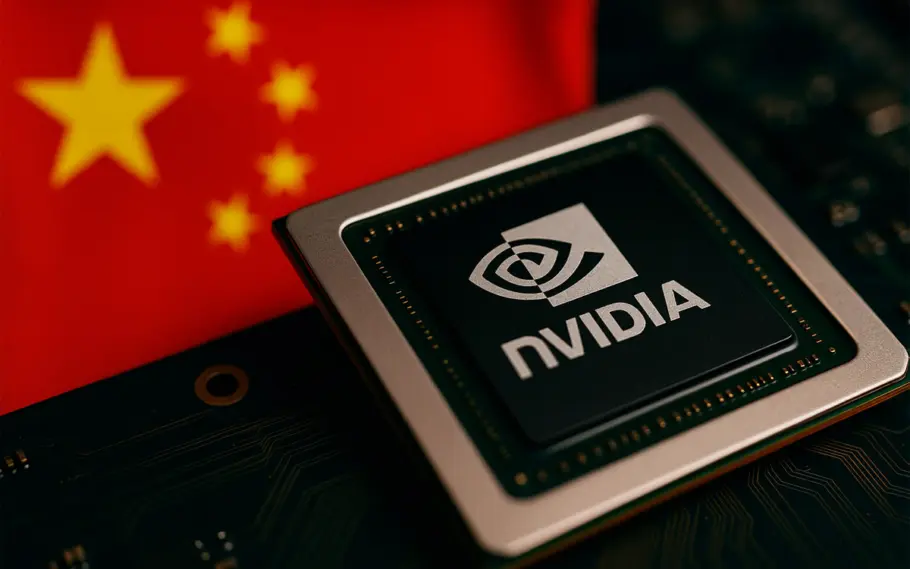
China is intensifying its campaign to reduce dependence on Nvidia by encouraging or directing domestic AI developers to adopt homegrown semiconductor alternatives, even as many Chinese firms remain heavily reliant on Nvidia’s hardware and software ecosystem. Reports indicate that Beijing views technological self-sufficiency as a strategic priority amid ongoing U.S. export controls and broader geopolitical competition. While domestic companies such as Huawei have made meaningful advances, many Chinese AI developers continue to face technical hurdles in replacing Nvidia’s mature CUDA software platform and high-performance chips, suggesting that Beijing’s policy ambitions currently outpace the readiness of its domestic AI industry.
Key Takeaways
- China is prioritizing technological independence over short-term performance. Beijing is increasingly steering government-backed projects and major technology firms toward domestically produced AI chips, even where Nvidia hardware may currently offer superior performance.
- Chinese chipmakers have narrowed—but not eliminated—the performance gap. Companies such as Huawei have made significant progress, particularly for AI inference workloads, but software compatibility, production capacity, and ecosystem maturity remain substantial obstacles.
- The U.S.-China AI competition is evolving beyond export controls. Rather than simply restricting access to American technology, both governments are increasingly investing in domestic AI infrastructure, creating two increasingly separate technology ecosystems with long-term economic and national security implications.
In-Depth
China’s determination to build an independent artificial intelligence industry has entered a new phase, with policymakers placing increasing pressure on domestic technology companies to reduce reliance on Nvidia hardware. The strategy reflects Beijing’s conclusion that dependence on foreign semiconductors represents a strategic vulnerability, particularly after years of U.S. export restrictions targeting advanced AI processors.
The challenge is that policy objectives do not automatically translate into technical capability. Nvidia’s dominance extends beyond the performance of its chips. The company’s CUDA software ecosystem has become the industry standard for AI development, and thousands of applications have been optimized around it over many years. Replacing that infrastructure requires far more than manufacturing competitive processors.
Chinese firms, led by Huawei, have made measurable gains. Domestic processors are becoming increasingly capable for inference workloads, and government support is accelerating investment throughout China’s semiconductor supply chain. Nevertheless, developers continue to face software migration costs, limited production capacity, and performance tradeoffs that make a complete transition difficult in the near term.
For Washington, these developments reinforce the argument that export controls have reshaped—not halted—China’s technological ambitions. Restrictions have encouraged Beijing to commit even greater resources toward semiconductor self-sufficiency, while American firms face the prospect of losing access to one of the world’s largest AI markets.
The result is an AI race defined not only by innovation but also by strategic independence. China appears willing to accept short-term inefficiencies in exchange for long-term control over critical technology, while the United States seeks to preserve its leadership by maintaining an edge in advanced computing hardware. The outcome will influence global technology supply chains, commercial AI development, and the broader balance of technological power for years to come.