

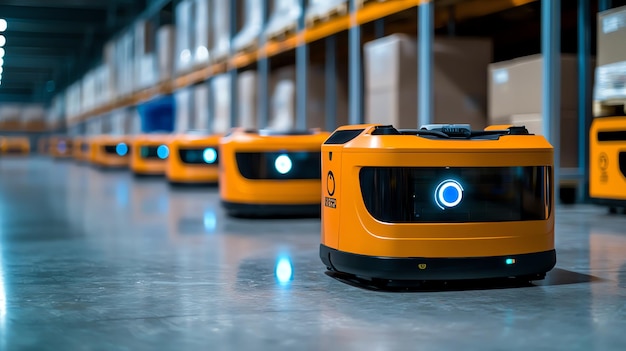
Amazon is reportedly developing a new generation of highly automated delivery stations under an internal initiative known as “Project Tetromino,” with the goal of dramatically increasing package-processing efficiency while reducing labor requirements. Internal planning documents indicate the company is exploring facilities capable of processing packages at roughly 2.5 times the speed of current delivery stations by combining artificial intelligence, robotics, and automated package sequencing. While Amazon has characterized the reported financial figures and deployment timeline as preliminary and not reflective of finalized plans, the initiative underscores the company’s continued investment in automation at a time when labor costs remain a major business concern. The project also raises broader questions about the long-term future of warehouse employment as companies increasingly substitute capital investment in robotics for recurring labor expenses.
Key Takeaways
- • Amazon is pursuing a next-generation automated delivery station concept that could increase package-processing capacity by approximately 2.5 times compared to existing facilities.
- • The initiative reflects a broader industry trend toward replacing repetitive warehouse functions with AI-powered robotics to improve productivity, reduce costs, and accelerate fulfillment.
- • Although Amazon maintains that automation is intended to improve safety and operational efficiency, continued advances in robotics are likely to reduce demand for traditional warehouse labor over the long term.
In-Depth
Amazon’s reported “Project Tetromino” represents another significant step in the ongoing transformation of modern logistics. The initiative reportedly focuses on automating delivery stations—the final link in Amazon’s supply chain before packages are loaded onto vehicles for customer delivery. Historically, this stage has remained one of the most labor-intensive portions of warehouse operations because of the complexity involved in sorting, sequencing, and loading packages efficiently.
According to planning documents, Amazon believes robotics, artificial intelligence, and advanced package-handling systems can substantially increase throughput while reducing dependence on manual labor. If the projected gains are realized, facilities built around the Tetromino concept could process packages approximately 2.5 times faster than current designs. Amazon has nevertheless cautioned that the reported investment figures and rollout schedule reflect an early-stage concept rather than finalized corporate plans.
The announcement fits into a much larger strategy that has unfolded over several years. Amazon has steadily expanded the use of robotic arms, automated inventory systems, machine vision, and AI-assisted workflow management throughout its fulfillment network. Company executives have acknowledged that artificial intelligence will increasingly optimize inventory placement, forecasting, and robotic coordination, allowing facilities to operate with greater efficiency.
For investors, automation promises lower operating costs and faster delivery performance. For workers, however, the trend reinforces growing concerns that technological improvements will continue reducing demand for traditional warehouse positions. While Amazon argues that employees will remain central to its operations and will transition into different roles, the economics increasingly favor automation wherever repetitive physical tasks can be reliably performed by machines. As AI capabilities continue advancing, the logistics industry appears poised for an accelerating shift toward highly automated facilities that require fewer workers to move a growing volume of goods.