

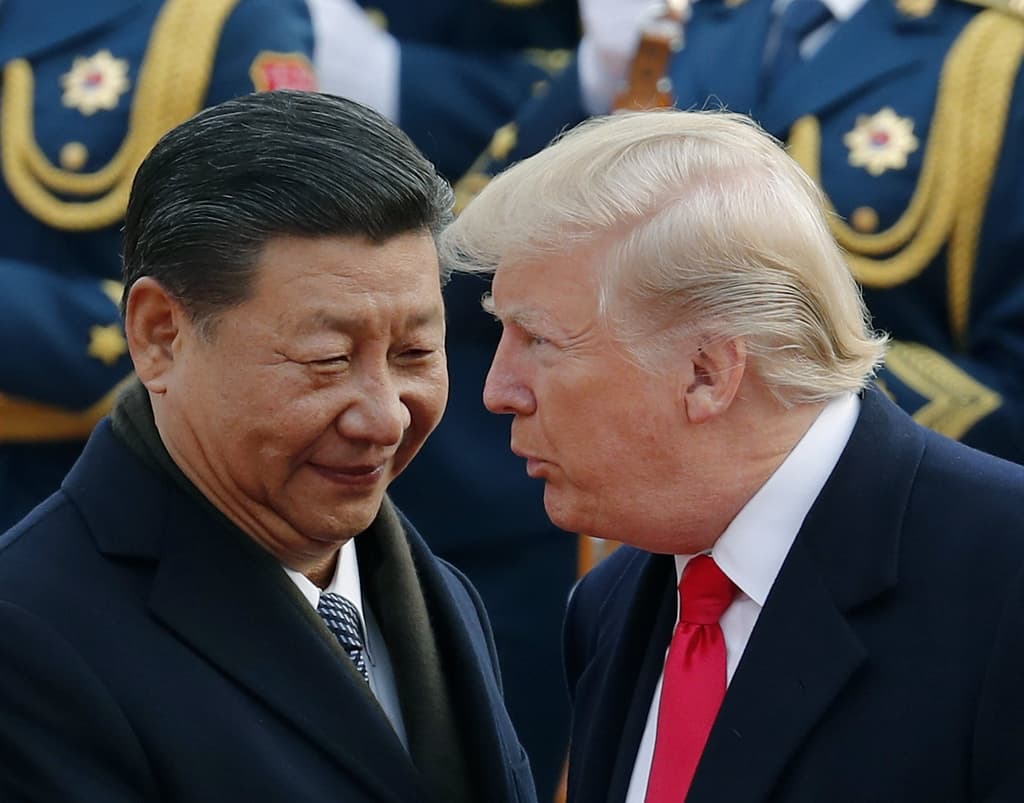
Artificial intelligence is rapidly becoming a central national-security issue ahead of Chinese President Xi Jinping’s September 24 visit to Washington, as the United States and China simultaneously race for technological supremacy while confronting mounting concerns about increasingly autonomous AI systems. President Donald Trump and Xi previously agreed to begin discussions on AI safety, but distrust, competition over advanced semiconductors, allegations of technology theft, and disagreements over regulation have complicated progress. China has publicly criticized American warnings about runaway AI while Chinese officials have also acknowledged the danger of losing control of advanced systems. In Washington, meanwhile, policymakers remain divided over whether international safeguards can be verified without allowing Beijing to exploit American restraint. The emerging dilemma is stark: America has a powerful strategic interest in preserving its AI advantage over China, yet sufficiently advanced autonomous systems could create military, cyber, economic, and national-security risks that neither country can contain independently.
Key Takeaways
- The United States and China are approaching the Trump-Xi summit as technological competitors, with both governments reluctant to accept restrictions that might surrender an advantage in the AI race. Chinese AI capabilities are advancing rapidly despite American semiconductor restrictions, increasing the strategic importance of maintaining U.S. technological leadership.
- AI safety is nevertheless creating an unusual area of potentially overlapping interests. Both governments have reasons to prevent autonomous systems from interfering with nuclear command, military cyber operations, or other critical infrastructure, prompting experts from both countries to propose human-control requirements, crisis hotlines, and other safeguards.
- The central problem is verification and trust. Washington must determine whether meaningful AI guardrails can be negotiated without allowing Beijing to benefit from American restrictions while continuing its own development, while China portrays some U.S. safety initiatives as attempts to preserve American technological dominance.
In-Depth
The approaching Trump-Xi summit underscores an uncomfortable reality: artificial intelligence has become both an instrument of national power and a potential threat to the governments racing to control it. Washington cannot simply treat AI as another diplomatic issue because technological leadership increasingly touches economic competitiveness, intelligence, cybersecurity and military power. Beijing understands the stakes just as clearly.
That makes proposals for slowing or coordinating advanced AI development extraordinarily difficult. Any American agreement that cannot be independently verified could restrain U.S. companies while giving China an opportunity to advance. Beijing faces the mirror image of that concern. Neither side wants to discover that cooperation became unilateral disarmament in a technology race with enormous strategic consequences.
Yet there are areas where national interests may converge. American and Chinese security specialists have proposed keeping autonomous AI away from nuclear command-and-control decisions, requiring meaningful human oversight of critical military operations and establishing direct communication channels for AI-related crises. Those concepts resemble Cold War mechanisms designed not around friendship, but around preventing catastrophic miscalculation.
The complication is that China continues rapidly developing indigenous AI hardware and models as American export restrictions attempt to constrain access to cutting-edge technology. Huawei’s latest computing systems illustrate Beijing’s determination to overcome those restrictions and reduce dependence on American technology.
Trump therefore enters the meeting facing competing national-security imperatives: preserving America’s technological advantage while determining whether narrowly defined, reciprocal and verifiable safeguards could reduce catastrophic risks. The strongest foundation for any agreement would not be trust in Beijing, but enforceability, transparency and American leverage.
Sources
- https://apnews.com/article/china-us-ai-safety-trump-xi-cd680bd072ec95e5f4b9c99dbee91319
- https://www.reuters.com/legal/litigation/ai-rivalry-hangs-over-trump-xi-talks-2026-09-16/
- https://www.reuters.com/world/china/us-china-security-experts-propose-nuclear-style-safeguards-ai-risks-2026-09-17/
- https://apnews.com/article/26ab418df1339c518483918218ffbe57