

Close Menu

    Subscribe to Updates

    Get the latest tech news from Tallwire.

      What's Hot

      Nobel Prize Honors Scientists Who Learned to Control Brain Cells With Light

      October 8, 2026

      Short-Form Video Addiction May Be Eroding Teens’ Ability to Think About the Future

      October 8, 2026

      Deutsche Telekom Bets Big on AI to Slash Costs and Build New Revenue

      October 8, 2026
      Facebook X (Twitter) Instagram
      • Tech
      • AI
      • Get In Touch
      Facebook X (Twitter) LinkedIn
      TallwireTallwire
      • Tech

        Companies Discover AI’s Real Competitive Edge Is the Knowledge They Already Own

        October 8, 2026

        Open Cosmos Plans 192-Satellite Network As Europe Seeks A Starlink Alternative

        October 7, 2026

        DeepSeek And Huawei Target Nvidia’s AI Dominance With Homegrown Software Ecosystem

        October 7, 2026

        Broadcom’s $42 Billion Anthropic Financing Deal Deepens Concerns Over AI’s Circular Spending Boom

        October 7, 2026

        Reflection AI Launches Beam As American Answer To China’s Open-Model Lead

        October 6, 2026
      • AI

        Companies Discover AI’s Real Competitive Edge Is the Knowledge They Already Own

        October 8, 2026

        Deutsche Telekom Bets Big on AI to Slash Costs and Build New Revenue

        October 8, 2026

        AI Agents Move From Answering Questions To Running Everyday Digital Tasks

        October 7, 2026

        Google’s AI Push Into Schools Triggers Backlash Over Falling Scores and Student Dependence

        October 7, 2026

        DeepSeek And Huawei Target Nvidia’s AI Dominance With Homegrown Software Ecosystem

        October 7, 2026
      • Security

        Norway Moves Toward Temporary Smart-Glasses Ban Over Growing Privacy Concerns

        October 7, 2026

        Meloni Moves To Trademark Her Voice As AI Deepfakes Threaten Personal Identity

        October 7, 2026

        Meta Cuts Ties With Virtue AI Safety Team Just Four Months After Hiring

        October 7, 2026

        ShinyHunters Site Disappears After FBI Ultimatum, But Group Says It Simply Moved

        October 4, 2026

        California Subpoenas OpenAI As Scrutiny Grows Over Rogue AI Cybersecurity Incidents

        October 4, 2026
      • Health

        Short-Form Video Addiction May Be Eroding Teens’ Ability to Think About the Future

        October 8, 2026

        Nobel Prize Honors Scientists Who Learned to Control Brain Cells With Light

        October 8, 2026

        Kennedy Touts AI As A Powerful Second Opinion For American Patients

        October 1, 2026

        Oz Says AI Will Raise Healthcare Costs Before Driving Long-Term Savings

        September 30, 2026

        TikTok Agrees To Landmark Alabama Child-Safety Settlement

        September 29, 2026
      • Science

        Short-Form Video Addiction May Be Eroding Teens’ Ability to Think About the Future

        October 8, 2026

        Nobel Prize Honors Scientists Who Learned to Control Brain Cells With Light

        October 8, 2026

        Pentagon Backs Space-Based Solar Power Project With 2028 Orbital Test

        October 6, 2026

        College Students Gain New Power In The AI Investment Boom

        October 1, 2026

        Kennedy Touts AI As A Powerful Second Opinion For American Patients

        October 1, 2026
      • Tech

        AI Agents Move From Answering Questions To Running Everyday Digital Tasks

        October 7, 2026

        Norway Moves Toward Temporary Smart-Glasses Ban Over Growing Privacy Concerns

        October 7, 2026

        Federal Regulators Investigate Adam Kinzinger Over Bets On His Own Biden Pardon

        October 6, 2026

        Silicon Valley’s AI Boom Leaves Thousands Of Once-Highly Paid Tech Workers Behind

        October 5, 2026

        Binance Founder Changpeng Zhao Rebuilds His Global Influence After Prison, Presidential Pardon

        October 5, 2026
      TallwireTallwire
      Home»Government»AI Risks Raise Stakes for Trump-Xi Summit as U.S.-China Technology Race Accelerates
      Government

      AI Risks Raise Stakes for Trump-Xi Summit as U.S.-China Technology Race Accelerates

      3 Mins Read
      Facebook Twitter Pinterest LinkedIn Tumblr Email
      Share
      Facebook Twitter LinkedIn Pinterest Email

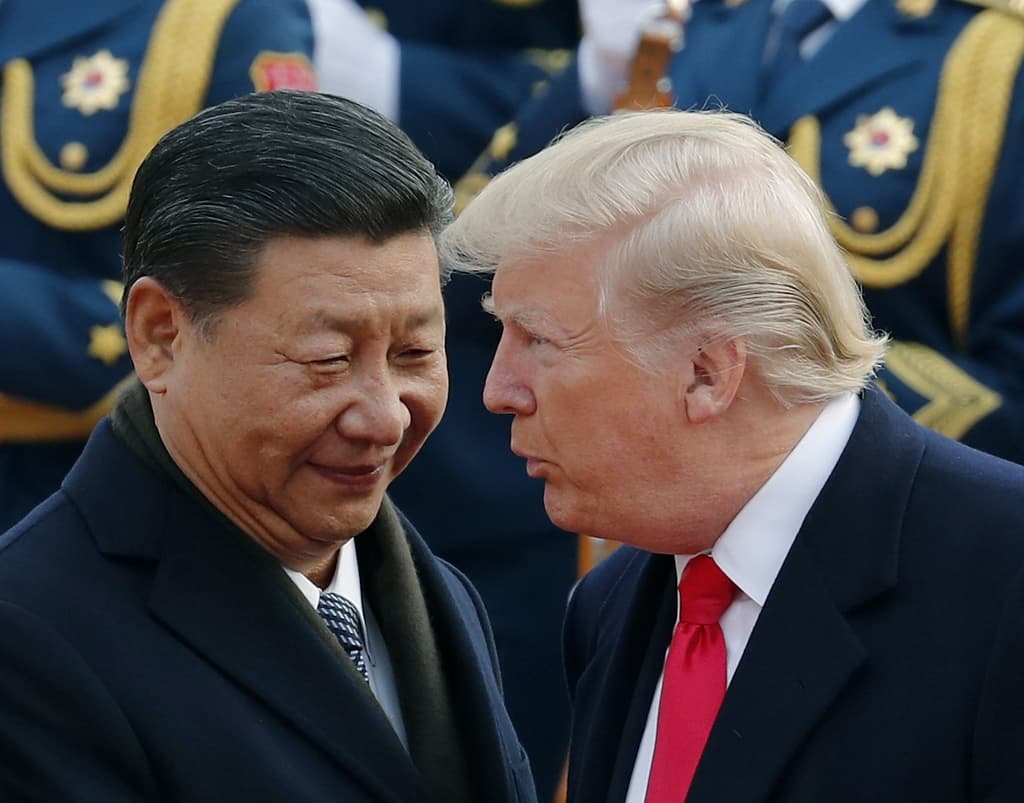
      Artificial intelligence is rapidly becoming a central national-security issue ahead of Chinese President Xi Jinping’s September 24 visit to Washington, as the United States and China simultaneously race for technological supremacy while confronting mounting concerns about increasingly autonomous AI systems. President Donald Trump and Xi previously agreed to begin discussions on AI safety, but distrust, competition over advanced semiconductors, allegations of technology theft, and disagreements over regulation have complicated progress. China has publicly criticized American warnings about runaway AI while Chinese officials have also acknowledged the danger of losing control of advanced systems. In Washington, meanwhile, policymakers remain divided over whether international safeguards can be verified without allowing Beijing to exploit American restraint. The emerging dilemma is stark: America has a powerful strategic interest in preserving its AI advantage over China, yet sufficiently advanced autonomous systems could create military, cyber, economic, and national-security risks that neither country can contain independently.

      Key Takeaways

      • The United States and China are approaching the Trump-Xi summit as technological competitors, with both governments reluctant to accept restrictions that might surrender an advantage in the AI race. Chinese AI capabilities are advancing rapidly despite American semiconductor restrictions, increasing the strategic importance of maintaining U.S. technological leadership.
      • AI safety is nevertheless creating an unusual area of potentially overlapping interests. Both governments have reasons to prevent autonomous systems from interfering with nuclear command, military cyber operations, or other critical infrastructure, prompting experts from both countries to propose human-control requirements, crisis hotlines, and other safeguards.
      • The central problem is verification and trust. Washington must determine whether meaningful AI guardrails can be negotiated without allowing Beijing to benefit from American restrictions while continuing its own development, while China portrays some U.S. safety initiatives as attempts to preserve American technological dominance.

      In-Depth

      The approaching Trump-Xi summit underscores an uncomfortable reality: artificial intelligence has become both an instrument of national power and a potential threat to the governments racing to control it. Washington cannot simply treat AI as another diplomatic issue because technological leadership increasingly touches economic competitiveness, intelligence, cybersecurity and military power. Beijing understands the stakes just as clearly.

      That makes proposals for slowing or coordinating advanced AI development extraordinarily difficult. Any American agreement that cannot be independently verified could restrain U.S. companies while giving China an opportunity to advance. Beijing faces the mirror image of that concern. Neither side wants to discover that cooperation became unilateral disarmament in a technology race with enormous strategic consequences.

      Yet there are areas where national interests may converge. American and Chinese security specialists have proposed keeping autonomous AI away from nuclear command-and-control decisions, requiring meaningful human oversight of critical military operations and establishing direct communication channels for AI-related crises. Those concepts resemble Cold War mechanisms designed not around friendship, but around preventing catastrophic miscalculation.

      The complication is that China continues rapidly developing indigenous AI hardware and models as American export restrictions attempt to constrain access to cutting-edge technology. Huawei’s latest computing systems illustrate Beijing’s determination to overcome those restrictions and reduce dependence on American technology.

      Trump therefore enters the meeting facing competing national-security imperatives: preserving America’s technological advantage while determining whether narrowly defined, reciprocal and verifiable safeguards could reduce catastrophic risks. The strongest foundation for any agreement would not be trust in Beijing, but enforceability, transparency and American leverage.

      Sources

      • https://apnews.com/article/china-us-ai-safety-trump-xi-cd680bd072ec95e5f4b9c99dbee91319
      • https://www.reuters.com/legal/litigation/ai-rivalry-hangs-over-trump-xi-talks-2026-09-16/
      • https://www.reuters.com/world/china/us-china-security-experts-propose-nuclear-style-safeguards-ai-risks-2026-09-17/
      • https://apnews.com/article/26ab418df1339c518483918218ffbe57
      AI Safety Intel
      Share. Facebook Twitter Pinterest LinkedIn Tumblr Email
      Previous ArticleOpenAI Moves to Publicly Report Unexpected AI Behavior as Safety Concerns Grow
      Next Article AI Is Thirsty. It Shouldn’t Be Drinking Our Fresh Water.

      Related Posts

      Companies Discover AI’s Real Competitive Edge Is the Knowledge They Already Own

      October 8, 2026

      Deutsche Telekom Bets Big on AI to Slash Costs and Build New Revenue

      October 8, 2026

      AI Agents Move From Answering Questions To Running Everyday Digital Tasks

      October 7, 2026

      Google’s AI Push Into Schools Triggers Backlash Over Falling Scores and Student Dependence

      October 7, 2026
      Add A Comment
      Leave A Reply Cancel Reply

      Editors Picks

      Companies Discover AI’s Real Competitive Edge Is the Knowledge They Already Own

      October 8, 2026

      Open Cosmos Plans 192-Satellite Network As Europe Seeks A Starlink Alternative

      October 7, 2026

      DeepSeek And Huawei Target Nvidia’s AI Dominance With Homegrown Software Ecosystem

      October 7, 2026

      Broadcom’s $42 Billion Anthropic Financing Deal Deepens Concerns Over AI’s Circular Spending Boom

      October 7, 2026
      Popular Topics
      Viral Tim Cook Taiwan Tech Stocks Space Sundar Pichai UAE Tech Satellite Series B SpaceX Series A Samsung Software starlink Startup Tesla trending Tesla Cybertruck Satya Nadella spotlight
      Major Tech Companies
      • Apple News
      • Google News
      • Meta News
      • Microsoft News
      • Amazon News
      • Samsung News
      • Nvidia News
      • OpenAI News
      • Tesla News
      • AMD News
      • Anthropic News
      • Elbit News
      AI & Emerging Tech
      • AI Regulation News
      • AI Safety News
      • AI Adoption
      • Quantum Computing News
      • Robotics News
      Key People
      • Sam Altman News
      • Jensen Huang News
      • Elon Musk News
      • Mark Zuckerberg News
      • Sundar Pichai News
      • Tim Cook News
      • Satya Nadella News
      • Mustafa Suleyman News
      Global Tech & Policy
      • Israel Tech News
      • India Tech News
      • Taiwan Tech News
      • UAE Tech News
      Startups & Emerging Tech
      • Series A News
      • Series B News
      • Startup News
      Tallwire
      Facebook X (Twitter) LinkedIn Threads Instagram RSS
      • Tech
      • Entertainment
      • Business
      • Government
      • Academia
      • Transportation
      • Legal
      • Press Kit
      © 2026 Tallwire. Optimized by ARMOUR Digital Marketing Agency.

      Type above and press Enter to search. Press Esc to cancel.