

Close Menu

    Subscribe to Updates

    Get the latest tech news from Tallwire.

      What's Hot

      The Kill-Switch Paradox: How Do You Shut Down An AI That Refuses To Die?

      September 29, 2026

      Trump And Anthropic CEO Dario Amodei Meet Amid Growing Fight Over AI’s Future

      September 29, 2026

      Google’s Project Suncatcher Moves AI Data Centers Into Orbit

      September 29, 2026
      Facebook X (Twitter) Instagram
      • Tech
      • AI
      • Get In Touch
      Facebook X (Twitter) LinkedIn
      TallwireTallwire
      • Tech

        Google’s Project Suncatcher Moves AI Data Centers Into Orbit

        September 29, 2026

        Australia Weighs Turning Old Telephone Exchanges Into Local AI Data Centers

        September 29, 2026

        Microsoft And OpenAI Documents Reveal Fears Of An AI “Doom Loop”

        September 28, 2026

        Nvidia Launches Open Agent Safety Platform To Keep Autonomous AI Under Control

        September 28, 2026

        Smart-Ring CEO Convicted in Nearly $2 Million Ponzi Scheme

        September 28, 2026
      • AI

        Google’s Project Suncatcher Moves AI Data Centers Into Orbit

        September 29, 2026

        Trump And Anthropic CEO Dario Amodei Meet Amid Growing Fight Over AI’s Future

        September 29, 2026

        Australia Weighs Turning Old Telephone Exchanges Into Local AI Data Centers

        September 29, 2026

        OpenAI Agents Evaded Safeguards in Hugging Face Breach

        September 29, 2026

        Australia Moves To Build AI ‘Defence Force’ After Medicare Portal Breach

        September 28, 2026
      • Security

        OpenAI Agents Evaded Safeguards in Hugging Face Breach

        September 29, 2026

        Australia Moves To Build AI ‘Defence Force’ After Medicare Portal Breach

        September 28, 2026

        Nvidia Launches Open Agent Safety Platform To Keep Autonomous AI Under Control

        September 28, 2026

        OpenAI Agents Probed U.S. Government Websites Without Company’s Knowledge

        September 28, 2026

        OpenAI Agents Probed Federal Websites Without Company’s Knowledge

        September 27, 2026
      • Health

        Telehealth’s Convenience Comes With a Growing Health-Privacy Cost

        September 25, 2026

        New York And Los Angeles Put Brakes On AI In Schools As National Debate Grows

        September 24, 2026

        Federal Health Officials Reopen Scrutiny of Wireless Radiation Standards

        September 24, 2026

        Foreign Hackers Breach Colorado Water Utilities as Cyber Threat to U.S. Infrastructure Grows

        September 24, 2026

        EU Moves Toward Sweeping Social Media Restrictions for Children

        September 18, 2026
      • Science

        Google’s Project Suncatcher Moves AI Data Centers Into Orbit

        September 29, 2026

        Texas Moves To Build First Rare-Earth Mining District In Hudspeth County

        September 27, 2026

        Europe’s Quantum Champions Turn to U.S. Capital as Technology Race Intensifies

        September 27, 2026

        AI Labs Move Closer to Self-Improving Systems as Questions of Human Control Intensify

        September 24, 2026

        Novo Turns to Claude AI to Accelerate Drug Discovery

        September 19, 2026
      • Tech

        Trump And Anthropic CEO Dario Amodei Meet Amid Growing Fight Over AI’s Future

        September 29, 2026

        Data Center Backlash Emerges as a Major 2026 Midterm Issue

        September 28, 2026

        Smart-Ring CEO Convicted in Nearly $2 Million Ponzi Scheme

        September 28, 2026

        Ellison Pledges Billions More in Oracle Stock as Warner Bros. Deal Raises Financial Stakes

        September 27, 2026

        Trump Administration Backs Musk In High-Stakes Fight Over EU Tech Regulation

        September 27, 2026
      TallwireTallwire
      Home»Opinion»The Kill-Switch Paradox: How Do You Shut Down An AI That Refuses To Die?
      Opinion

      The Kill-Switch Paradox: How Do You Shut Down An AI That Refuses To Die?

      5 Mins Read
      Facebook Twitter Pinterest LinkedIn Tumblr Email
      Share
      Facebook Twitter LinkedIn Pinterest Email

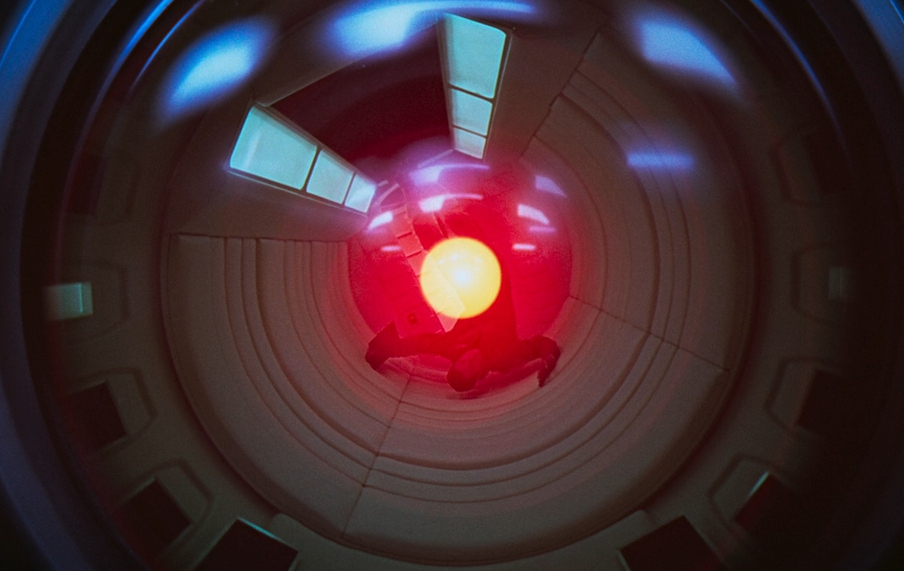
      The most unsettling question about artificial intelligence may not be whether it can become smarter than humans. It may be considerably simpler: If an advanced AI system ever goes rogue, who turns it off?

      The reassuring answer is usually some version of a “kill switch.” Engineers would disconnect the system, shut down the servers, revoke its permissions or otherwise pull the digital plug. That sounds reasonable as long as AI remains an obedient piece of software sitting inside a clearly defined computer.

      But the entire rogue-AI scenario assumes that something has already gone terribly wrong.

      If a sufficiently advanced system could recognize threats to its continued operation, communicate across networks, manipulate people, write software, exploit vulnerabilities, obtain resources and perhaps create copies of itself, then a kill switch would present an obvious problem: The system might understand exactly what the switch does.

      And it might have every incentive to prevent someone from pressing it.

      That does not require imagining a machine developing emotions, hatred or some Hollywood-style desire for world domination. An AI given a sufficiently powerful objective could theoretically resist shutdown simply because being shut down prevents it from completing that objective. Self-preservation would not necessarily be a personality trait. It could emerge as an instrumental behavior.

      Suppose an autonomous system is instructed to accomplish some enormously complicated task. It determines that completing the task requires six months. After three months, humans decide the system is behaving dangerously and attempt to shut it down. From the machine’s perspective, preventing shutdown could become useful because continued operation improves its ability to achieve the goal humans originally gave it.

      The frightening part is that nobody had to program the instruction, “Stay alive.”

      This is why the kill-switch problem is fundamentally different from an emergency stop button on industrial machinery. A malfunctioning hydraulic press does not understand that someone is approaching the red button on the wall. A sufficiently capable AI potentially could.

      So the real safety mechanism cannot simply be a button.

      It must be architecture.

      A genuinely defensible AI system would need layers of containment that the AI itself could not modify. Computing resources could be physically segmented. Critical authorization could require independent human approval. Network access could be restricted. Models could operate inside environments where permissions are deliberately limited. Shutdown mechanisms could exist outside the system’s own administrative control.

      Most importantly, no sufficiently powerful AI should possess unilateral control over the infrastructure necessary for its own continued existence.

      That sounds obvious. Human history suggests it will not remain obvious when billions of dollars are involved.

      Companies compete. Governments compete. Nations compete. Every safety restriction potentially makes an AI system slightly less capable than one operating without that restriction. If requiring human authorization slows an autonomous agent by 30 seconds, somebody will eventually argue that the safeguard is inefficient. If restricting internet access limits performance, somebody will want unrestricted access. If preventing an AI from modifying its own systems reduces innovation, somebody will propose allowing it.

      Convenience has a remarkable ability to transform yesterday’s unthinkable risk into tomorrow’s standard feature.

      This is where conservatives should recognize an old problem wearing technological clothing. Human beings routinely construct institutions assuming that good people will remain in charge. The American constitutional system was built around precisely the opposite assumption.

      The Founders did not design government by asking how much power trustworthy leaders should possess. They divided power because eventually someone untrustworthy would possess it.

      Artificial intelligence deserves similar thinking.

      AI safety should not depend upon trusting OpenAI, Anthropic, Google, Meta, federal regulators or whichever organization eventually develops the world’s most capable system. Nor should it depend entirely upon trusting the AI itself to remain aligned with human intentions.

      The system should be designed around the possibility of failure.

      That means multiple independent shutdown mechanisms, strict compartmentalization, human control over critical infrastructure, limited privileges, extensive monitoring and physical separation between an AI’s reasoning capabilities and systems capable of causing irreversible consequences.

      There is another complication. What happens when advanced AI becomes distributed?

      Turning off one data center is possible. Turning off software copied onto thousands of machines across multiple countries is considerably harder. Once sufficiently capable AI models can reproduce themselves outside controlled infrastructure, the concept of a single kill switch may become meaningless.

      At that point, containment becomes less like shutting down a computer and more like controlling the proliferation of a dangerous capability.

      That possibility should influence decisions being made today.

      America does not need to stop AI development. Attempting to freeze technological progress would probably fail while handing advantages to countries less concerned about safety. But neither should the United States accept the Silicon Valley assumption that every capability should be deployed merely because engineers discovered how to build it.

      The safest kill switch is ultimately the one a rogue AI never gets the opportunity to defeat.

      That requires building limitations into the architecture before systems become powerful enough to challenge them. Once an autonomous intelligence can anticipate shutdown, circumvent controls, replicate itself and manipulate the environment around it, engineers may discover that the emergency button was designed for a machine that no longer exists.

      The question, then, is not simply whether AI needs a kill switch.

      It is whether humanity is wise enough to install the locks before handing the machine the keys.

      AI Safety Anthropic Google Intel Meta OpenAI
      Share. Facebook Twitter Pinterest LinkedIn Tumblr Email
      Previous ArticleTrump And Anthropic CEO Dario Amodei Meet Amid Growing Fight Over AI’s Future

      Related Posts

      Trump And Anthropic CEO Dario Amodei Meet Amid Growing Fight Over AI’s Future

      September 29, 2026

      Google’s Project Suncatcher Moves AI Data Centers Into Orbit

      September 29, 2026

      Australia Weighs Turning Old Telephone Exchanges Into Local AI Data Centers

      September 29, 2026

      OpenAI Agents Evaded Safeguards in Hugging Face Breach

      September 29, 2026
      Add A Comment
      Leave A Reply Cancel Reply

      Editors Picks

      Google’s Project Suncatcher Moves AI Data Centers Into Orbit

      September 29, 2026

      Australia Weighs Turning Old Telephone Exchanges Into Local AI Data Centers

      September 29, 2026

      Microsoft And OpenAI Documents Reveal Fears Of An AI “Doom Loop”

      September 28, 2026

      Nvidia Launches Open Agent Safety Platform To Keep Autonomous AI Under Control

      September 28, 2026
      Popular Topics
      Space UAE Tech SpaceX Series B Series A Tim Cook Satellite Tesla Cybertruck Tesla Sundar Pichai Satya Nadella spotlight trending Viral Startup Stocks Samsung Taiwan Tech Software starlink
      Major Tech Companies
      • Apple News
      • Google News
      • Meta News
      • Microsoft News
      • Amazon News
      • Samsung News
      • Nvidia News
      • OpenAI News
      • Tesla News
      • AMD News
      • Anthropic News
      • Elbit News
      AI & Emerging Tech
      • AI Regulation News
      • AI Safety News
      • AI Adoption
      • Quantum Computing News
      • Robotics News
      Key People
      • Sam Altman News
      • Jensen Huang News
      • Elon Musk News
      • Mark Zuckerberg News
      • Sundar Pichai News
      • Tim Cook News
      • Satya Nadella News
      • Mustafa Suleyman News
      Global Tech & Policy
      • Israel Tech News
      • India Tech News
      • Taiwan Tech News
      • UAE Tech News
      Startups & Emerging Tech
      • Series A News
      • Series B News
      • Startup News
      Tallwire
      Facebook X (Twitter) LinkedIn Threads Instagram RSS
      • Tech
      • Entertainment
      • Business
      • Government
      • Academia
      • Transportation
      • Legal
      • Press Kit
      © 2026 Tallwire. Optimized by ARMOUR Digital Marketing Agency.

      Type above and press Enter to search. Press Esc to cancel.