

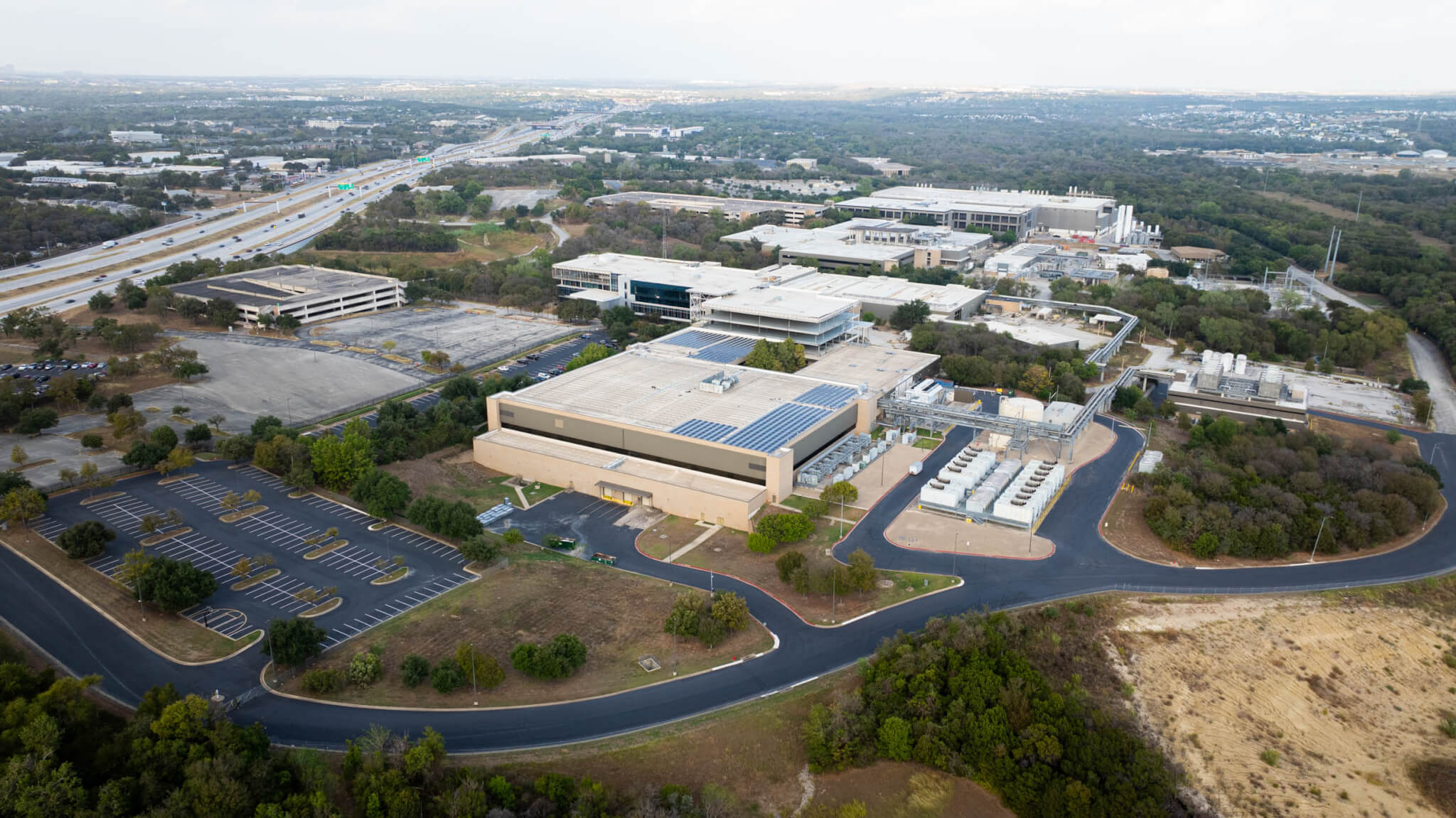
• Core Scientific has registered a $1.3 billion, 341,326-square-foot data center project in Hunt County, Texas, with construction scheduled to begin Nov. 24, 2026.
• The development includes infrastructure supporting AMD‘s contracted 110-megawatt capacity, raising questions about whether existing power agreements will be protected from new restrictions.
• Democratic Gov.-elect Gina Hinojosa’s proposed freeze on data center approvals could test Texas’ commitment to private investment, regulatory certainty and electricity grid reliability.
Core Scientific has registered a $1.3 billion data center building in Hunt County, Texas, setting up an early confrontation with Gov.-elect Gina Hinojosa’s proposed freeze on new data center approvals. State records describe a 341,326-square-foot structure near Quinlan, northeast of Dallas, with construction scheduled to begin Nov. 24, 2026, and conclude in September 2028. The registration identifies private financing and lists the project as registered, not formally approved for every required permit.
The development belongs to a larger campus where chipmaker AMD has contracted for 110 megawatts of computing capacity. Core Scientific says its Hunt County site has already secured significant grid-related approvals, potentially distinguishing existing commitments from future applications. Hinojosa, who defeated incumbent Greg Abbott, has advocated tighter controls as Texas confronts mounting electricity demands from artificial intelligence infrastructure. The central question is whether her proposed restrictions would affect projects with previously established power arrangements or only new requests.
Why It Matters
The dispute will test whether Texas can protect electric grid reliability without undermining investments made under existing rules. A sweeping approval freeze could discourage private capital, delay construction and create uncertainty for businesses that have already paid for engineering, equipment and grid access. Conversely, unchecked data center expansion could impose infrastructure costs on households and smaller businesses while straining electricity supplies during periods of peak demand.
Core Scientific’s project illustrates why legal distinctions matter. Registering a building is not the same as obtaining every necessary construction, environmental or utility approval. Likewise, previously secured grid arrangements do not automatically exempt a development from future requirements. Policymakers should demand transparent forecasts, enforce financial commitments and ensure that electricity customers bear costs attributable to their projects. Protecting property rights and honoring existing agreements should remain central to any reform. The outcome could influence how Texas balances economic growth, consumer protection and regulatory predictability.
Sources
• Original reporting on Core Scientific’s $1.3 billion development and proposed Texas data center restrictions:
https://www.zerohedge.com/markets/first-test-texas-data-center-freeze-core-scientifics-110-mw-building-amd
• Texas Department of Licensing and Regulation — Official project registration, construction schedule, cost and ownership:
https://www.tdlr.texas.gov/TABS/Search/Print/TABS2027005763
• Core Scientific — SEC filing detailing Texas electricity agreements and regulatory status:
https://www.sec.gov/Archives/edgar/data/1839341/000183934126000023/core-20260910.htm
• Core Scientific — Third-quarter 2026 SEC filing detailing AMD contracts, capacity commitments and development risks:
https://www.sec.gov/Archives/edgar/data/1839341/000183934126000030/core-20260930.htm
• Independent reporting on Core Scientific’s Hunt County data center development and AMD capacity agreements:
https://www.datacenterdynamics.com/en/news/core-scientific-files-for-285mw-data-center-outside-dallas-texas/
• Texas gubernatorial election results documenting Hinojosa’s victory:
https://live.txelectionresults.com/2026-general-election/races/1285613