

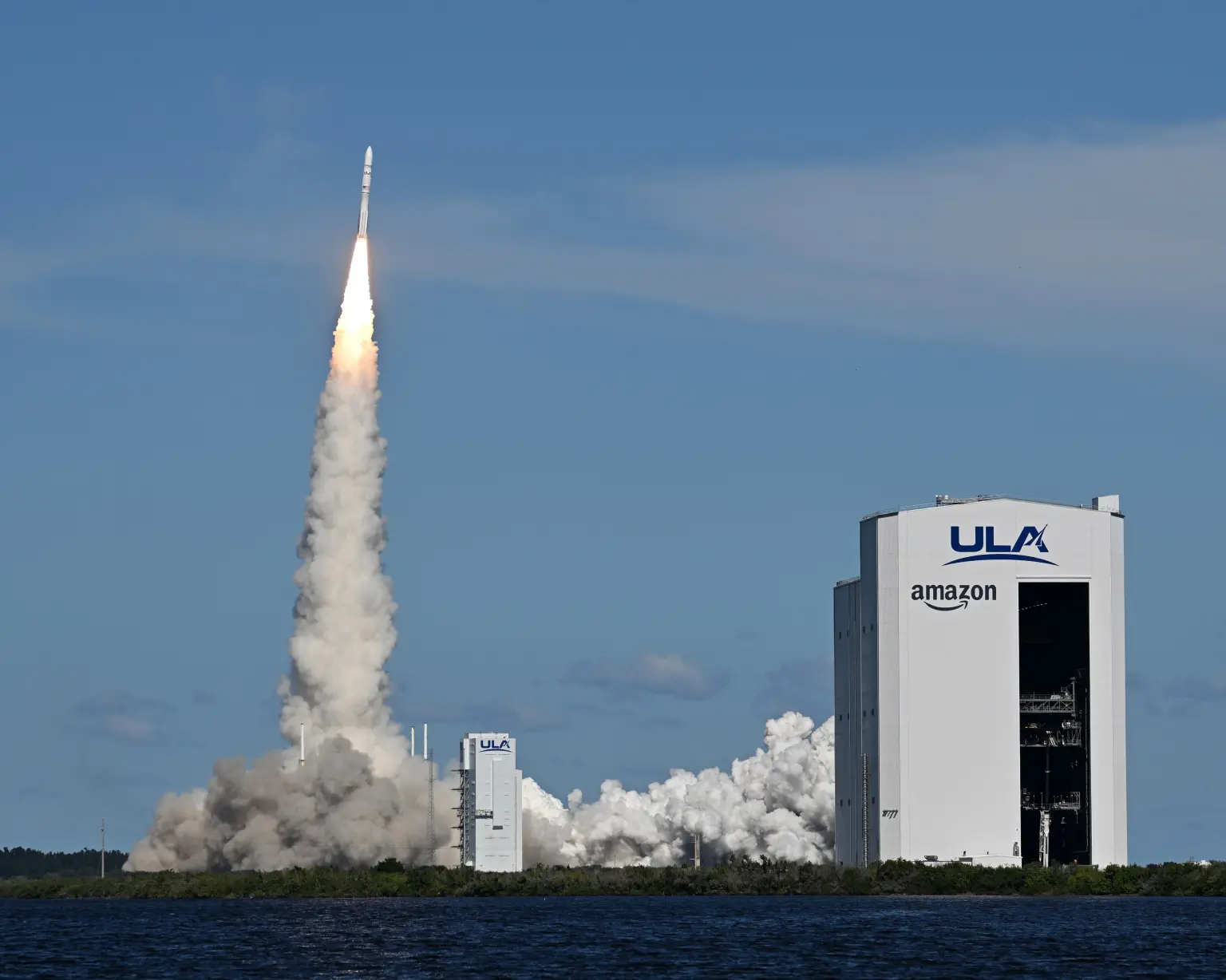
• A United Launch Alliance Vulcan rocket suffered a catastrophic mission failure Nov. 15, destroying 40 Amazon Leo broadband satellites approximately 10 minutes after launching from Cape Canaveral, Florida.
• The disaster marked ULA’s first complete mission failure since 2006 and followed a nine-month suspension of Vulcan flights over previous rocket booster problems.
• The setback threatens Amazon’s satellite internet expansion, raises concerns about U.S. launch reliability and could complicate future commercial and national security space missions.
A United Launch Alliance Vulcan rocket carrying 40 Amazon Leo broadband satellites failed approximately 10 minutes after liftoff from Cape Canaveral Space Force Station in Florida on Nov. 15, destroying its entire payload. The rocket launched at 12:40 p.m. EST on the first Vulcan mission dedicated to Amazon’s satellite internet network. ULA confirmed an unexplained anomaly prevented the spacecraft from reaching orbit, marking the company’s first complete mission failure since its formation in 2006.
The loss followed a nine-month pause in Vulcan flights while engineers addressed earlier solid rocket booster problems. Although previous anomalies did not prevent successful satellite deployment, the latest failure raises questions about the vehicle’s reliability. Amazon had already launched nearly 400 satellites toward its planned broadband constellation and intends to challenge SpaceX‘s Starlink service. Amazon expressed continued confidence in ULA, while the launch provider pledged to investigate and identify corrective measures before returning to flight.
Why It Matters
The failed launch exposes a weakness in America’s increasingly important commercial space infrastructure: expanding broadband access and maintaining reliable national security launch capacity depend on rockets that perform consistently. ULA’s Vulcan is intended to serve both commercial customers and the U.S. military. Another prolonged grounding could complicate launch schedules, increase pressure on competing providers and narrow choices for customers seeking dependable access to orbit.
For Amazon, losing 40 satellites means forfeiting hardware, launch capacity and precious deployment time in a market already dominated by Starlink. Its proposed network could eventually expand internet options for rural communities where terrestrial service remains inadequate. Competition, however, requires more than ambitious promises and substantial investment. It demands demonstrated engineering reliability, transparent investigations and accountability when missions fail. The immediate priority is establishing the technical cause rather than speculating about blame. Protecting American leadership in space requires both private-sector innovation and rigorous performance standards nationwide.
Sources
- https://nypost.com/2026/11/15/us-news/ula-loses-40-amazon-leo-satellites-in-total-mission-failure-minutes-after-rocket-launch/
- https://www.satellitetoday.com/launch/2026/11/15/ula-set-to-return-vulcan-to-flight-in-first-amazon-leo-launch/
- https://www.space.com/space-exploration/launches-spacecraft/ula-vulcan-centaur-return-to-flight-amazon-leo-internet-satellite-launch
- https://spaceflightnow.com/2026/11/15/ula-suffers-first-total-mission-failure-with-loss-of-vulcan-rocket-carrying-40-amazon-leo-satellites/
- https://www.aboutamazon.com/news/innovation-at-amazon/project-kuiper-satellite-rocket-launch-progress-updates