

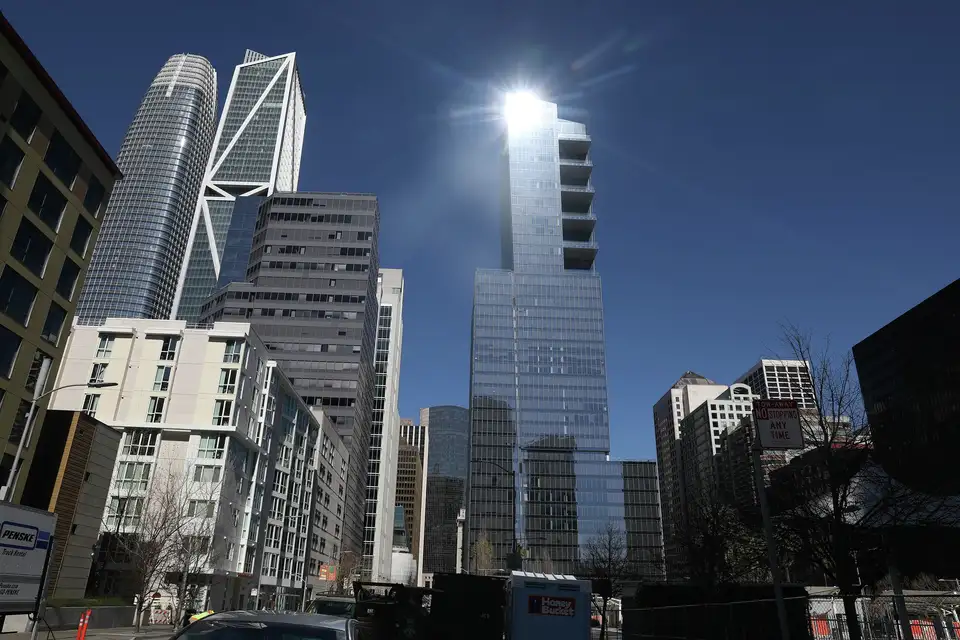
• Meta is considering subleasing approximately 160,000 square feet at its San Francisco headquarters, potentially expanding its already substantial real estate reductions.
• Artificial intelligence companies are absorbing vacant office space, with technology tenants seeking 5.3 million square feet across San Francisco.
• Despite improving leasing activity, Meta’s continued downsizing raises questions about the sustainability of San Francisco’s AI-driven commercial real estate recovery.
Meta Platforms is considering subleasing part of its San Francisco headquarters at 250 Howard St., adding space to a market increasingly supported by artificial intelligence companies. Discussions have centered on 160,000 square feet, although a larger amount has been floated as unlikely. Meta has occupied the 755,900-square-foot building since 2018 and has not disclosed how much employees use. The company previously marketed its nearby 181 Fremont St. offices for sublease following workplace changes and cost reductions.
The proposal comes despite improving demand for desirable downtown offices. Industry estimates show technology tenants seeking millions of square feet, with AI companies accounting for a substantial share. Anthropic has expanded into former Meta space at 181 Fremont, illustrating how emerging businesses are replacing established technology occupants. Yet Meta’s consolidation, earlier layoffs and reduced property commitments underscore the difference between renewed leasing interest and a broad recovery for San Francisco’s commercial real estate market.
Why It Matters
Meta’s contemplated retreat from another San Francisco property illustrates why city leaders should judge economic recovery by durable private investment rather than enthusiasm surrounding a single industry. Artificial intelligence companies are leasing offices, but their expansion does not automatically restore the jobs, tax revenue and neighborhood commerce lost when established employers reduced their downtown presence.
The distinction matters for property owners, businesses and taxpayers. A promising sublease market can coexist with empty buildings, weakened property values and uncertainty about future demand. Public officials cannot assume that an AI boom will erase years of commercial real estate disruption or relieve pressure on municipal finances.
San Francisco’s path requires competitive operating costs, dependable public safety, predictable regulations and a business environment that attracts companies across industries. Meta’s decision is not proof that the technology sector is abandoning the city. It is a reminder that sustainable recovery depends on broader economic fundamentals, not headlines about artificial intelligence.
Sources
• https://www.sfgate.com/tech/article/meta-dumps-three-fremont-offices-20263626.php
• https://sfstandard.com/2026/04/07/i-leaderboard-san-francisco-office/
• https://wesanfrancisco.com/news/2026/10/27/anthropic-subleases-office-space-181-fremo