

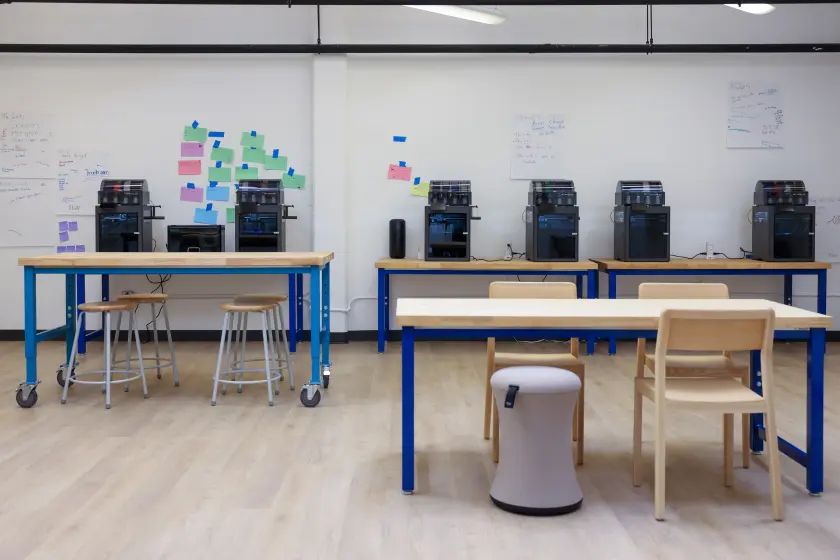
• Alpha School replaces conventional classroom instruction with AI-powered learning, allowing students to complete core academics in approximately two hours daily.
• Annual tuition at some Los Angeles-area campuses exceeds $75,000, raising questions about affordability and access to alternative education.
• Supporters emphasize personalized instruction and practical skills, while education experts question academic effectiveness, student development and independent verification.
Alpha School is expanding across Los Angeles with an unconventional education model that substitutes artificial intelligence software for traditional classroom lectures. New campuses in Santa Monica, Playa Vista and Malibu offer personalized academic instruction concentrated into two hours, followed by workshops emphasizing practical skills, teamwork and independence. Tuition varies by campus, with costs exceeding $75,000 annually at some locations, while the Santa Monica campus advertises $65,000.
Founded in Austin, Texas, Alpha says its students progress through core subjects at individual speeds, advancing after demonstrating mastery. Human guides oversee motivation, social development and hands-on activities rather than delivering lessons. Supporters argue the approach addresses stagnant instruction and gives families greater educational choice. Critics question whether its academic gains withstand independent scrutiny and whether software can replace the judgment and relationships provided by trained teachers. The experiment highlights demand for alternatives alongside unresolved concerns about affordability, screen exposure and learning outcomes.
Why It Matters
Alpha School’s expansion challenges the assumption that classrooms are the only route to academic achievement. Parents dissatisfied with slow instruction, limited individual attention and inadequate practical training now have another option, albeit one affordable to wealthy households. Its appeal also underscores a broader demand for educational competition, parental choice and measurable results rather than institutional loyalty.
Yet replacing conventional instruction with software should not be confused with proving better education. Alpha’s performance claims require transparent, independently verified evidence, especially when children’s intellectual development is at stake. Human mentorship remains essential, and families deserve clarity about screen time, data privacy and the qualifications of adults supervising students.
The larger question is whether personalized technology can eventually deliver improvements at costs ordinary families can afford. If successful, the model could pressure established schools to modernize. If unsuccessful, it will demonstrate why technological novelty, tuition and impressive marketing cannot substitute for demonstrated learning.
Sources
• https://www.latimes.com/business/story/2026-11-23/ai-taught-alpha-school-la-cost-parents
• https://fortune.com/2026/09/10/alpha-school-wealthy-parents-ai-school/