

Close Menu

    Subscribe to Updates

    Get the latest creative news from FooBar about art, design and business.

    What's Hot

    PayPal Data Breach Exposed Customer Personal Information For Months

    February 27, 2026

    DOJ Opens Antitrust Investigation Into Netflix’s Proposed Warner Bros. Acquisition

    February 27, 2026

    Taara Beam Launch Brings 25Gbps Optical Wireless Networks to Cities

    February 27, 2026
    Facebook X (Twitter) Instagram
    • Tech
    • AI
    • Get In Touch
    Facebook X (Twitter) LinkedIn
    TallwireTallwire
    • Tech

      Taara Beam Launch Brings 25Gbps Optical Wireless Networks to Cities

      February 27, 2026

      Global Memory Shortage Set to Push Up Prices on Phones, Laptops, and More

      February 27, 2026

      OpenAI’s Stargate Data Center Ambitions Hit Major Roadblocks

      February 27, 2026

      Large Hadron Collider Enters Third Shutdown For Major Upgrade

      February 26, 2026

      Stellantis Faces Massive Losses and Strategic Shift After Misjudging EV Market Demand

      February 26, 2026
    • AI

      X to Let Users Mark Posts ‘Made With AI’ as Platform Eyes Voluntary Disclosure Feature

      February 27, 2026

      Uber Rolls Out “Uber Autonomous Solutions” To Support Third-Party Robotaxi Partners

      February 27, 2026

      Global Memory Shortage Set to Push Up Prices on Phones, Laptops, and More

      February 27, 2026

      OpenAI’s Stargate Data Center Ambitions Hit Major Roadblocks

      February 27, 2026

      Anthropic Raises Alarm Over Chinese AI Model Distillation Practices

      February 26, 2026
    • Security

      PayPal Data Breach Exposed Customer Personal Information For Months

      February 27, 2026

      Discord Ends Persona Age Verification Trial Amid Privacy Backlash

      February 27, 2026

      FBI Issues Alert on Outdated Wi-Fi Routers Vulnerable to Cyber Attacks

      February 25, 2026

      Wikipedia Blacklists Archive.Today After DDoS Abuse And Content Manipulation

      February 24, 2026

      Admissions Website Bug Exposed Children’s Personal Information

      February 23, 2026
    • Health

      Social Media Addiction Trial Draws Grieving Parents Seeking Accountability From Tech Platforms

      February 19, 2026

      Portugal’s Parliament OKs Law to Restrict Children’s Social Media Access With Parental Consent

      February 18, 2026

      Parents Paint 108 Names, Demand Snapchat Reform After Deadly Fentanyl Claims

      February 18, 2026

      UK Kids Turning to AI Chatbots and Acting on Advice at Alarming Rates

      February 16, 2026

      Landmark California Trial Sees YouTube Defend Itself, Rejects ‘Social Media’ and Addiction Claims

      February 16, 2026
    • Science

      Taara Beam Launch Brings 25Gbps Optical Wireless Networks to Cities

      February 27, 2026

      Large Hadron Collider Enters Third Shutdown For Major Upgrade

      February 26, 2026

      Google Phases Out Android’s Built-In Weather App, Replacing It With Search-Based Forecasts

      February 25, 2026

      Microsoft’s Breakthrough Suggests Data Could Be Preserved for 10,000 Years on Glass

      February 24, 2026

      NASA Trials Autonomous, AI-Planned Driving on Mars Rover

      February 20, 2026
    • Tech

      Zuckerberg Testifies In Landmark Trial Over Alleged Teen Social Media Harms

      February 23, 2026

      Gay Tech Networks Under Spotlight In Silicon Valley Culture Debate

      February 23, 2026

      Google Co-Founder’s Epstein Contacts Reignite Scrutiny of Elite Tech Circles

      February 7, 2026

      Bill Gates Denies “Absolutely Absurd” Claims in Newly Released Epstein Files

      February 6, 2026

      Informant Claims Epstein Employed Personal Hacker With Zero-Day Skills

      February 5, 2026
    TallwireTallwire
    Home»Tech»Hackers Turn Servers into Search-Result Traffic Boosters
    Tech

    Hackers Turn Servers into Search-Result Traffic Boosters

    Updated:February 21, 20263 Mins Read
    Facebook Twitter Pinterest LinkedIn Tumblr Email
    Hackers Turn Servers into Search-Result Traffic Boosters
    Hackers Turn Servers into Search-Result Traffic Boosters
    Share
    Facebook Twitter LinkedIn Pinterest Email

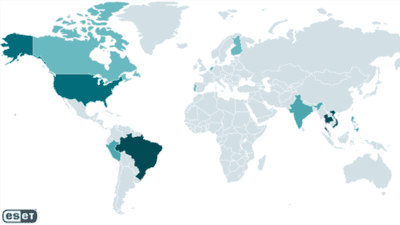
    A fresh investigation by Slovak cybersecurity firm ESET uncovered a previously unknown threat group dubbed GhostRedirector, active since at least August 2024, which covertly compromised at least 65 Windows servers across Brazil, Thailand, Vietnam, the U.S., Peru, Canada, Finland, India, the Netherlands, the Philippines, and Singapore. Using two custom tools—Rungan, a stealthy C++ backdoor that executes commands and even creates admin users, and Gamshen, a sneaky IIS module that intercepts Googlebot requests for SEO fraud to promote gambling sites—the group quietly manipulated search engine rankings without affecting regular visitors. They also leveraged public privilege-escalation exploits (EfsPotato, BadPotato), and tools like GoToHTTP, Zunput, and web shells to maintain persistent access across sectors such as healthcare, education, retail, insurance, transportation, and technology. ESET attributes GhostRedirector to a China-aligned threat actor, citing Chinese code strings, a Chinese-issued code-signing certificate, and use of the password “huang.” 

    Sources: ESET, Hacker News, We Live Security

    Key Takeaways

    – SEO Abuse via Malware: Hackers used SEO fraud (via Gamshen) to covertly manipulate Google search rankings—and benefit gambling websites—without impacting normal site visitors.

    – Resilient and Multi-Pronged Attack Strategy: The campaign combined custom backdoors (Rungan), privilege escalation exploits (EfsPotato, BadPotato), and other tools to embed long-term access across various global sectors.

    – China-Linked Attribution: ESET links the campaign to China-aligned actors based on code traits, certificate origin, and internal details, though emphasis is on “China-aligned,” not definitive attribution.

    In-Depth

    Since late 2024, cybersecurity researchers have tracked a cunning new threat group known as GhostRedirector—a China-aligned, opportunistic operation that quietly infiltrated at least 65 Windows servers worldwide. Far from your typical ransomware gang, GhostRedirector specialized in “SEO fraud as a service”, executing a scheme that quietly manipulated Google’s search crawler (Googlebot) to boost gambling websites in search results.

    The campaign relied on two custom malware tools: Rungan, a passive C++ backdoor capable of executing commands and creating admin users, and Gamshen, an IIS module that intercepted Googlebot requests to insert hidden backlinks or manipulated content aimed at deceiving search algorithms—without affecting normal visitors. Together, these tools allowed the hackers to quietly juice search rankings without arousing suspicion.

    To gain and maintain access, the attackers exploited probable SQL injection vulnerabilities using PowerShell-driven payloads from a staging server (868id[.]com), along with public tools like EfsPotato and BadPotato for privilege escalation. They also deployed web shells, GoToHTTP, and custom utilities such as Zunput—all pointing to deliberate, layered persistence even if some components were removed.

    Victims ranged across industries—from healthcare and education to retail and transportation—and spanned numerous countries, with strong representation in Latin America and Southeast Asia. That broad reach speaks to the opportunistic nature of this campaign, driven more by opportunity than by specific targets.

    ESET attributes GhostRedirector to a China-aligned group based on linguistic cues, a code-signing certificate issued to a Chinese firm, and internal artifacts like the password “huang.” Still, attribution remains cautious, reflective of prudent cybersecurity norms.

    In short, GhostRedirector underscores a subtle but insidious evolution in cyber threats—where search engine manipulation becomes the payload and stealth is the weapon.

    India Tech Ransomware
    Share. Facebook Twitter Pinterest LinkedIn Tumblr Email
    Previous ArticleHackers Masquerade Malware as ChatGPT, Office, Google Drive to Trick Workers
    Next Article Harvard Dropouts Introduce Halo X—AI Glasses That Listen, Record, and Transcribe Every Conversation

    Related Posts

    Taara Beam Launch Brings 25Gbps Optical Wireless Networks to Cities

    February 27, 2026

    Global Memory Shortage Set to Push Up Prices on Phones, Laptops, and More

    February 27, 2026

    OpenAI’s Stargate Data Center Ambitions Hit Major Roadblocks

    February 27, 2026

    Large Hadron Collider Enters Third Shutdown For Major Upgrade

    February 26, 2026
    Add A Comment
    Leave A Reply Cancel Reply

    Editors Picks

    Taara Beam Launch Brings 25Gbps Optical Wireless Networks to Cities

    February 27, 2026

    Global Memory Shortage Set to Push Up Prices on Phones, Laptops, and More

    February 27, 2026

    OpenAI’s Stargate Data Center Ambitions Hit Major Roadblocks

    February 27, 2026

    Large Hadron Collider Enters Third Shutdown For Major Upgrade

    February 26, 2026
    Top Reviews
    Tallwire
    Facebook X (Twitter) LinkedIn Threads Instagram RSS
    • Tech
    • Entertainment
    • Business
    • Government
    • Academia
    • Transportation
    • Legal
    • Press Kit
    © 2026 Tallwire. Optimized by ARMOUR Digital Marketing Agency.

    Type above and press Enter to search. Press Esc to cancel.