

Close Menu

    Subscribe to Updates

    Get the latest creative news from FooBar about art, design and business.

    What's Hot

    Google’s Compliance With ICE Data Request Sparks Privacy Concerns

    February 14, 2026

    XAI Publicly Unveils Elon Musk’s Interplanetary AI Vision In Rare All-Hands Release

    February 14, 2026

    Elon Musk Shifts SpaceX Priority From Mars Colonization to Building a Moon City

    February 14, 2026
    Facebook X (Twitter) Instagram
    • Tech
    • AI News
    • Get In Touch
    Facebook X (Twitter) LinkedIn
    TallwireTallwire
    • Tech

      Microsoft Exchange Online’s Aggressive Filters Mistake Legitimate Emails for Phishing

      February 13, 2026

      Hobbyist Finds $500 Worth Of RAM In Landfill As Memory Shortages Bite Hardware Market

      February 13, 2026

      Intel Quietly Pulls Plug on Controversial Pay-to-Unlock CPU Feature Model

      February 13, 2026

      Toyota Announces Open-Source “Console-Grade” Game Engine For Vehicle Systems And Beyond

      February 13, 2026

      Snapchat Rolls Out Expanded Arrival Notifications Beyond Home

      February 13, 2026
    • AI News

      XAI Publicly Unveils Elon Musk’s Interplanetary AI Vision In Rare All-Hands Release

      February 14, 2026

      OpenAI Begins Testing Ads in ChatGPT’s Free and Low-Cost Tiers as Industry Monetization Shift

      February 14, 2026

      Discord to Mandate Global Age Verification With Face Scans and IDs in March 2026

      February 13, 2026

      Hobbyist Finds $500 Worth Of RAM In Landfill As Memory Shortages Bite Hardware Market

      February 13, 2026

      Chinese Firms Expand Chip Production As Global Memory Shortage Deepens

      February 12, 2026
    • Security

      Microsoft Exchange Online’s Aggressive Filters Mistake Legitimate Emails for Phishing

      February 13, 2026

      China’s Salt Typhoon Hackers Penetrate Norwegian Networks in Espionage Push

      February 12, 2026

      Reality Losing the Deepfake War as C2PA Labels Falter

      February 11, 2026

      Global Android Security Alert: Over One Billion Devices Vulnerable to Malware and Spyware Risks

      February 11, 2026

      Small Water Systems Face Rising Cyber Threats As Experts Warn National Security Risk

      February 9, 2026
    • Health

      AI Advances Aim to Bridge Labor Gaps in Rare Disease Treatment

      February 12, 2026

      Boeing and Israel’s Technion Forge Clean Fuel Partnership to Reduce Aviation Carbon Footprints

      February 11, 2026

      OpenAI’s Drug Royalties Model Draws Skepticism as Unworkable in Biotech Reality

      February 10, 2026

      New AI Health App From Fitbit Founders Aims To Transform Family Care

      February 9, 2026

      Startups Deploy Underwater Robots to Radically Expand Ocean Tracking Capabilities

      February 9, 2026
    • Science

      XAI Publicly Unveils Elon Musk’s Interplanetary AI Vision In Rare All-Hands Release

      February 14, 2026

      Elon Musk Shifts SpaceX Priority From Mars Colonization to Building a Moon City

      February 14, 2026

      NASA Artemis II Spacesuit Mobility Concerns Ahead Of Historic Mission

      February 13, 2026

      AI Agents Build Their Own MMO Playground After Moltbook Ignites Agent-Only Web Communities

      February 12, 2026

      AI Advances Aim to Bridge Labor Gaps in Rare Disease Treatment

      February 12, 2026
    • People

      Google Co-Founder’s Epstein Contacts Reignite Scrutiny of Elite Tech Circles

      February 7, 2026

      Bill Gates Denies “Absolutely Absurd” Claims in Newly Released Epstein Files

      February 6, 2026

      Informant Claims Epstein Employed Personal Hacker With Zero-Day Skills

      February 5, 2026

      Starlink Becomes Critical Internet Lifeline Amid Iran Protest Crackdown

      January 25, 2026

      Musk Pledges to Open-Source X’s Recommendation Algorithm, Promising Transparency

      January 21, 2026
    TallwireTallwire
    Home»Tech»Hackers Turn Servers into Search-Result Traffic Boosters
    Tech

    Hackers Turn Servers into Search-Result Traffic Boosters

    Updated:December 25, 20253 Mins Read
    Facebook Twitter Pinterest LinkedIn Tumblr Email
    Hackers Turn Servers into Search-Result Traffic Boosters
    Hackers Turn Servers into Search-Result Traffic Boosters
    Share
    Facebook Twitter LinkedIn Pinterest Email

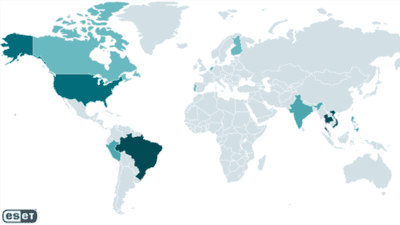
    A fresh investigation by Slovak cybersecurity firm ESET uncovered a previously unknown threat group dubbed GhostRedirector, active since at least August 2024, which covertly compromised at least 65 Windows servers across Brazil, Thailand, Vietnam, the U.S., Peru, Canada, Finland, India, the Netherlands, the Philippines, and Singapore. Using two custom tools—Rungan, a stealthy C++ backdoor that executes commands and even creates admin users, and Gamshen, a sneaky IIS module that intercepts Googlebot requests for SEO fraud to promote gambling sites—the group quietly manipulated search engine rankings without affecting regular visitors. They also leveraged public privilege-escalation exploits (EfsPotato, BadPotato), and tools like GoToHTTP, Zunput, and web shells to maintain persistent access across sectors such as healthcare, education, retail, insurance, transportation, and technology. ESET attributes GhostRedirector to a China-aligned threat actor, citing Chinese code strings, a Chinese-issued code-signing certificate, and use of the password “huang.” 

    Sources: ESET, Hacker News, We Live Security

    Key Takeaways

    – SEO Abuse via Malware: Hackers used SEO fraud (via Gamshen) to covertly manipulate Google search rankings—and benefit gambling websites—without impacting normal site visitors.

    – Resilient and Multi-Pronged Attack Strategy: The campaign combined custom backdoors (Rungan), privilege escalation exploits (EfsPotato, BadPotato), and other tools to embed long-term access across various global sectors.

    – China-Linked Attribution: ESET links the campaign to China-aligned actors based on code traits, certificate origin, and internal details, though emphasis is on “China-aligned,” not definitive attribution.

    In-Depth

    Since late 2024, cybersecurity researchers have tracked a cunning new threat group known as GhostRedirector—a China-aligned, opportunistic operation that quietly infiltrated at least 65 Windows servers worldwide. Far from your typical ransomware gang, GhostRedirector specialized in “SEO fraud as a service”, executing a scheme that quietly manipulated Google’s search crawler (Googlebot) to boost gambling websites in search results.

    The campaign relied on two custom malware tools: Rungan, a passive C++ backdoor capable of executing commands and creating admin users, and Gamshen, an IIS module that intercepted Googlebot requests to insert hidden backlinks or manipulated content aimed at deceiving search algorithms—without affecting normal visitors. Together, these tools allowed the hackers to quietly juice search rankings without arousing suspicion.

    To gain and maintain access, the attackers exploited probable SQL injection vulnerabilities using PowerShell-driven payloads from a staging server (868id[.]com), along with public tools like EfsPotato and BadPotato for privilege escalation. They also deployed web shells, GoToHTTP, and custom utilities such as Zunput—all pointing to deliberate, layered persistence even if some components were removed.

    Victims ranged across industries—from healthcare and education to retail and transportation—and spanned numerous countries, with strong representation in Latin America and Southeast Asia. That broad reach speaks to the opportunistic nature of this campaign, driven more by opportunity than by specific targets.

    ESET attributes GhostRedirector to a China-aligned group based on linguistic cues, a code-signing certificate issued to a Chinese firm, and internal artifacts like the password “huang.” Still, attribution remains cautious, reflective of prudent cybersecurity norms.

    In short, GhostRedirector underscores a subtle but insidious evolution in cyber threats—where search engine manipulation becomes the payload and stealth is the weapon.

    Share. Facebook Twitter Pinterest LinkedIn Tumblr Email
    Previous ArticleHackers Masquerade Malware as ChatGPT, Office, Google Drive to Trick Workers
    Next Article Harvard Dropouts Introduce Halo X—AI Glasses That Listen, Record, and Transcribe Every Conversation

    Related Posts

    Microsoft Exchange Online’s Aggressive Filters Mistake Legitimate Emails for Phishing

    February 13, 2026

    Hobbyist Finds $500 Worth Of RAM In Landfill As Memory Shortages Bite Hardware Market

    February 13, 2026

    Intel Quietly Pulls Plug on Controversial Pay-to-Unlock CPU Feature Model

    February 13, 2026

    Snapchat Rolls Out Expanded Arrival Notifications Beyond Home

    February 13, 2026
    Add A Comment
    Leave A Reply Cancel Reply

    Editors Picks

    Microsoft Exchange Online’s Aggressive Filters Mistake Legitimate Emails for Phishing

    February 13, 2026

    Hobbyist Finds $500 Worth Of RAM In Landfill As Memory Shortages Bite Hardware Market

    February 13, 2026

    Intel Quietly Pulls Plug on Controversial Pay-to-Unlock CPU Feature Model

    February 13, 2026

    Toyota Announces Open-Source “Console-Grade” Game Engine For Vehicle Systems And Beyond

    February 13, 2026
    Top Reviews
    Tallwire
    Facebook X (Twitter) LinkedIn Threads Instagram RSS
    • Tech
    • Entertainment
    • Business
    • Government
    • Academia
    • Transportation
    • Legal
    • Press Kit
    © 2026 Tallwire. Optimized by ARMOUR Digital Marketing Agency.

    Type above and press Enter to search. Press Esc to cancel.