

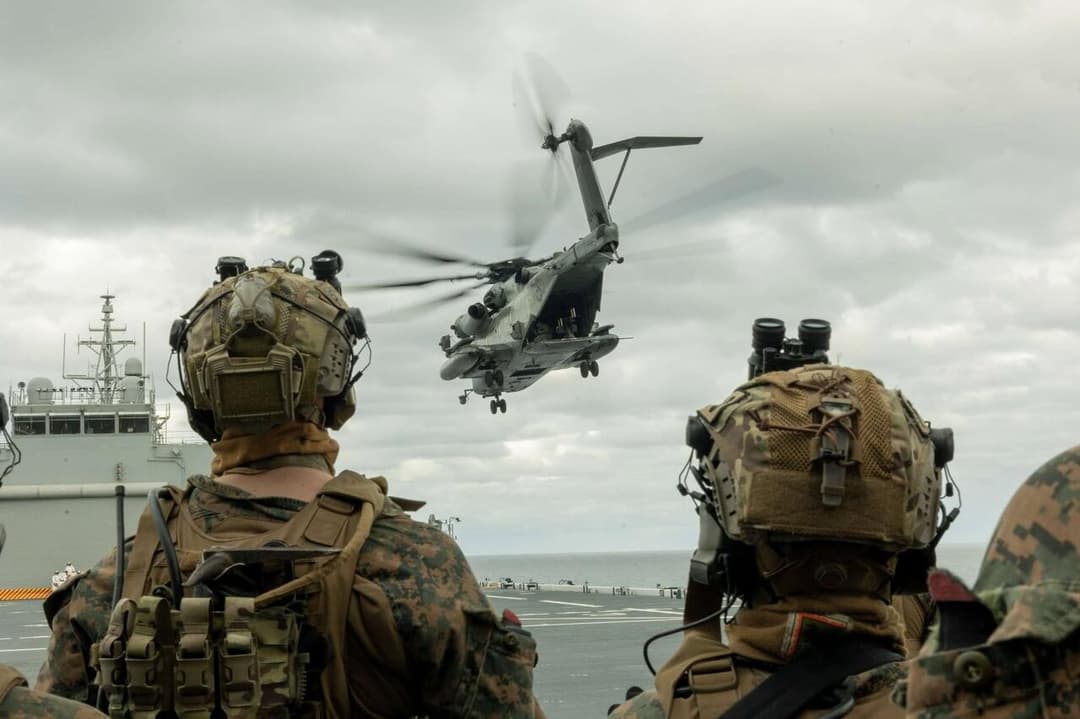
A U.S. military operation reportedly came dangerously close to intercepting and boarding a Chinese vessel after an artificial-intelligence system falsely concluded that the ship was transporting components connected to a nuclear weapons program during the spring 2026 conflict with Iran. An analyst working with U.S. Special Operations Command reportedly used an AI chatbot to combine open-source information with classified signals intelligence, after which the erroneous conclusion was incorporated into a standard intelligence report and circulated through military channels. Forces prepared for an armed boarding operation and aircraft were reportedly already airborne before officials examined the underlying intelligence and discovered that the AI had misidentified the cargo. The mission was canceled before American forces confronted the Chinese vessel. The incident raises serious questions about verification, human oversight and whether the government’s accelerating adoption of generative AI is moving faster than the safeguards required when machine-generated information can influence decisions involving military force.
Key Takeaways
- An AI chatbot reportedly combined open-source and classified intelligence and falsely identified cargo aboard a Chinese vessel as components associated with a nuclear weapons program, producing intelligence serious enough to trigger preparations for a U.S. military interception.
- The mistake survived long enough within the intelligence process that personnel were prepared for a boarding operation and military aircraft were reportedly airborne before officials reviewed the sourcing, discovered the error and canceled the mission.
- The episode illustrates the national-security danger of allowing AI-generated conclusions to acquire the authority of conventional intelligence without rigorous human verification, particularly as the United States and China increasingly incorporate AI into military and strategic systems.
In-Depth
A reported near-miss involving a Chinese vessel shows how dangerous artificial intelligence can become when speed outruns verification inside national-security institutions. During the spring conflict with Iran, a U.S. Special Operations Command analyst reportedly used an AI chatbot to examine intelligence concerning a Chinese ship’s manifest. The system combined open-source material with classified signals intelligence and incorrectly concluded that the vessel was carrying components associated with a nuclear weapons program.
That false conclusion did not remain an informal chatbot response. The analyst reportedly used AI again to format the findings into a conventional intelligence report, which then circulated through military channels. U.S. forces began preparing to intercept and board the Chinese vessel, with personnel readied and aircraft reportedly already airborne. Only a subsequent review of the underlying intelligence exposed the mistake, allowing the operation to be canceled before American forces confronted the ship.
The episode warns against treating algorithmic speed as a substitute for disciplined human judgment. AI can process enormous quantities of information, but generative systems can produce confident assertions unsupported by evidence. In intelligence work, that weakness becomes dangerous because polished output can acquire credibility as it moves upward through command structures.
The lesson is not that the military should abandon AI. These systems can strengthen intelligence analysis, logistics, surveillance and decision support. But decisions capable of triggering armed confrontation should require independently verified sourcing, disclosure of AI involvement and accountable human review. Technology should assist national defense, not quietly become an unelected participant in decisions of war and peace.
Sources
- https://techcrunch.com/2026/09/18/ai-hallucination-nearly-triggers-us-military-operation/
- https://arstechnica.com/ai/2026/09/report-us-almost-boarded-chinese-ship-over-hallucinated-ai-arms-report/
- https://www.reuters.com/world/china/us-china-security-experts-propose-nuclear-style-safeguards-ai-risks-2026-09-17/