

Close Menu

    Subscribe to Updates

    Get the latest creative news from FooBar about art, design and business.

    What's Hot

    AI Safety Researcher Resigns, Warns ‘World Is in Peril’ Amid Broader Industry Concerns

    February 15, 2026

    Amazon’s Eero Signal Introduces Cellular Backup for Home Internet Outages

    February 15, 2026

    Microsoft Warns Hackers Are Exploiting Critical Zero-Day Bugs Targeting Windows, Office Users

    February 15, 2026
    Facebook X (Twitter) Instagram
    • Tech
    • AI News
    • Get In Touch
    Facebook X (Twitter) LinkedIn
    TallwireTallwire
    • Tech

      Amazon’s Eero Signal Introduces Cellular Backup for Home Internet Outages

      February 15, 2026

      AI Safety Researcher Resigns, Warns ‘World Is in Peril’ Amid Broader Industry Concerns

      February 15, 2026

      OpenAI Disbands Mission Alignment Team Amid Internal Restructuring And Safety Concerns

      February 14, 2026

      Startup’s New Chip Tech Aims to Make Luxury Goods Harder to Fake

      February 14, 2026

      Microsoft Exchange Online’s Aggressive Filters Mistake Legitimate Emails for Phishing

      February 13, 2026
    • AI News

      Amazon’s Eero Signal Introduces Cellular Backup for Home Internet Outages

      February 15, 2026

      AI Safety Researcher Resigns, Warns ‘World Is in Peril’ Amid Broader Industry Concerns

      February 15, 2026

      Amazon Eyes Marketplace to Let Publishers Sell Content to AI Firms

      February 15, 2026

      OpenAI Disbands Mission Alignment Team Amid Internal Restructuring And Safety Concerns

      February 14, 2026

      Startup’s New Chip Tech Aims to Make Luxury Goods Harder to Fake

      February 14, 2026
    • Security

      AI Safety Researcher Resigns, Warns ‘World Is in Peril’ Amid Broader Industry Concerns

      February 15, 2026

      Microsoft Warns Hackers Are Exploiting Critical Zero-Day Bugs Targeting Windows, Office Users

      February 15, 2026

      Microsoft Exchange Online’s Aggressive Filters Mistake Legitimate Emails for Phishing

      February 13, 2026

      China’s Salt Typhoon Hackers Penetrate Norwegian Networks in Espionage Push

      February 12, 2026

      Reality Losing the Deepfake War as C2PA Labels Falter

      February 11, 2026
    • Health

      Amazon Pharmacy Rolls Out Same-Day Prescription Delivery To 4,500 U.S. Cities

      February 14, 2026

      AI Advances Aim to Bridge Labor Gaps in Rare Disease Treatment

      February 12, 2026

      Boeing and Israel’s Technion Forge Clean Fuel Partnership to Reduce Aviation Carbon Footprints

      February 11, 2026

      OpenAI’s Drug Royalties Model Draws Skepticism as Unworkable in Biotech Reality

      February 10, 2026

      New AI Health App From Fitbit Founders Aims To Transform Family Care

      February 9, 2026
    • Science

      XAI Publicly Unveils Elon Musk’s Interplanetary AI Vision In Rare All-Hands Release

      February 14, 2026

      Elon Musk Shifts SpaceX Priority From Mars Colonization to Building a Moon City

      February 14, 2026

      NASA Artemis II Spacesuit Mobility Concerns Ahead Of Historic Mission

      February 13, 2026

      AI Agents Build Their Own MMO Playground After Moltbook Ignites Agent-Only Web Communities

      February 12, 2026

      AI Advances Aim to Bridge Labor Gaps in Rare Disease Treatment

      February 12, 2026
    • People

      Google Co-Founder’s Epstein Contacts Reignite Scrutiny of Elite Tech Circles

      February 7, 2026

      Bill Gates Denies “Absolutely Absurd” Claims in Newly Released Epstein Files

      February 6, 2026

      Informant Claims Epstein Employed Personal Hacker With Zero-Day Skills

      February 5, 2026

      Starlink Becomes Critical Internet Lifeline Amid Iran Protest Crackdown

      January 25, 2026

      Musk Pledges to Open-Source X’s Recommendation Algorithm, Promising Transparency

      January 21, 2026
    TallwireTallwire
    Home»Tech»California’s Ambitious $2.2B Ivanpah Solar Project Heads Toward Shutdown Amid Performance, Cost, and Environmental Concerns
    Tech

    California’s Ambitious $2.2B Ivanpah Solar Project Heads Toward Shutdown Amid Performance, Cost, and Environmental Concerns

    Updated:December 25, 20254 Mins Read
    Facebook Twitter Pinterest LinkedIn Tumblr Email
    California’s Ambitious $2.2B Ivanpah Solar Project Heads Toward Shutdown Amid Performance, Cost, and Environmental Concerns
    California’s Ambitious $2.2B Ivanpah Solar Project Heads Toward Shutdown Amid Performance, Cost, and Environmental Concerns
    Share
    Facebook Twitter LinkedIn Pinterest Email

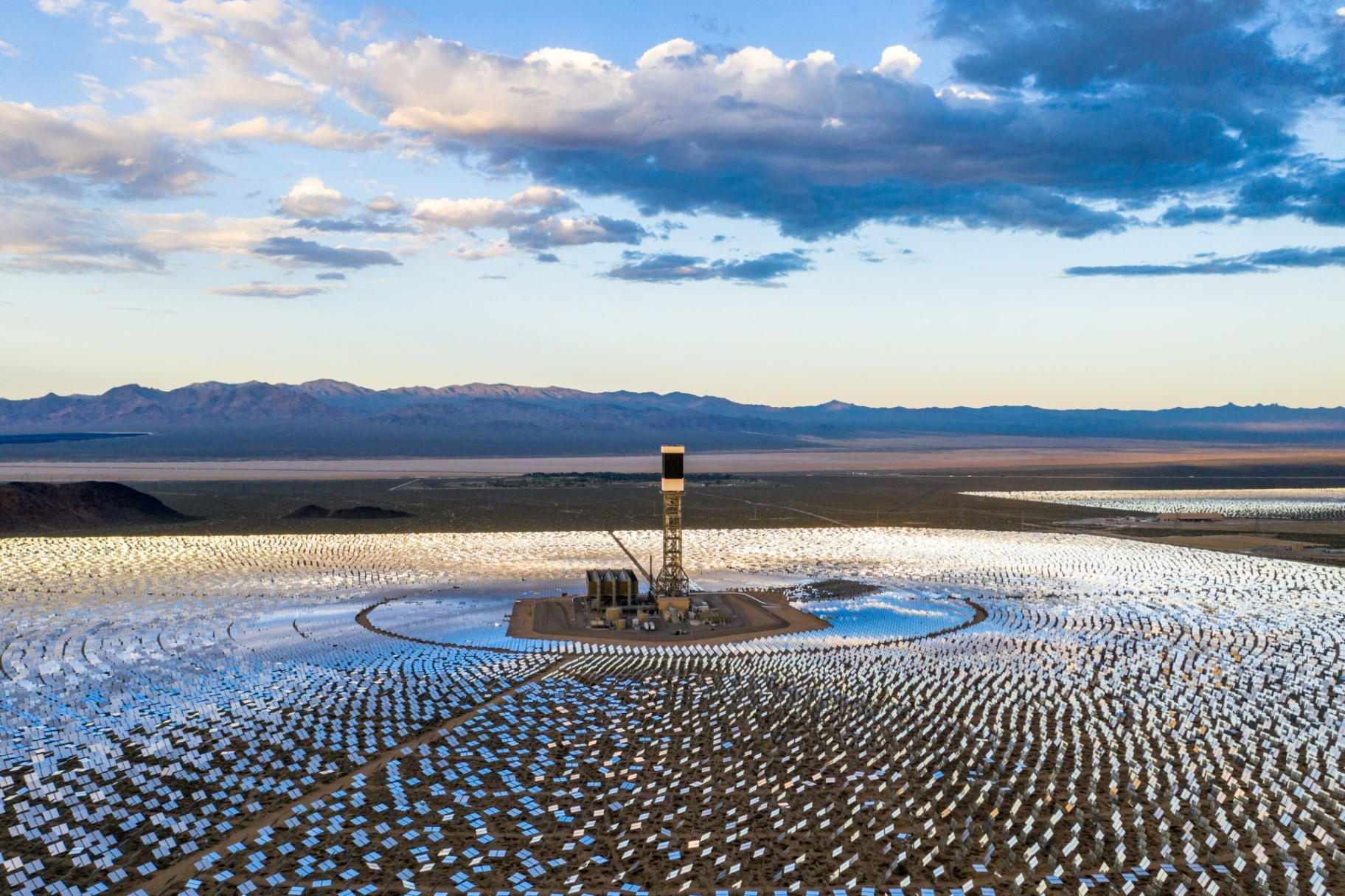
    In a move that underscores the challenges of marrying ambitious clean energy goals with economic realism, the Ivanpah Solar Power Facility in California is being phased toward shutdown starting in 2026. The concentrated solar thermal plant—built with an estimated $2.2 billion in capital and backed by $1.6 billion in federal loan guarantees—has never lived up to its production expectations and has relied on natural gas backup. Pacific Gas & Electric (PG&E), one of its major off-takers, has already terminated its power purchase agreements early, citing expected savings for ratepayers. The facility also faced sharp criticism over environmental side effects—among them the death of thousands of birds each year due to extreme heat near its heliostat mirrors. Some of the plant’s owners and operators now plan to decommission two of its three towers, seek regulatory approval for the shutdown, and explore repurposing the land, potentially for more efficient photovoltaic projects.

    Sources: Sierra Daily News, AP News

    Key Takeaways

    – Ivanpah’s concentrated solar thermal technology underperformed relative to projections and never achieved full contracted output, prompting early contract termination by PG&E.

    – The project’s reliance on natural gas and environmental impacts—particularly bird mortalities around the concentrated mirror fields—have fueled critiques of its sustainability and justification.

    – Its impending shutdown highlights the shifting economics in solar energy, as lower-cost photovoltaic (PV) technology and battery storage have outpaced complex thermal solar systems in competitiveness.

    In-Depth

    Ivanpah Solar was launched with considerable fanfare as a bold experiment in large-scale concentrated solar power (CSP). Located in California’s Mojave Desert and composed of three tower units focusing sunlight via over 173,500 heliostat mirrors, it was once the world’s largest facility of its kind. Its construction—carrying a $2.2 billion price tag and backed by $1.6 billion in federal loan guarantees—was intended to mark a turning point in renewable energy technology. Yet just over a decade into its operation, Ivanpah has become a cautionary tale.

    From early days, the plant struggled to hit its energy output goals. Analysts found its actual electricity production lagged behind model predictions by significant margins, undermining the financial assumptions embedded in its design. One technical review of Ivanpah’s data showed the actual output for a tower was far lower than both hand-calculated estimates and models run by NREL’s SAM tool. This discrepancy drove up its levelized cost of electricity (LCOE), making it far less competitive than forecast. (Performance modeling and real-world comparisons from peer-reviewed sources highlight how underperformance inflated costs and eroded returns.)

    On top of that, Ivanpah depended on natural gas to augment or prime its operations—especially in mornings or during intermittent cloud cover. Though the facility was ostensibly solar, its auxiliary fossil fuel use was significant and controversial. That dual reliance diluted the narrative of a purely clean power source.

    Beyond the technical and economic underpinnings, environmental critiques gained traction. The plant’s intense mirror fields create extreme localized heat near the tower receivers, killing birds and occasionally bats that fly into the focal zone. Environmental groups have estimated annual bird deaths in the thousands. In addition, some ecological concerns were raised about the disrupted desert habitat and impacts on species such as the desert tortoise.

    Over time, changes in the solar market worked against Ivanpah. Photovoltaic (PV) panels, along with battery storage systems, have seen steep cost declines and scalability gains that CSP designs struggled to match. When PG&E re-evaluated long-term contracts, it concluded canceling its agreements would save ratepayers money. In early 2025, negotiations resulted in ending contracts on two of the three towers. Operators, including NRG, now plan to begin decommissioning those units in 2026, pending regulatory approvals. Some of the land may be repurposed for newer solar developments, likely PV.

    Ivanpah’s experience offers a few clear lessons. First, aggressive subsidies and engineering ambition do not guarantee commercial success—especially when assumptions diverge from operating reality. Second, technology choice matters: simpler, more modular solutions often carry less risk in evolving markets. Third, planning for eventual decommissioning and environmental remediation is essential, especially for large infrastructure projects. Ultimately, Ivanpah may be remembered less as a clean energy triumph and more as a high-stakes experiment whose failures will inform the next generation of solar.

    Share. Facebook Twitter Pinterest LinkedIn Tumblr Email
    Previous ArticleCalifornia Nears Passage of Groundbreaking Bill to Regulate AI ‘Companion’ Chatbots, Especially for Minors
    Next Article California’s First-in-Nation AI Chatbot Law Ushers in New Era of Tech Regulation

    Related Posts

    Amazon’s Eero Signal Introduces Cellular Backup for Home Internet Outages

    February 15, 2026

    AI Safety Researcher Resigns, Warns ‘World Is in Peril’ Amid Broader Industry Concerns

    February 15, 2026

    OpenAI Disbands Mission Alignment Team Amid Internal Restructuring And Safety Concerns

    February 14, 2026

    Startup’s New Chip Tech Aims to Make Luxury Goods Harder to Fake

    February 14, 2026
    Add A Comment
    Leave A Reply Cancel Reply

    Editors Picks

    Amazon’s Eero Signal Introduces Cellular Backup for Home Internet Outages

    February 15, 2026

    AI Safety Researcher Resigns, Warns ‘World Is in Peril’ Amid Broader Industry Concerns

    February 15, 2026

    OpenAI Disbands Mission Alignment Team Amid Internal Restructuring And Safety Concerns

    February 14, 2026

    Startup’s New Chip Tech Aims to Make Luxury Goods Harder to Fake

    February 14, 2026
    Top Reviews
    Tallwire
    Facebook X (Twitter) LinkedIn Threads Instagram RSS
    • Tech
    • Entertainment
    • Business
    • Government
    • Academia
    • Transportation
    • Legal
    • Press Kit
    © 2026 Tallwire. Optimized by ARMOUR Digital Marketing Agency.

    Type above and press Enter to search. Press Esc to cancel.