

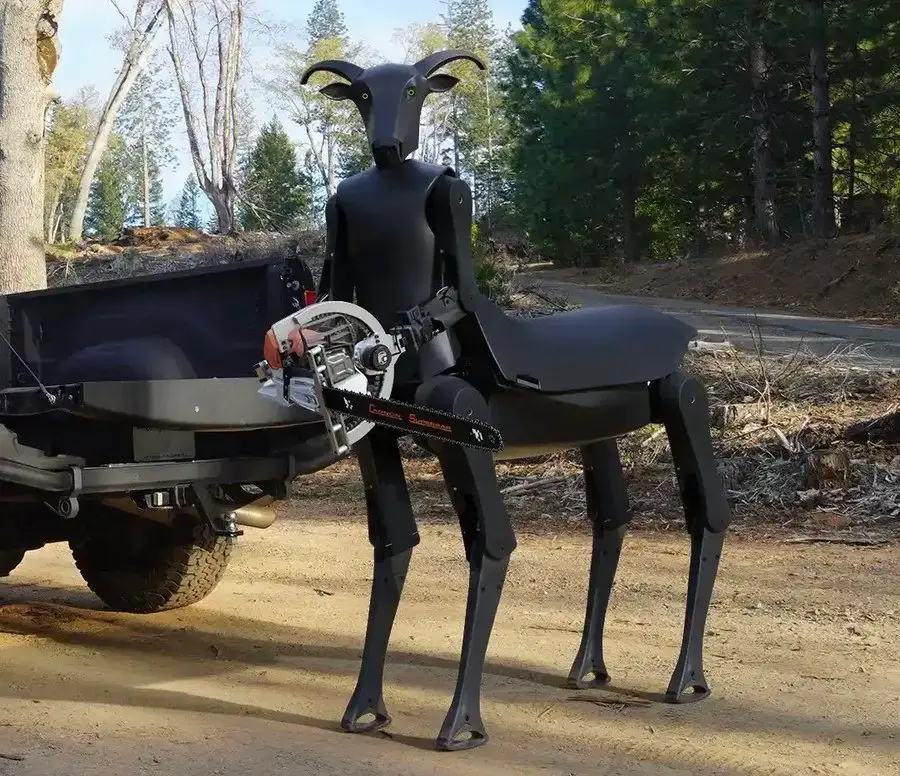
A California robotics engineer has sparked widespread debate after unveiling a towering, chainsaw-equipped centaur-style robot designed for dangerous tasks such as wildfire mitigation, disaster response, and search-and-rescue operations. While the machine’s intimidating appearance quickly went viral across social media, its creators argue that the design is intended to allow the robot to traverse difficult terrain and perform hazardous work too dangerous for humans. The viral reaction underscores a growing public unease over the accelerating convergence of artificial intelligence and advanced robotics, with many observers questioning whether technological capability is advancing faster than society’s willingness—or ability—to establish appropriate safeguards. Even as developers emphasize practical applications, the spectacle has renewed broader discussions over public trust, ethical deployment, and the future role of autonomous machines in everyday life.
Sources
- https://nypost.com/2026/07/30/lifestyle/chainsaw-robot-goes-viral-as-california-engineer-predicts-ai-future
- https://techcrunch.com/2026/04/16/physical-intelligence-a-hot-robotics-startup-says-its-new-robot-brain-can-figure-out-tasks-it-was-never-taught/
- https://www.washingtonpost.com/technology/2026/07/20/how-armed-robots-could-become-military-weapon-choice
Key Takeaways
- • The rapid integration of AI with increasingly capable robots is moving from research laboratories into real-world applications, particularly in hazardous environments where human risk is highest.
- • Viral public reaction demonstrates that acceptance of advanced robotics will depend not only on technical performance but also on transparency, appearance, safety standards, and public confidence.
- • As AI-powered machines become more autonomous and physically capable, policymakers will face growing pressure to establish meaningful oversight before widespread deployment outpaces regulation.
In-Depth
The viral debut of a chainsaw-equipped robotic platform may have generated countless memes, but it also revealed something far more consequential: the American public is beginning to grapple with what the next generation of artificial intelligence will actually look like in the physical world. For years, AI debates centered primarily on chatbots, image generation, and software. Increasingly, however, those same algorithms are being paired with machines capable of navigating terrain, manipulating objects, and performing dangerous work traditionally reserved for humans.
Supporters argue that this evolution should be welcomed. Robots capable of cutting firebreaks, clearing storm debris, or entering unstable disaster zones could save lives while reducing injuries among firefighters and rescue personnel. Those are legitimate objectives that deserve serious consideration.
Yet conservatives have long argued that technological innovation should be matched by responsible governance rather than blind enthusiasm. The public’s discomfort with an intimidating autonomous machine is not irrational fear but a reminder that trust must be earned. As robotics companies race to commercialize increasingly capable systems, questions surrounding accountability, human oversight, cybersecurity, and mission creep cannot be dismissed as obstacles to progress.
Innovation remains one of America’s greatest strengths, but history demonstrates that transformative technologies produce the best outcomes when guided by prudent safeguards rather than after-the-fact regulation. The challenge facing policymakers is not whether advanced robotics will become commonplace—they almost certainly will—but whether society establishes clear rules before these machines become deeply integrated into critical infrastructure, emergency response, industry, and eventually everyday life. The viral chainsaw robot may be remembered less for its appearance than for marking the moment the broader public realized that the AI revolution is no longer confined to computer screens.