

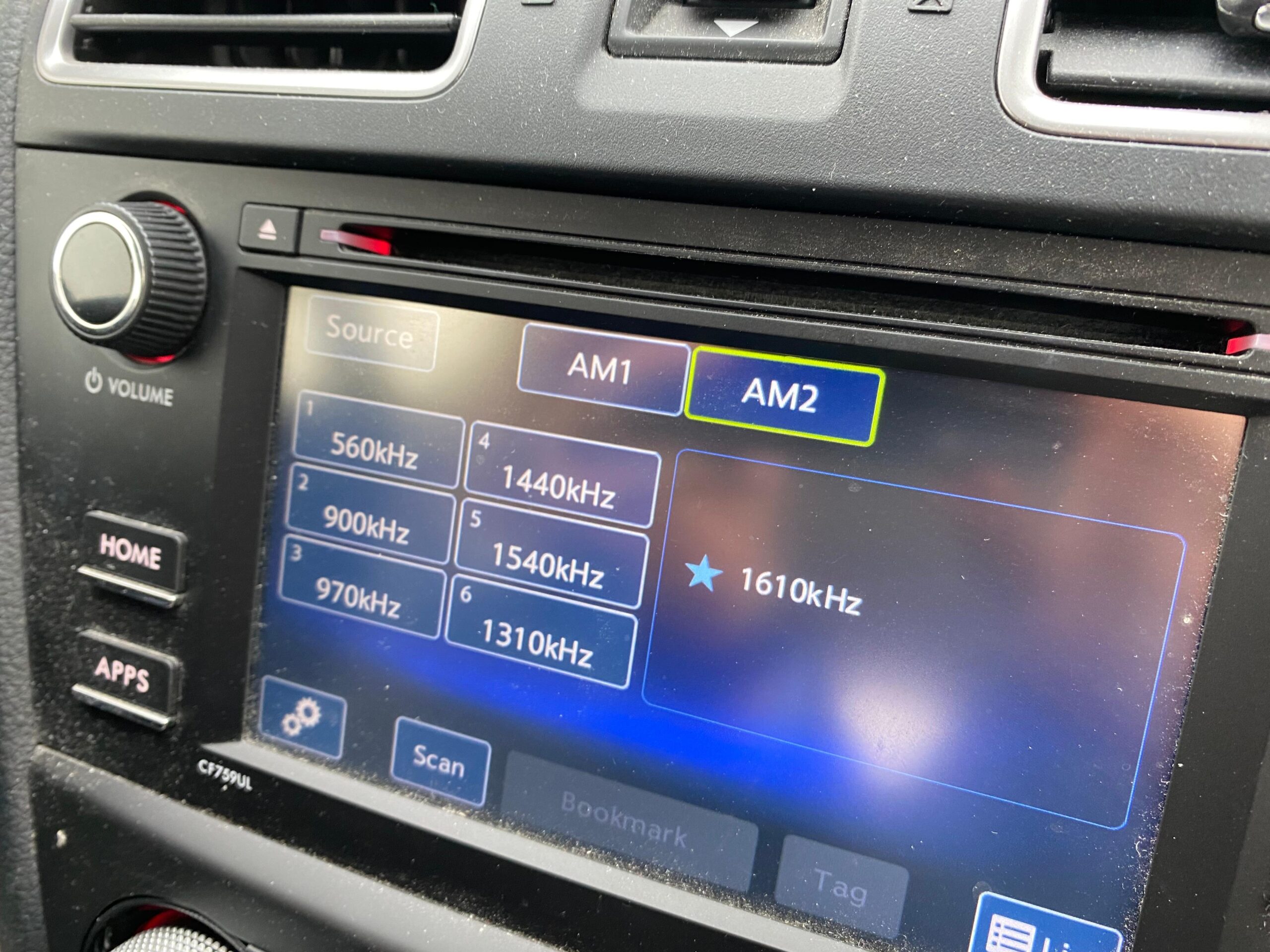
Congress is moving closer to requiring AM radio in new vehicles despite resistance from automakers that argue the federal government should not dictate entertainment technology inside cars. The House passed the bipartisan AM Radio for Every Vehicle Act in September, sending the measure to the Senate, where the companion legislation has accumulated 60 cosponsors. The proposal would direct federal transportation regulators to require automakers to provide access to AM broadcast stations in new passenger vehicles at no additional charge, with supporters emphasizing AM radio’s unusual ability to distribute emergency information across large geographic areas when electricity, cellular networks or internet service fail. Automakers counter that AM reception is particularly problematic in electric vehicles because electrical systems can generate interference, requiring potentially expensive engineering solutions. The debate consequently pits a legitimate free-market objection to government mandates against the public-safety argument that AM remains part of America’s emergency communications infrastructure and provides an inexpensive, resilient information source for rural communities and motorists during disasters.
Key Takeaways
- The House has passed the bipartisan AM Radio for Every Vehicle Act, which would require new passenger vehicles to provide access to AM broadcast stations without charging consumers extra; the legislation now awaits Senate action, where the companion measure has 60 cosponsors.
- Supporters argue AM radio remains an essential component of the nation’s emergency communications infrastructure because broadcasts can cover large areas and remain accessible when power, broadband and cellular networks are disrupted.
- Automakers oppose a federal mandate, particularly because electric-vehicle components can interfere with AM reception and manufacturers argue Washington should not dictate specific communications technology as vehicles and consumer preferences evolve.
In-Depth
Congress rarely finds overwhelming bipartisan agreement, but preserving AM radio in American automobiles has managed to bridge Washington’s political divide. The House-approved AM Radio for Every Vehicle Act would require automakers to maintain AM reception in new passenger vehicles without imposing an additional charge on buyers.
Ordinarily, conservatives should be skeptical when Washington tells private manufacturers which features their products must contain. Automakers reasonably argue that consumer preferences and technological innovation—not federal bureaucrats—should determine vehicle design. Electric vehicles complicate the issue because their electrical systems can create interference that makes AM reception difficult, potentially requiring additional engineering and expense.
But AM radio presents an unusual public-safety consideration. Its long-range broadcasts remain integrated into America’s emergency communications infrastructure, providing information during hurricanes, tornadoes, floods and other disasters when cellular towers, electricity or internet connections may fail. Rural communities are particularly dependent on AM’s geographic reach.
That distinction makes the legislation more defensible than an ordinary product mandate. Congress is not merely protecting an aging entertainment format. It is deciding whether every new automobile should retain access to an established emergency-information system that requires neither a subscription nor functioning cellular infrastructure.
Still, lawmakers should keep the requirement narrowly focused and periodically reconsider whether technology has produced an equally resilient alternative. The legislation’s sunset mechanism is therefore important.
The market should generally determine which technologies survive. But government also has a legitimate responsibility to maintain essential emergency communications. If AM radio remains one of the simplest and most reliable ways to reach Americans when modern networks fail, preserving access in vehicles represents a limited mandate with a credible public-safety justification.
Sources
- https://chicago.suntimes.com/media/2026/10/03/lawmakers-am-radio-new-cars-automakers-pushback
- https://www.govinfo.gov/app/details/BILLS-119hr979eh
- https://www.govinfo.gov/content/pkg/CREC-2026-09-15/pdf/CREC-2026-09-15-pt1-PgH5667.pdf
- https://www.commerce.senate.gov/press/rep/release/cruz-markey-applaud-house-passage-of-legislation-to-keep-am-radio-in-new-vehicles/
- https://www.markey.senate.gov/news/press-releases/sens-markey-and-cruz-applaud-house-passage-of-legislation-to-keep-am-radio-in-new-vehicles