

Close Menu

    Subscribe to Updates

    Get the latest tech news from Tallwire.

      What's Hot

      Social Media Ban Proposal Sparks Fears of Collateral Damage for Educational Technology Firms

      July 16, 2026

      Washington’s Intel Gamble Begins Delivering Strategic Results

      July 16, 2026

      U.S. Biotechs Turn to Secrecy as China Accelerates Drug Development Race

      July 16, 2026
      Facebook X (Twitter) Instagram
      • Tech
      • AI
      • Get In Touch
      Facebook X (Twitter) LinkedIn
      TallwireTallwire
      • Tech

        U.S. Biotechs Turn to Secrecy as China Accelerates Drug Development Race

        July 16, 2026

        Fiat Bets on Tiny EV as Affordable Transportation Returns to the Spotlight

        July 15, 2026

        Personalized UVB Device Promises Vitamin D Benefits While Raising Questions About Medicalizing Everyday Health

        July 15, 2026

        Meta Patent Ignites Fresh Fears Over AI-Powered Emotional Surveillance

        July 14, 2026

        AI Protesters March on Silicon Valley Giants Demanding Development Freeze

        July 14, 2026
      • AI

        Washington’s Intel Gamble Begins Delivering Strategic Results

        July 16, 2026

        AI Chatbots Face Growing Scrutiny as Mental Health Risks Draw Medical Alarm

        July 16, 2026

        U.S. Biotechs Turn to Secrecy as China Accelerates Drug Development Race

        July 16, 2026

        Record Industry Pushes for AI Labels on Streaming Music

        July 15, 2026

        AI Chatbots Increasingly Clash With Eating Disorder Treatment

        July 15, 2026
      • Security

        Social Media Ban Proposal Sparks Fears of Collateral Damage for Educational Technology Firms

        July 16, 2026

        China’s AI Distillation Campaign Raises New Concerns Over U.S. Technology Security

        July 13, 2026

        AI Tools Increasingly Exploited by Terrorist Organizations, New Research Finds

        July 13, 2026

        Pentagon Expands Engineering Recruitment to Restore America’s Military Technology Edge

        July 13, 2026

        EU Lawmakers Advance Controversial Private Message Scanning Measure Despite Mounting Privacy Concerns

        July 12, 2026
      • Health

        AI Chatbots Face Growing Scrutiny as Mental Health Risks Draw Medical Alarm

        July 16, 2026

        AI Chatbots Increasingly Clash With Eating Disorder Treatment

        July 15, 2026

        Personalized UVB Device Promises Vitamin D Benefits While Raising Questions About Medicalizing Everyday Health

        July 15, 2026

        Humanoid Robots Complete First Live Surgical Procedures in Medical Milestone

        July 14, 2026

        Meta Patent Ignites Fresh Fears Over AI-Powered Emotional Surveillance

        July 14, 2026
      • Science

        AI Chatbots Face Growing Scrutiny as Mental Health Risks Draw Medical Alarm

        July 16, 2026

        U.S. Biotechs Turn to Secrecy as China Accelerates Drug Development Race

        July 16, 2026

        Scientists Advance “StormWall” Concept to Defend Earth from Catastrophic Solar Storms

        July 15, 2026

        Personalized UVB Device Promises Vitamin D Benefits While Raising Questions About Medicalizing Everyday Health

        July 15, 2026

        Humanoid Robots Complete First Live Surgical Procedures in Medical Milestone

        July 14, 2026
      • Tech

        AI Protesters March on Silicon Valley Giants Demanding Development Freeze

        July 14, 2026

        Palo Alto Networks CEO Warns AI Costs Must Plunge Before Enterprise Adoption Can Accelerate

        July 14, 2026

        DeepMind Unionization Effort Encounters Early Resistance as Labor Talks Stall

        July 11, 2026

        Always-On Workplace Culture Pushes Employees Toward the Breaking Point

        July 10, 2026

        High-Income Families Embrace AI-Driven Schools as Alternative Education Expands

        July 9, 2026
      TallwireTallwire
      Home»Tech»Federal Sunsets Strip EVs of Solo Carpool Lane Access in California and New York
      Tech

      Federal Sunsets Strip EVs of Solo Carpool Lane Access in California and New York

      Updated:December 25, 20254 Mins Read
      Facebook Twitter Pinterest LinkedIn Tumblr Email
      Federal Sunsets Strip EVs of Solo Carpool Lane Access in California and New York
      Federal Sunsets Strip EVs of Solo Carpool Lane Access in California and New York
      Share
      Facebook Twitter LinkedIn Pinterest Email

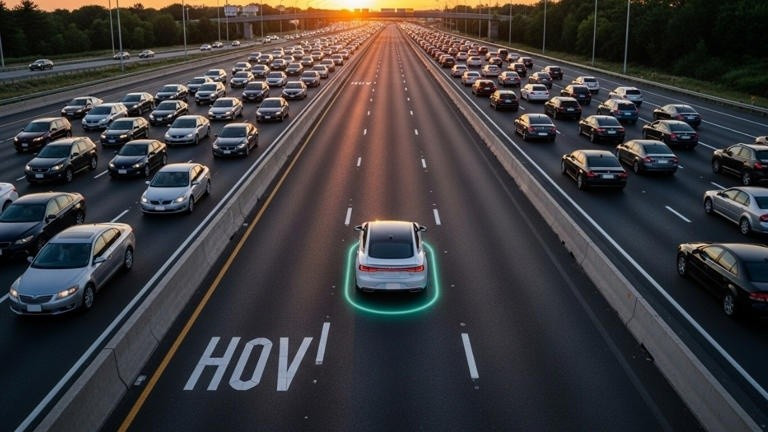
      As of October 1, 2025, electric, plug-in hybrid, and hydrogen fuel cell vehicles in California will lose their ability to use carpool (HOV) lanes when driving solo, as well as associated toll discounts, due to the expiration of the Clean Air Vehicle (CAV) decal program, which the federal government failed to reauthorize. The program had issued over 1.2 million decals since its start around 1999, with about 500,000 of them still active prior to the cutoff. The driving force behind ending the program is a “sunset” provision under Section 166 of Title 23 of the U.S. Code, which required congressional/federal approval to continue, an approval that was not granted. California officials warn that the move will remove a popular incentive for clean vehicle purchases, potentially slowing EV uptake, and will force drivers to meet the usual carpool/occupancy rules or else face fines. 

      Sources: Reuters, KQED, California Air Resources Board

      Key Takeaways

      – The Clean Air Vehicle decal program, which let certain clean-fuel vehicles use carpool lanes solo and enjoy toll perks in California (and a similar provision in New York), will end on Sept 30, 2025, because federal authorization was not renewed.

      – Roughly 500,000 active decaled vehicles will be affected — losing time savings, toll discounts, and a commuting incentive many cited as part of their justification for buying EVs or hybrids.

      – Officials warn that ending this incentive may slow EV adoption momentum and undermine environmental goals; alternative incentives or policy mechanisms may be needed to compensate.

      In-Depth

      The impending end of solo carpool lane access for clean-fuel vehicles in California and New York marks a significant shift in how states reward environmentally friendly vehicle choices—and shows how dependent many incentive programs are on continued federal approval.

      Since 1999, California’s Clean Air Vehicle (CAV) program has allowed qualifying electric, plug-in hybrid, and hydrogen fuel cell vehicles to use high-occupancy vehicle (HOV) or carpool lanes even when driven by a single occupant. For many EV owners and prospective buyers, this wasn’t just a convenience—it was a strong incentive to make the switch away from traditional internal combustion engine vehicles. 

      However, under Section 166 of Title 23 of the U.S. Code, the program’s extension required federal reauthorization. That reauthorization didn’t come, which means that on October 1, 2025, all active CAV decals will expire, and solo EV drivers will no longer be able to use carpool lanes without meeting the usual occupancy rules. There’s no grace period. California’s DMV stopped accepting new or replacement decal applications as of August 29, 2025. 

      What’s more, it’s not just an inconvenience. For many drivers, using the carpool lane meant drastically shorter travel times, reduced congestion, and often cheaper tolls in places where discounts applied. Removing that benefit could change commuting behavior, increase traffic congestion in general-purpose lanes, and reduce the relative appeal of buying clean vehicles. Some state officials argue the environmental return on the program is decreasing because as more clean vehicles populate the roads, the incremental benefit of giving them solo access to carpool lanes shrinks—but the incentive value to consumers remains. 

      States that used the program as part of broader EV adoption strategies now face a gap. With classified major incentive mechanisms—tax credits, rebates, fast-lane access—either expiring or being trimmed, EV adoption could slow unless new policies are crafted. Policymakers may need to explore refined benefits, such as limiting solo lane access to the cleanest vehicles (fully battery electric), restricting the benefit to off-peak hours, or offering other non-federal incentives to fill the void. Otherwise, what was once a free perk may turn into a sorely missed reason people chose EVs in the first place.

      In the end, the change underlines how entwined environmental policy, infrastructure law, and federal-state cooperation are. Incentives are powerful—but if they depend on temporary authorizations, their loss can ripple through consumer behavior, traffic patterns, and state strategies for reducing emissions. As California, New York, and other states adjust, it’s possible we’ll see new incentives arise—but for many current clean vehicle owners, October 1 will mean losing a much-loved lane.

      Share. Facebook Twitter Pinterest LinkedIn Tumblr Email
      Previous ArticleFCC Moves to Revoke Recognition of Seven Chinese Labs Over Security Concerns
      Next Article FICO Unveils Trust-Scored Foundation Models to Curb AI Risk in Financial Services

      Related Posts

      U.S. Biotechs Turn to Secrecy as China Accelerates Drug Development Race

      July 16, 2026

      Fiat Bets on Tiny EV as Affordable Transportation Returns to the Spotlight

      July 15, 2026

      Personalized UVB Device Promises Vitamin D Benefits While Raising Questions About Medicalizing Everyday Health

      July 15, 2026

      Meta Patent Ignites Fresh Fears Over AI-Powered Emotional Surveillance

      July 14, 2026
      Add A Comment
      Leave A Reply Cancel Reply

      Editors Picks

      U.S. Biotechs Turn to Secrecy as China Accelerates Drug Development Race

      July 16, 2026

      Fiat Bets on Tiny EV as Affordable Transportation Returns to the Spotlight

      July 15, 2026

      Personalized UVB Device Promises Vitamin D Benefits While Raising Questions About Medicalizing Everyday Health

      July 15, 2026

      Meta Patent Ignites Fresh Fears Over AI-Powered Emotional Surveillance

      July 14, 2026
      Popular Topics
      Software Tesla Cybertruck SpaceX Series A starlink Startup UAE Tech Stocks trending Satya Nadella Taiwan Tech Viral Samsung spotlight Series B Tesla Sundar Pichai Satellite Tim Cook Space
      Major Tech Companies
      • Apple News
      • Google News
      • Meta News
      • Microsoft News
      • Amazon News
      • Samsung News
      • Nvidia News
      • OpenAI News
      • Tesla News
      • AMD News
      • Anthropic News
      • Elbit News
      AI & Emerging Tech
      • AI Regulation News
      • AI Safety News
      • AI Adoption
      • Quantum Computing News
      • Robotics News
      Key People
      • Sam Altman News
      • Jensen Huang News
      • Elon Musk News
      • Mark Zuckerberg News
      • Sundar Pichai News
      • Tim Cook News
      • Satya Nadella News
      • Mustafa Suleyman News
      Global Tech & Policy
      • Israel Tech News
      • India Tech News
      • Taiwan Tech News
      • UAE Tech News
      Startups & Emerging Tech
      • Series A News
      • Series B News
      • Startup News
      Tallwire
      Facebook X (Twitter) LinkedIn Threads Instagram RSS
      • Tech
      • Entertainment
      • Business
      • Government
      • Academia
      • Transportation
      • Legal
      • Press Kit
      © 2026 Tallwire. Optimized by ARMOUR Digital Marketing Agency.

      Type above and press Enter to search. Press Esc to cancel.