

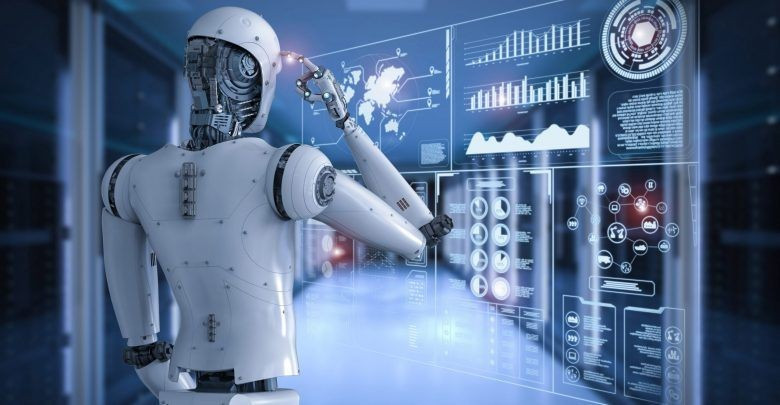
Japan’s industrial manufacturing giant is making a major bet on the future of artificial intelligence by partnering with Nvidia and several technology leaders to establish a new physical AI development center in Silicon Valley. The initiative is focused on merging advanced robotics with real-world AI applications, particularly in healthcare, elder care, mobility, and industrial automation. Located in San Jose, the center reflects a growing shift away from purely digital AI models and toward systems that can physically interact with the world through machines, sensors, and autonomous decision-making. The effort comes as Western and Asian technology firms race to dominate next-generation robotics, an industry increasingly viewed as essential to addressing labor shortages, aging populations, and future economic competitiveness. The partnership also highlights how manufacturing powerhouses are seeking to leverage American AI innovation while expanding practical, real-world applications beyond the chatbot and software sectors that have dominated recent headlines.
Sources
- https://www.reuters.com/world/asia-pacific/kawasaki-heavy-nvidia-plan-silicon-valley-robotics-center-nikkei-reports-2026-05-21
- https://www.engineering.com/kawasaki-opens-silicon-valley-hub-for-physical-ai/
- https://asiatimes.com/2026/05/kawasaki-heavy-industries-opens-physical-ai-center-in-silicon-valley/
- https://www.digitimes.com/news/a20260525PR204/kawasaki-nvidia-silicon-valley-manufacturing-healthcare.html
Key Takeaways
- The new San Jose-based development center signals a significant move toward “physical AI,” where artificial intelligence controls and enhances machines operating in real-world environments rather than remaining confined to software applications.
- Healthcare, elder care, mobility systems, and advanced robotics are expected to be the first sectors targeted, reflecting growing concerns about labor shortages and demographic challenges in developed nations.
- The partnership demonstrates that the global AI race is increasingly becoming a competition over industrial capability and automation infrastructure, not merely consumer-facing AI products and language models.
In-Depth
For years, much of the public conversation surrounding artificial intelligence has focused on chatbots, content generation, and digital productivity tools. What is emerging in Silicon Valley, however, represents something potentially far more transformative. The collaboration between Kawasaki, Nvidia, and other technology firms is aimed at bringing AI into the physical world, where machines can perceive, analyze, and act in real-time environments.
This matters because advanced economies face mounting labor shortages, rising healthcare demands, and growing pressure to maintain productivity despite aging populations. Robotics powered by sophisticated AI offers a potential answer to those challenges. Rather than replacing every worker, the technology is increasingly being developed to augment human capabilities, handle repetitive tasks, and perform duties that are physically difficult or dangerous.
From a conservative perspective, the development is also notable because it emphasizes tangible industrial advancement over speculative digital trends. Manufacturing, engineering, infrastructure, and healthcare are sectors that generate measurable economic value and national strength. By focusing on robotics and real-world applications, the partnership reflects a recognition that long-term prosperity depends on productive capacity rather than purely virtual innovation.
The establishment of the San Jose center further underscores Silicon Valley’s continued role as the global nexus of technological development. Even as nations compete aggressively for AI leadership, the United States remains the primary destination where advanced computing, venture capital, engineering talent, and industrial partnerships converge to shape the next generation of economic and technological power.