

Close Menu

    Subscribe to Updates

    Get the latest creative news from FooBar about art, design and business.

    What's Hot

    DeSantis Pushes Aggressive State AI Regulation With AI Bill of Rights and Data Center Limits

    February 9, 2026

    Lawmakers, Parents Renew Push To Sunset Section 230 And Make Big Tech Liable

    February 9, 2026

    Slovenia Proposes Ban On Social Media For Under-15s Amid Growing Global Push

    February 8, 2026
    Facebook X (Twitter) Instagram
    • Tech
    • AI News
    • Get In Touch
    Facebook X (Twitter) LinkedIn
    TallwireTallwire
    • Tech

      Lawmakers, Parents Renew Push To Sunset Section 230 And Make Big Tech Liable

      February 9, 2026

      NASA Clears Smartphones for Artemis Moon Mission

      February 7, 2026

      SpaceX Acquires xAI in Record-Setting Merger, Pivots Toward Space-Based AI Data Centers

      February 7, 2026

      Iran’s Government Blackout of the Internet Amid Protests Stifles Communication and Masks Violence

      February 6, 2026

      Israeli Aerospace Startup Unveils Heavy-Lift Cargo Drone at Singapore Airshow

      February 6, 2026
    • AI News

      DeSantis Pushes Aggressive State AI Regulation With AI Bill of Rights and Data Center Limits

      February 9, 2026

      EU Drove Global Censorship Through Tech Platforms: House Judiciary Report

      February 8, 2026

      China’s Porn Spam Tactic on X Draws Red Flags Over Digital Censorship

      February 8, 2026

      Amazon Begins Closed Beta Testing of AI Tools to Reshape Film and TV Production

      February 8, 2026

      European University Offline for Days After Major Cyberattack Disrupts Systems

      February 7, 2026
    • Security

      EU Drove Global Censorship Through Tech Platforms: House Judiciary Report

      February 8, 2026

      Slovenia Proposes Ban On Social Media For Under-15s Amid Growing Global Push

      February 8, 2026

      NSW Moves to Make Employers Liable for AI and Digital System Harms Under Work Safety Law

      February 8, 2026

      Hackers Dump Millions of Harvard and UPenn Records After Refused Ransom Demands

      February 8, 2026

      European University Offline for Days After Major Cyberattack Disrupts Systems

      February 7, 2026
    • Health

      AI Technology Offers Early Warning System for Deadly Coral Bleaching

      February 6, 2026

      Israel’s New Soreq B Desalination Plant Reaches Full Operational Capacity Boosting Water Supply

      February 3, 2026

      Institutions Are Missing AI’s Potential For Drug Discovery, Experts Say

      February 2, 2026

      Landmark Legal Battles Ignite Over Alleged Social Media Addiction Impacting Youth and Schools

      February 1, 2026

      OpenAI Deploys Free AI-Powered Scientific Workspace Prism to Reshape Research

      January 31, 2026
    • Science

      Pacific Fusion Advances Cheaper Path to Fusion Through Sandia Reactor Experiments

      February 8, 2026

      Trump’s Critical Minerals Reserve Signals U.S. Adapts to Electric Future Amid China Competition

      February 7, 2026

      NASA Clears Smartphones for Artemis Moon Mission

      February 7, 2026

      Elon Musk Pushes Forward With Orbital Data Center Ambitions

      February 7, 2026

      AI Technology Offers Early Warning System for Deadly Coral Bleaching

      February 6, 2026
    • People

      Google Co-Founder’s Epstein Contacts Reignite Scrutiny of Elite Tech Circles

      February 7, 2026

      Bill Gates Denies “Absolutely Absurd” Claims in Newly Released Epstein Files

      February 6, 2026

      Informant Claims Epstein Employed Personal Hacker With Zero-Day Skills

      February 5, 2026

      Starlink Becomes Critical Internet Lifeline Amid Iran Protest Crackdown

      January 25, 2026

      Musk Pledges to Open-Source X’s Recommendation Algorithm, Promising Transparency

      January 21, 2026
    TallwireTallwire
    Home»Tech»Satellites Rapidly Degrading Hubble’s Cosmic View, Study Warns
    Tech

    Satellites Rapidly Degrading Hubble’s Cosmic View, Study Warns

    4 Mins Read
    Facebook Twitter Pinterest LinkedIn Tumblr Email
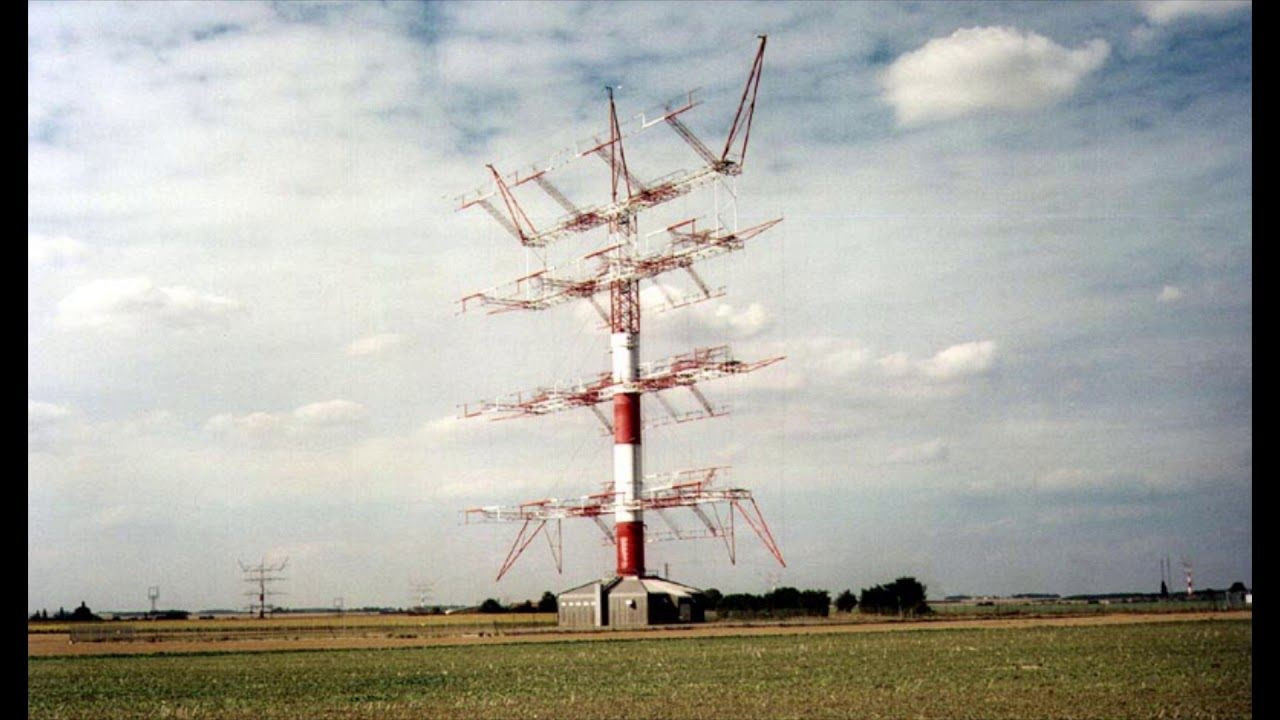
    Russia’s 'Buzzer' Broadcasts Fuel Nuclear Anxiety Amid Cold-War Echoes
    Russia’s 'Buzzer' Broadcasts Fuel Nuclear Anxiety Amid Cold-War Echoes
    Share
    Facebook Twitter LinkedIn Pinterest Email

    A new study from NASA, highlighted by science outlets, reveals that the explosion of satellite megaconstellations is rapidly undermining the imaging capabilities of even space-based telescopes such as the Hubble Space Telescope. Observations between 2018–2021 showed about 4.3 percent of Hubble images were marred by satellite trails. But with satellite numbers rising steeply — from ~5,000 in 2019 to more than 15,800 today — projections suggest nearly 40 percent of future Hubble images could be contaminated, and as much as 96 percent of images from several other telescopes may also be compromised. The interference stems from bright sunlight reflecting off satellites, which leaves streaks and “photobombs” in telescope photographs, obscuring faint celestial objects and jeopardizing key tasks like exoplanet detection and asteroid tracking. The authors urge coordinated policy and design changes — darker satellites, smarter orbital placement, and scheduling observations to avoid interference — to salvage the clarity of space imagery.

    Sources: Financial Times, Reuters

    Key Takeaways

    – Satellite megaconstellations are likely to corrupt up to 40 % of images from Hubble and ~96 % from several other Earth-orbiting telescopes by the 2030s.

    – The root cause is reflected sunlight from low-Earth-orbit satellites, which leaves bright streaks that obscure faint cosmic objects and disrupt critical astronomical research.

    – Mitigation will require cooperation across the public and private sector: less-reflective satellite design, coordinated orbital planning, and regulated launch schedules to balance connectivity ambitions with scientific integrity.

    In-Depth

    For decades, the Hubble Space Telescope (HST) has served as humanity’s window into the farthest reaches of the universe: discovering distant galaxies, observing planetary formation, and even identifying the farthest-known stars. Its strength lies in orbiting above Earth’s atmosphere — avoiding atmospheric distortion and ground-based light pollution — yet a new threat is rapidly encroaching from a direction few anticipated: low-Earth orbit satellites.

    A recent NASA-led study (published in Nature and covered widely) reveals that satellite trails are already appearing in Hubble images — about 4.3 percent of exposures between 2018 and 2021 showed interference. That number might seem modest, but the rate of satellite deployment has accelerated dramatically. In 2019 there were approximately 5,000 active satellites orbiting Earth; by late 2025 that figure had tripled to over 15,800, and satellite operators worldwide plan to launch many tens or even hundreds of thousands more in the coming decade.

    If current trajectories continue unaltered, the consequences for astronomy could be dire. The models from the study forecast that around 40 percent of all Hubble exposures might include at least one satellite trail. For other telescopes — including some new or planned space-based observatories — contamination rates could reach 96 percent. This isn’t merely a cosmetic nuisance: each streak can obliterate or distort faint signals from distant objects, making it far harder to detect subtle cosmic features such as exoplanet transits, distant galaxies, or near-Earth asteroids.

    Why is this happening? Many of the new satellites are part of megaconstellations launched for global broadband coverage. Operating in low Earth orbit (LEO) makes them fast and efficient for communications — but also ensures they regularly cross the fields of view of space- and ground-based telescopes. When these satellites reflect sunlight — even dimly — they appear as bright, moving streaks across telescope detectors, effectively “photobombing” whatever the telescope was focused on.

    The study’s authors make clear that continuing along this path endangers the future of deep-space astronomy. But there are mitigation strategies, if industry and policymakers act quickly: designing satellites with darker, low-reflectivity surfaces; coordinating satellite orbits to minimize overlap with critical telescope trajectories; and scheduling observations during times or orbital configurations less likely to intersect satellites. However, preliminary attempts to darken satellites have encountered trade-offs, such as increased heating or infrared emissions, complicating the technical feasibility.

    Ultimately, this is more than a technical nuisance — it’s a systemic clash between commercial interests and scientific heritage. The erupting boom in space-based internet infrastructure promises global connectivity, but at a growing cost to humanity’s ability to observe the universe. Unless satellite operators, space agencies, and regulators cooperate to treat low-Earth orbit as a shared resource — a “global commons” for both commerce and science — the night sky may soon belong only to satellites, not stars.

    Share. Facebook Twitter Pinterest LinkedIn Tumblr Email
    Previous ArticleSatellite-AI Drives Major Lithium Find in Quebec
    Next Article Scientists Say Humans Likely Have Far More Than Five Senses, Possibly 30-Plus

    Related Posts

    Lawmakers, Parents Renew Push To Sunset Section 230 And Make Big Tech Liable

    February 9, 2026

    NASA Clears Smartphones for Artemis Moon Mission

    February 7, 2026

    SpaceX Acquires xAI in Record-Setting Merger, Pivots Toward Space-Based AI Data Centers

    February 7, 2026

    Iran’s Government Blackout of the Internet Amid Protests Stifles Communication and Masks Violence

    February 6, 2026
    Add A Comment
    Leave A Reply Cancel Reply

    Editors Picks

    Lawmakers, Parents Renew Push To Sunset Section 230 And Make Big Tech Liable

    February 9, 2026

    NASA Clears Smartphones for Artemis Moon Mission

    February 7, 2026

    SpaceX Acquires xAI in Record-Setting Merger, Pivots Toward Space-Based AI Data Centers

    February 7, 2026

    Iran’s Government Blackout of the Internet Amid Protests Stifles Communication and Masks Violence

    February 6, 2026
    Top Reviews
    Tallwire
    Facebook X (Twitter) LinkedIn Threads Instagram RSS
    • Tech
    • Entertainment
    • Business
    • Government
    • Academia
    • Transportation
    • Legal
    • Press Kit
    © 2026 Tallwire. Optimized by ARMOUR Digital Marketing Agency.

    Type above and press Enter to search. Press Esc to cancel.