

Close Menu

    Subscribe to Updates

    Get the latest tech news from Tallwire.

      What's Hot

      U.S. Biotechs Turn to Secrecy as China Accelerates Drug Development Race

      July 16, 2026

      AI Chatbots Face Growing Scrutiny as Mental Health Risks Draw Medical Alarm

      July 16, 2026

      Record Industry Pushes for AI Labels on Streaming Music

      July 15, 2026
      Facebook X (Twitter) Instagram
      • Tech
      • AI
      • Get In Touch
      Facebook X (Twitter) LinkedIn
      TallwireTallwire
      • Tech

        U.S. Biotechs Turn to Secrecy as China Accelerates Drug Development Race

        July 16, 2026

        Fiat Bets on Tiny EV as Affordable Transportation Returns to the Spotlight

        July 15, 2026

        Personalized UVB Device Promises Vitamin D Benefits While Raising Questions About Medicalizing Everyday Health

        July 15, 2026

        Meta Patent Ignites Fresh Fears Over AI-Powered Emotional Surveillance

        July 14, 2026

        AI Protesters March on Silicon Valley Giants Demanding Development Freeze

        July 14, 2026
      • AI

        AI Chatbots Face Growing Scrutiny as Mental Health Risks Draw Medical Alarm

        July 16, 2026

        U.S. Biotechs Turn to Secrecy as China Accelerates Drug Development Race

        July 16, 2026

        Record Industry Pushes for AI Labels on Streaming Music

        July 15, 2026

        AI Chatbots Increasingly Clash With Eating Disorder Treatment

        July 15, 2026

        Anthropic Doubles Down on New York as AI Talent War Intensifies

        July 15, 2026
      • Security

        China’s AI Distillation Campaign Raises New Concerns Over U.S. Technology Security

        July 13, 2026

        AI Tools Increasingly Exploited by Terrorist Organizations, New Research Finds

        July 13, 2026

        Pentagon Expands Engineering Recruitment to Restore America’s Military Technology Edge

        July 13, 2026

        EU Lawmakers Advance Controversial Private Message Scanning Measure Despite Mounting Privacy Concerns

        July 12, 2026

        Scramble Intensifies to Secure America Against Emerging AI National Security Threats

        July 12, 2026
      • Health

        AI Chatbots Face Growing Scrutiny as Mental Health Risks Draw Medical Alarm

        July 16, 2026

        AI Chatbots Increasingly Clash With Eating Disorder Treatment

        July 15, 2026

        Personalized UVB Device Promises Vitamin D Benefits While Raising Questions About Medicalizing Everyday Health

        July 15, 2026

        Humanoid Robots Complete First Live Surgical Procedures in Medical Milestone

        July 14, 2026

        Meta Patent Ignites Fresh Fears Over AI-Powered Emotional Surveillance

        July 14, 2026
      • Science

        AI Chatbots Face Growing Scrutiny as Mental Health Risks Draw Medical Alarm

        July 16, 2026

        U.S. Biotechs Turn to Secrecy as China Accelerates Drug Development Race

        July 16, 2026

        Scientists Advance “StormWall” Concept to Defend Earth from Catastrophic Solar Storms

        July 15, 2026

        Personalized UVB Device Promises Vitamin D Benefits While Raising Questions About Medicalizing Everyday Health

        July 15, 2026

        Humanoid Robots Complete First Live Surgical Procedures in Medical Milestone

        July 14, 2026
      • Tech

        AI Protesters March on Silicon Valley Giants Demanding Development Freeze

        July 14, 2026

        Palo Alto Networks CEO Warns AI Costs Must Plunge Before Enterprise Adoption Can Accelerate

        July 14, 2026

        DeepMind Unionization Effort Encounters Early Resistance as Labor Talks Stall

        July 11, 2026

        Always-On Workplace Culture Pushes Employees Toward the Breaking Point

        July 10, 2026

        High-Income Families Embrace AI-Driven Schools as Alternative Education Expands

        July 9, 2026
      TallwireTallwire
      Home»Tech»Scientists 3D-Print Artificial Skin with Built-in Blood Vessel Network
      Tech

      Scientists 3D-Print Artificial Skin with Built-in Blood Vessel Network

      Updated:December 25, 20254 Mins Read
      Facebook Twitter Pinterest LinkedIn Tumblr Email
      Scientists 3D-Print Artificial Skin with Built-in Blood Vessel Network
      Scientists 3D-Print Artificial Skin with Built-in Blood Vessel Network
      Share
      Facebook Twitter LinkedIn Pinterest Email

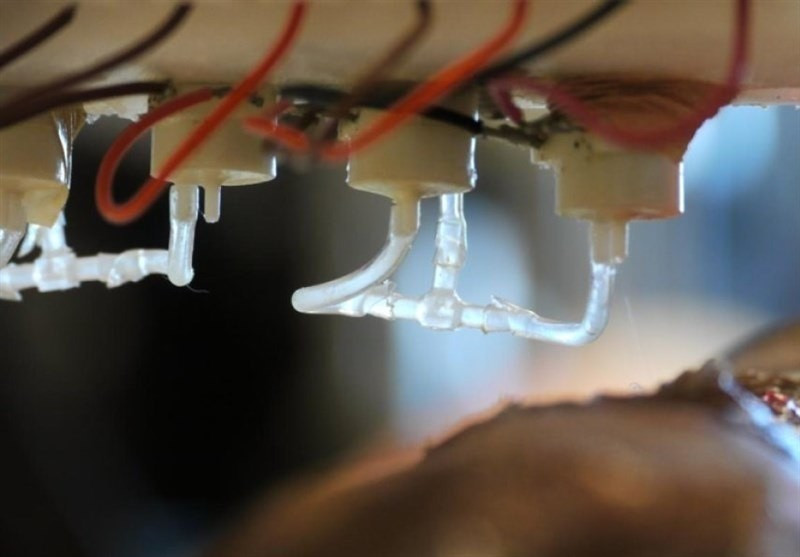
      Swedish researchers from Linköping University have unveiled two cutting-edge 3D bioprinting technologies that generate artificial skin capable of supporting bloodflow, a milestone in regenerative medicine. The team developed a bio-ink dubbed “μInk,” which suspends fibroblasts (cells that build up connective tissue) on gelatin microspheres within a hyaluronic acid gel, and used it to print thick, cell-dense skin tissue. In mice, this printed tissue not only grew living cells producing collagen and other dermal components, but also developed new blood vessels. The second technology—REFRESH (Rerouting of Free-Floating Suspended Hydrogel Filaments)—constructs hydrogel threads that act as temporary scaffolds: they can be tied, braided, maintain shape memory, and later be dissolved enzymatically to leave behind channels that mimic blood vessels. While there’s promise, challenges like infection risk, immune response, and scaling to human use remain. 

      Sources: Linköping University, Wired, TechSpot

      Key Takeaways

      – The integration of vascularization (i.e. forming blood vessel networks) into artificial skin is a significant leap forward: without it, thicker skin constructs fail to deliver oxygen/nutrients to all cells, and central areas die off.

      – The two technologies developed—μInk and REFRESH—play complementary roles: μInk provides dense, living dermal tissue; REFRESH makes customizable vessel-like channels that can later be removed to allow bloodflow.

      – Moving from animal models to safe, effective human clinical applications is a non-trivial path: immune reactions, infection, mechanical stability, full integration (with nerves, appendages, etc.), and manufacturing at scale are obstacles still to be addressed.

      In-Depth

      Regenerative medicine has long grappled with the difficulty of recreating full-functioning skin—not just its superficial layer, but the deeper dermis, replete with blood vessels and the complex support structures that make skin a living, responsive organ.

      Severely burned or traumatically injured patients often receive grafts that restore the epidermis, but the lack of proper dermal regeneration means persistent scarring, loss of function, and cosmetic issues. A promising fresh front in this struggle has arrived courtesy of researchers at Linköping University in Sweden, who have successfully demonstrated that artificial skin can be printed with built-in capacity for vascularization—an achievement that may change how serious skin injuries are treated.

      Two distinct but complementary technologies lie at the heart of this advance. First is μInk, a bio-ink that uses fibroblasts seeded on spongy gelatin spheres and held within a hyaluronic acid gel. Fibroblasts are critical: they produce collagen, elastin, hyaluronic acid—all the building blocks of the dermis. Using μInk and 3D printing, the team constructed skin-like tissues densely packed with living cells; when transplanted into mice, these constructs produced collagen and reassembled meaningful dermal structure, with new blood vessels growing in. The second technology, REFRESH, focuses more directly on vascular architecture. It prints hydrogel filaments that can be shaped (knots, braids, etc.), hold form under stress, and later be enzymatically removed, leaving voids that act like channels. These become templates for capillary networks when integrated into tissue.

      Together, μInk and REFRESH offer a path toward artificial skin that does more than cover wounds—it can potentially replace lost dermis, support blood flow, enable nutrition and oxygen delivery throughout the tissue, thus making the graft more robust, healthier, and more functional. But the road ahead is still long. Experiments in mice are promising but do not fully mimic the human immune system, infection risk, or the mechanical stresses skin undergoes in real life. Scaling up—both in size of grafts and production processes—will also be challenging. Moreover, integrating nerves, hair follicles, pigment, and other skin features remains a hurdle. Finally, regulatory, ethical, and cost barriers will shape how fast such technology reaches patients.

      This is one of those rare scientific achievements that seems less like speculative science fiction and more like the beginning of viable clinical translation. If the remaining technical and safety challenges can be solved, we may be moving toward grafts that restore both form and function far better than what’s possible today.

      Share. Facebook Twitter Pinterest LinkedIn Tumblr Email
      Previous ArticleScattered Spider Targets Browsers in Rising Cyber Threats
      Next Article Scientists Back Off the Hype: Growing AI Skepticism in Research Ranks

      Related Posts

      U.S. Biotechs Turn to Secrecy as China Accelerates Drug Development Race

      July 16, 2026

      Fiat Bets on Tiny EV as Affordable Transportation Returns to the Spotlight

      July 15, 2026

      Personalized UVB Device Promises Vitamin D Benefits While Raising Questions About Medicalizing Everyday Health

      July 15, 2026

      Meta Patent Ignites Fresh Fears Over AI-Powered Emotional Surveillance

      July 14, 2026
      Add A Comment
      Leave A Reply Cancel Reply

      Editors Picks

      U.S. Biotechs Turn to Secrecy as China Accelerates Drug Development Race

      July 16, 2026

      Fiat Bets on Tiny EV as Affordable Transportation Returns to the Spotlight

      July 15, 2026

      Personalized UVB Device Promises Vitamin D Benefits While Raising Questions About Medicalizing Everyday Health

      July 15, 2026

      Meta Patent Ignites Fresh Fears Over AI-Powered Emotional Surveillance

      July 14, 2026
      Popular Topics
      Satya Nadella spotlight Space Viral starlink Samsung Startup Taiwan Tech Software SpaceX Tesla Cybertruck Stocks Tesla UAE Tech Series A Tim Cook Series B Satellite trending Sundar Pichai
      Major Tech Companies
      • Apple News
      • Google News
      • Meta News
      • Microsoft News
      • Amazon News
      • Samsung News
      • Nvidia News
      • OpenAI News
      • Tesla News
      • AMD News
      • Anthropic News
      • Elbit News
      AI & Emerging Tech
      • AI Regulation News
      • AI Safety News
      • AI Adoption
      • Quantum Computing News
      • Robotics News
      Key People
      • Sam Altman News
      • Jensen Huang News
      • Elon Musk News
      • Mark Zuckerberg News
      • Sundar Pichai News
      • Tim Cook News
      • Satya Nadella News
      • Mustafa Suleyman News
      Global Tech & Policy
      • Israel Tech News
      • India Tech News
      • Taiwan Tech News
      • UAE Tech News
      Startups & Emerging Tech
      • Series A News
      • Series B News
      • Startup News
      Tallwire
      Facebook X (Twitter) LinkedIn Threads Instagram RSS
      • Tech
      • Entertainment
      • Business
      • Government
      • Academia
      • Transportation
      • Legal
      • Press Kit
      © 2026 Tallwire. Optimized by ARMOUR Digital Marketing Agency.

      Type above and press Enter to search. Press Esc to cancel.