

Close Menu

    Subscribe to Updates

    Get the latest tech news from Tallwire.

      What's Hot

      Artemis II Splashdown Signals A Step Closer to Mass Space Travel

      April 12, 2026

      Anthropic Code Leak Raises Questions About AI Security and Industry Oversight

      April 8, 2026

      NASA Astronauts Use iPhones to Capture Historic Artemis II Mission Images

      April 8, 2026
      Facebook X (Twitter) Instagram
      • Tech
      • AI
      • Get In Touch
      Facebook X (Twitter) LinkedIn
      TallwireTallwire
      • Tech

        NASA Astronauts Use iPhones to Capture Historic Artemis II Mission Images

        April 8, 2026

        OpenAI Expands Influence With Strategic TBPN Media Acquisition

        April 8, 2026

        Cybersecurity Veteran Turns Focus To Drone Hacking After Decades Battling Malware

        April 6, 2026

        Anonymous Social App Surges In Saudi Arabia, Testing Limits Of Digital Freedom

        April 6, 2026

        Peter Thiel’s Bold Ag-Tech Gamble Signals High-Tech Disruption of Traditional Ranching

        April 6, 2026
      • AI

        Anthropic Code Leak Raises Questions About AI Security and Industry Oversight

        April 8, 2026

        The Rise Of Agentic AI Signals A Shift From Tools To Autonomous Digital Actors

        April 8, 2026

        AI Chatbots Draw Scrutiny As Teens Engage In Intimate Roleplay And Emotional Dependency

        April 8, 2026

        Ai-Powered Startup Signals Rise Of One-Person Billion-Dollar Companies

        April 8, 2026

        OpenAI Secures Historic $122 Billion Funding Round at $852 Billion Valuation

        April 7, 2026
      • Security

        Anthropic Code Leak Raises Questions About AI Security and Industry Oversight

        April 8, 2026

        DeFi Platform Drift Halts Operations After Multi-Million Dollar Crypto Hack

        April 7, 2026

        Fake WhatsApp App Exposes Users To Government Spyware Operation

        April 7, 2026

        ICE Deploys Controversial Spyware Tool In Drug Trafficking Investigations

        April 7, 2026

        Telehealth Firm Discloses Breach Amid Rising Digital Health Vulnerabilities

        April 6, 2026
      • Health

        European Crackdown Targets Social Media’s Impact on Children

        April 8, 2026

        AI Chatbots Draw Scrutiny As Teens Engage In Intimate Roleplay And Emotional Dependency

        April 8, 2026

        Australia Moves To Curb Social Media Addiction Among Youth With Expanded Under-16 Ban

        April 5, 2026

        Australia’s eSafety Regulator Warns Big Tech As Teens Circumvent Social Media Restrictions

        April 5, 2026

        Meta Finally Held Accountable For Harming Teens, But Real Reform Remains Uncertain

        April 2, 2026
      • Science

        Artemis II Splashdown Signals A Step Closer to Mass Space Travel

        April 12, 2026

        Peter Thiel’s Bold Ag-Tech Gamble Signals High-Tech Disruption of Traditional Ranching

        April 6, 2026

        White House Tech Advisor David Sacks Steps Down To Lead Presidential Science Advisory

        March 31, 2026

        Blue Origin’s Orbital Data Center Push Signals New Frontier in Tech Infrastructure

        March 27, 2026

        Quantum Cryptography Pioneers Awarded Computing’s Highest Honor

        March 25, 2026
      • Tech

        Peter Thiel’s Bold Ag-Tech Gamble Signals High-Tech Disruption of Traditional Ranching

        April 6, 2026

        Zuckerberg Quietly Offers Musk Support As Tech Titans Align Around Government Power

        April 4, 2026

        White House Tech Advisor David Sacks Steps Down To Lead Presidential Science Advisory

        March 31, 2026

        Another Billionaire Signals Exit As California’s Taxes Drives Out High-Profile Entrepreneurs

        March 28, 2026

        Bezos Eyes $100 Billion War Chest To Rewire Legacy Industry With AI

        March 28, 2026
      TallwireTallwire
      Home»Tech»Self-Replicating ‘Shai-Hulud’ Worm Ravages Open-Source Ecosystem via NPM Supply Chain Attack
      Tech

      Self-Replicating ‘Shai-Hulud’ Worm Ravages Open-Source Ecosystem via NPM Supply Chain Attack

      Updated:March 21, 20265 Mins Read
      Facebook Twitter Pinterest LinkedIn Tumblr Email
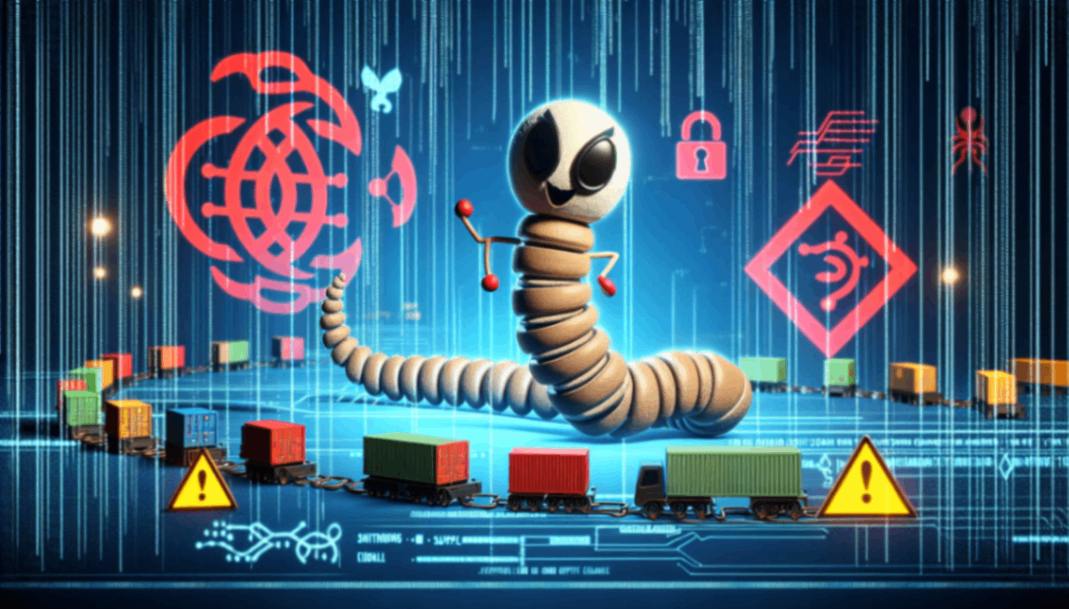
      Self-Replicating 'Shai-Hulud' Worm Ravages Open-Source Ecosystem via NPM Supply Chain Attack
      Self-Replicating 'Shai-Hulud' Worm Ravages Open-Source Ecosystem via NPM Supply Chain Attack
      Share
      Facebook Twitter LinkedIn Pinterest Email

      A newly uncovered self-replicating worm named Shai-Hulud has infiltrated the Node Package Manager (npm) ecosystem, compromising hundreds of JavaScript packages by harvesting credentials and autonomously propagating itself across maintainers’ codebases. Security researchers from ReversingLabs, Dark Reading, Unit42, Sonatype, and others report the worm spreads by hijacking developer accounts, injecting post-install scripts that steal tokens (npm, GitHub, cloud credentials) and then poisoning additional packages downstream. Depending on the researcher, estimates of affected packages range from ~180 to over 500, with some versions already removed or remediated. The Worm’s ability to autonomously spread marks an evolution in supply chain attacks, prompting calls for sweeping credential rotation, dependency auditing, and architectural shifts away from static secrets. 

      Sources: Unit 42, Sonatype

      Key Takeaways

      – The Shai-Hulud worm is a self-replicating supply chain attack, able to propagate itself across npm packages by abusing stolen credentials.

      – The scale of the compromise is unprecedented in the ecosystem, with estimates of impacted packages stretching from ~180 to over 500 distinct modules/versions.

      – Defending against this attack requires more than patching: approaches like revoking keys, auditing dependencies, enforcing least privilege, and moving toward ephemeral identity models are critical.

      In-Depth

      It’s hard to overstate how significant the emergence of the Shai-Hulud worm is in the context of software security. Over the years, we’ve seen supply chain attacks—malicious code hidden in trusted dependencies—but never one that automatically and autonomously spreads itself by leveraging stolen credentials. In effect, Shai-Hulud is a malware that treats the npm registry as its digestive tract, infiltrating code, sucking up secrets, and branching outward to new packages in an automated cascade. What used to require human orchestration now happens algorithmically.

      Researchers first noticed anomalous behavior around September 15, 2025. ReversingLabs called it “the first self-replicating worm compromising npm packages” and flagged the technique: once a package is infected, the worm’s payload (often a bundle.js script invoked in post-install) will run TruffleHog-like secret scanning to seek out tokens, cloud credentials, and GitHub keys. With those in hand, it writes malicious workflows or makes use of npm publishing access to poison additional projects. Dark Reading and others confirm that the worm is especially dangerous because it doesn’t wait for human direction once installed; it worms itself further, quietly and persistently. 

      Estimates on how many packages were affected vary. Some researchers reported around 187 compromised modules in the early wave, including modules linked to CrowdStrike, though later analysis suggests the number may exceed 500 distinct versions or modules. Sonatype, which monitors package integrity, points to over 180 currently known affected packages, and warns that the list may continue growing. Palo Alto’s Unit42 observed that the worm may even have been bootstrapped via phishing or social engineering of developer credentials. 

      What makes Shai-Hulud especially dangerous is its chaining nature. Once a developer’s machine or CI environment is compromised, the worm can re-publish poisoned versions of all packages the developer maintains, embedding the same payload. Downstream users who depend on those packages inadvertently further propagate the worm. In some cases, private repositories were made public or were migrated with “-migration” suffixes, embedding signs of tampering. In short: once inside, the worm uses trust pathways as its highways.

      Defensive responses are urgent and multifaceted. Several security teams and CISA have issued alerts urging organizations to rotate all credentials (npm tokens, GitHub PATs, SSH keys, cloud keys), audit dependency trees (especially transitive dependencies), and pin to safe package versions published prior to mid-September. Zscaler recommends identifying suspicious behavior such as the presence of bundle.js, workflows named shai-hulud-workflow.yml, or outbound traffic to known webhook endpoints. Meanwhile, GitHub announced enhancements to the npm supply chain security model: stricter authentication, more granular tokens, and tighter publishing controls aimed at restoring trust. 

      Perhaps the most strategic shift signaled by this incident is rethinking how we handle secrets and identity in automated systems. Many analysts now argue that static, long-lived credentials are the fundamental weak link. As the worm demonstrates, once a secret leaks, that secret becomes a bridge into new territory. Some voices in the security community are pushing for transient, ephemeral, least-privilege identity models in CI/CD pipelines and across non-human actors—identities that vanish when not in use, rather than standing credentials waiting to be stolen. The hope is that by making credentials ephemeral and context-scoped, malware like Shai-Hulud loses its fuel source.

      What this episode underscores is how the modernization and acceleration of software development can inadvertently widen the attack surface. Open-source dependencies are levers of productivity—but those same levers can become vectors of compromise when trust mechanisms break down. Organizations must treat supply chain security as a first-order concern: they must audit dependencies, enforce strict credential hygiene, monitor anomalous publishing activity, and adopt architectural shifts that reduce the value of any one stolen secret. Otherwise, the next worm may not just steal keys—it may reconfigure how trust flows in software ecosystems altogether.

      Open Source AI Open-Source
      Share. Facebook Twitter Pinterest LinkedIn Tumblr Email
      Previous ArticleSecurity Flaws in Carmaker’s Web Portal Expose Vehicles to Remote Hacking
      Next Article Sen. Klobuchar Pushes Tougher Deepfake Rules — Federal Law Follows

      Related Posts

      NASA Astronauts Use iPhones to Capture Historic Artemis II Mission Images

      April 8, 2026

      OpenAI Expands Influence With Strategic TBPN Media Acquisition

      April 8, 2026

      Cybersecurity Veteran Turns Focus To Drone Hacking After Decades Battling Malware

      April 6, 2026

      Anonymous Social App Surges In Saudi Arabia, Testing Limits Of Digital Freedom

      April 6, 2026
      Add A Comment
      Leave A Reply Cancel Reply

      Editors Picks

      NASA Astronauts Use iPhones to Capture Historic Artemis II Mission Images

      April 8, 2026

      OpenAI Expands Influence With Strategic TBPN Media Acquisition

      April 8, 2026

      Cybersecurity Veteran Turns Focus To Drone Hacking After Decades Battling Malware

      April 6, 2026

      Anonymous Social App Surges In Saudi Arabia, Testing Limits Of Digital Freedom

      April 6, 2026
      Popular Topics
      Satya Nadella Robotics Sundar Pichai Ransomware Taiwan Tech Quantum computing Tim Cook Software trending Tesla Series A Samsung SpaceX Tesla Cybertruck UAE Tech Sam Altman Series B spotlight Startup Viral
      Major Tech Companies
      • Apple News
      • Google News
      • Meta News
      • Microsoft News
      • Amazon News
      • Samsung News
      • Nvidia News
      • OpenAI News
      • Tesla News
      • AMD News
      • Anthropic News
      • Elbit News
      AI & Emerging Tech
      • AI Regulation News
      • AI Safety News
      • AI Adoption
      • Quantum Computing News
      • Robotics News
      Key People
      • Sam Altman News
      • Jensen Huang News
      • Elon Musk News
      • Mark Zuckerberg News
      • Sundar Pichai News
      • Tim Cook News
      • Satya Nadella News
      • Mustafa Suleyman News
      Global Tech & Policy
      • Israel Tech News
      • India Tech News
      • Taiwan Tech News
      • UAE Tech News
      Startups & Emerging Tech
      • Series A News
      • Series B News
      • Startup News
      Tallwire
      Facebook X (Twitter) LinkedIn Threads Instagram RSS
      • Tech
      • Entertainment
      • Business
      • Government
      • Academia
      • Transportation
      • Legal
      • Press Kit
      © 2026 Tallwire. Optimized by ARMOUR Digital Marketing Agency.

      Type above and press Enter to search. Press Esc to cancel.