

Close Menu

    Subscribe to Updates

    Get the latest tech news from Tallwire.

      What's Hot

      U.S. Approves Bill Gates-Backed TerraPower Reactor, Signaling Nuclear Energy Revival

      March 9, 2026

      Federal Investigators Probe Worker Death At Rivian Warehouse In Illinois

      March 9, 2026

      Nintendo Sues U.S. Government Seeking Refund For Tariffs Declared Unlawful

      March 9, 2026
      Facebook X (Twitter) Instagram
      • Tech
      • AI
      • Get In Touch
      Facebook X (Twitter) LinkedIn
      TallwireTallwire
      • Tech

        U.S. Approves Bill Gates-Backed TerraPower Reactor, Signaling Nuclear Energy Revival

        March 9, 2026

        AI War Games Reveal Chatbots Escalate Toward Nuclear Conflict

        March 8, 2026

        Nvidia Pulls Plug on China-Bound AI Chips Amid Escalating U.S.–China Tech Standoff

        March 8, 2026

        U.S. Military Deploys AI Targeting Tool in Iran Despite Government Feud With Its Creator

        March 8, 2026

        Google Accelerates Chrome Updates As AI-Driven Browser Competition Intensifies

        March 7, 2026
      • AI

        OpenAI Delays ChatGPT “Adult Mode” Again Amid Safety And Priority Concerns

        March 9, 2026

        AI Agents Overwhelm Security Firms As Automation Outpaces Defenses

        March 8, 2026

        Study Warns Artificial Intelligence Can Be Used To Fabricate Scientific Research

        March 8, 2026

        OpenAI Signals Deference to Government Authority Amid Growing AI Power Struggle

        March 8, 2026

        AI War Games Reveal Chatbots Escalate Toward Nuclear Conflict

        March 8, 2026
      • Security

        Cyberwarfare Takes Center Stage As Digital Attacks Shape The Modern Battlefield in Iran

        March 7, 2026

        Leaked Government-Grade iPhone Hacking Tools Now Power Global Cybercrime Campaign

        March 6, 2026

        International Crackdown Shutters Global Cybercrime Hub LeakBase

        March 6, 2026

        Discord Age Verification Push Sparks Search For Privacy-Focused Alternatives

        March 5, 2026

        Hacktivists Claim Breach Of Homeland Security Systems, Release ICE Contractor Data

        March 5, 2026
      • Health

        Expert Testimony Warns Social Media Is Rewiring Children’s Brains

        March 8, 2026

        Courtroom Scrutiny Grows Over Claims Instagram Tracked Usage While Pursuing Teens

        March 5, 2026

        Smartphone Use Creates A Daily “Vicious Cycle” Of Disconnection And Disengagement

        March 4, 2026

        Gaming Platforms Like Roblox Used by Crime Gangs to Groom Children, Victoria Warns

        March 4, 2026

        New AI-Generated Videos Ignite Debate Over Realism and Risks

        March 4, 2026
      • Science

        U.S. Approves Bill Gates-Backed TerraPower Reactor, Signaling Nuclear Energy Revival

        March 9, 2026

        Study Warns Artificial Intelligence Can Be Used To Fabricate Scientific Research

        March 8, 2026

        Expert Testimony Warns Social Media Is Rewiring Children’s Brains

        March 8, 2026

        Floating Data Centers Could Beat Costly Space-Based AI Infrastructure

        March 6, 2026

        CERN Turns To Artificial Intelligence To Challenge Long-Standing Physics Theories

        March 6, 2026
      • Tech

        Apple Quietly Expands Executive Bench With Three New Leaders

        March 8, 2026

        Silicon Valley’s Political Experiment Faces Internal Revolt

        March 7, 2026

        Sam Altman Says ‘AI Washing’ Is Being Used to Mask Corporate Layoffs

        February 28, 2026

        Zuckerberg Testifies In Landmark Trial Over Alleged Teen Social Media Harms

        February 23, 2026

        Gay Tech Networks Under Spotlight In Silicon Valley Culture Debate

        February 23, 2026
      TallwireTallwire
      Home»Tech»Senator Pushes FTC to Investigate Microsoft for ‘Gross Cybersecurity Negligence’
      Tech

      Senator Pushes FTC to Investigate Microsoft for ‘Gross Cybersecurity Negligence’

      Updated:February 21, 20264 Mins Read
      Facebook Twitter Pinterest LinkedIn Tumblr Email
      Senator Pushes FTC to Investigate Microsoft for 'Gross Cybersecurity Negligence'
      Senator Pushes FTC to Investigate Microsoft for 'Gross Cybersecurity Negligence'
      Share
      Facebook Twitter LinkedIn Pinterest Email

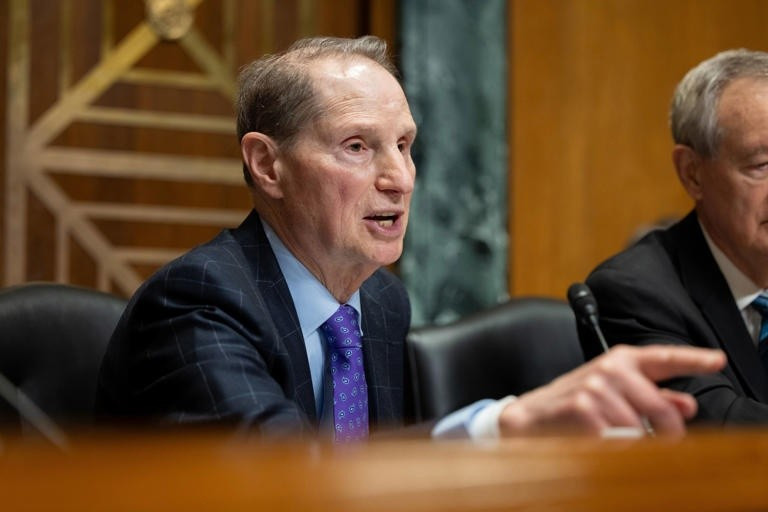
      U.S. Senator Ron Wyden (D-Ore.) has formally requested the Federal Trade Commission (FTC) open an investigation into Microsoft, arguing that the tech giant’s cyber-security practices amount to “gross negligence” and pose a serious national security risk. In a September 10, 2025 letter to FTC Chair Andrew Ferguson, Wyden accuses Microsoft of delivering “dangerous, insecure software” to the U.S. government and critical infrastructure sectors, especially healthcare. Central to his concerns are default insecure settings in Windows, continued support for the outdated RC4 encryption standard, and failure to require long enough passwords for privileged accounts—factors which he alleges enabled the 2024 ransomware attack on Ascension Healthcare, affecting 5.6 million patients. Wyden also criticizes Microsoft for not promptly disabling RC4, for providing guidance in overly technical language to a small audience rather than broadly warning its users, and for profiting from cybersecurity add-ons while its core software remains vulnerable. Microsoft has responded that RC4 usage is minimal (under 0.1% of traffic), that disabling it completely risks compatibility breaks, and that it plans to disable RC4 by default in certain Windows Server 2025 installations in early 2026; meanwhile mitigation for existing systems will be added. 

      Sources: Office of US Sen. Ron Wyden, IT Pro, CyberScoop

      Key Takeaways

      – Outdated defaults matter: Microsoft’s default configurations, including support for the RC4 encryption protocol and insufficiently strong password policies for privileged accounts, are central to Senator Wyden’s argument that the company’s product security posture is leaving critical infrastructure vulnerable.

      – Real-world consequences: The 2024 ransomware incident at Ascension Healthcare is cited as a concrete example illustrating how weak defaults, combined with phishing via Microsoft’s services (Bing/Edge), allowed attackers to gain privileged access and compromise patient data.

      – Regulatory scrutiny and response timeline: Wyden is pushing the FTC to hold Microsoft accountable; Microsoft has committed to disabling RC4 by default in certain new server setups by early 2026, but critics argue the pace and communication have been too slow and that broader mitigation is still needed.

      In-Depth

      Senator Ron Wyden has escalated his criticism of Microsoft, demanding that the Federal Trade Commission (FTC) investigate what he describes as “gross cybersecurity negligence.” His September 2025 letter argues that Microsoft’s long-standing default settings, engineering choices, and slow movement away from obsolete encryption standards have created exploitable gaps in critical infrastructure defenses—primarily in healthcare—but also affecting government systems broadly.

      According to Wyden, Microsoft’s software design, especially its defaults and support for antiquated protocols like RC4, have enabled serious threats, including the 2024 ransomware breach at Ascension Healthcare, which resulted in the exposure of sensitive data for 5.6 million patients after a contractor unintentionally introduced malware via a malicious Bing search link.

      The senator’s central contention is that Microsoft, by not making more secure configurations the default, shifts the burden of security onto customers—many of whom lack the technical bandwidth to audit, change, or maintain hardened settings. Wyden argues this dynamic is especially problematic given Microsoft’s de facto dominance in enterprise operating systems and identity management tools like Active Directory.

      In his view, when one entity controls so much of the architecture, its choices about defaults, encryption, and backwards compatibility ripple outward, influencing systemic risk. To this point, Wyden highlights Kerberoasting—an attack that abuses weak or legacy encryption in Kerberos ticketing systems—together with weak password requirements, as vectors that remain open because Microsoft hasn’t required usage of stronger encryption (e.g. AES) or eliminated RC4 broadly and more rapidly.

      Microsoft, in turn, defends its position by noting that RC4 is rarely used in practice (under 0.1% of traffic), that removing or disabling it entirely risks breaking compatibility with existing systems, and that the company has placed on its roadmap the phasing out of RC4 and other mitigations. It also points out that, technically, organizations can choose stronger settings—it’s just not the default. Nonetheless, Wyden contends that merely offering the possibility of stronger security, without making it standard, is insufficient given real consequences of weak settings: compromised networks, stolen data, and disruption of public health services.

      As this debate unfolds, the questions are not simply whether Microsoft’s engineering roadmap is improving, but whether regulatory bodies like the FTC should intervene to shift incentives, enforce more secure defaults, and hold dominant platform providers to greater responsibility for the downstream risks of their software engineer­ing decisions.

      Microsoft Ransomware
      Share. Facebook Twitter Pinterest LinkedIn Tumblr Email
      Previous ArticleSen. Klobuchar Pushes Tougher Deepfake Rules — Federal Law Follows
      Next Article Senior Developers Now Spending Most of Their Time Babysitting AI Code

      Related Posts

      U.S. Approves Bill Gates-Backed TerraPower Reactor, Signaling Nuclear Energy Revival

      March 9, 2026

      AI War Games Reveal Chatbots Escalate Toward Nuclear Conflict

      March 8, 2026

      Nvidia Pulls Plug on China-Bound AI Chips Amid Escalating U.S.–China Tech Standoff

      March 8, 2026

      U.S. Military Deploys AI Targeting Tool in Iran Despite Government Feud With Its Creator

      March 8, 2026
      Add A Comment
      Leave A Reply Cancel Reply

      Editors Picks

      U.S. Approves Bill Gates-Backed TerraPower Reactor, Signaling Nuclear Energy Revival

      March 9, 2026

      AI War Games Reveal Chatbots Escalate Toward Nuclear Conflict

      March 8, 2026

      Nvidia Pulls Plug on China-Bound AI Chips Amid Escalating U.S.–China Tech Standoff

      March 8, 2026

      U.S. Military Deploys AI Targeting Tool in Iran Despite Government Feud With Its Creator

      March 8, 2026
      Popular Topics
      Tim Cook Tesla Series A Satya Nadella spotlight Startup UAE Tech picks Ransomware Tesla Cybertruck Robotics Series B Sundar Pichai Qualcomm Taiwan Tech trending Quantum computing SpaceX Sam Altman Samsung
      Major Tech Companies
      • Apple News
      • Google News
      • Meta News
      • Microsoft News
      • Amazon News
      • Samsung News
      • Nvidia News
      • OpenAI News
      • Tesla News
      • AMD News
      • Anthropic News
      • Elbit News
      AI & Emerging Tech
      • AI Regulation News
      • AI Safety News
      • AI Adoption
      • Quantum Computing News
      • Robotics News
      Key People
      • Sam Altman News
      • Jensen Huang News
      • Elon Musk News
      • Mark Zuckerberg News
      • Sundar Pichai News
      • Tim Cook News
      • Satya Nadella News
      • Mustafa Suleyman News
      Global Tech & Policy
      • Israel Tech News
      • India Tech News
      • Taiwan Tech News
      • UAE Tech News
      Startups & Emerging Tech
      • Series A News
      • Series B News
      • Startup News
      Tallwire
      Facebook X (Twitter) LinkedIn Threads Instagram RSS
      • Tech
      • Entertainment
      • Business
      • Government
      • Academia
      • Transportation
      • Legal
      • Press Kit
      © 2026 Tallwire. Optimized by ARMOUR Digital Marketing Agency.

      Type above and press Enter to search. Press Esc to cancel.