

Close Menu

    Subscribe to Updates

    Get the latest tech news from Tallwire.

      What's Hot

      Silicon Dependence: The Quiet Risk of Chinese AI Chips in American Products

      July 2, 2026

      AI Is Rapidly Transforming Scientific Research, Supercharging the Next Generation of PhD Talent

      July 2, 2026

      German Merck Acquires Us Biotech Firm In Major Life Sciences Deal

      July 2, 2026
      Facebook X (Twitter) Instagram
      • Tech
      • AI
      • Get In Touch
      Facebook X (Twitter) LinkedIn
      TallwireTallwire
      • Tech

        Bipartisan Coalition Targets AI Workforce Disruption with Massive Retraining Push

        July 2, 2026

        BlackBerry Accelerates Into AI-Driven Embedded Software Growth

        July 1, 2026

        Google’s AI Talent Drain Triggers Historic Market Selloff

        July 1, 2026

        Cisco Layoffs Underscore AI-Era Workforce Realignment Despite Record Revenue

        June 30, 2026

        China Retakes Supercomputer Crown from United States

        June 29, 2026
      • AI

        AI Is Rapidly Transforming Scientific Research, Supercharging the Next Generation of PhD Talent

        July 2, 2026

        Bipartisan Coalition Targets AI Workforce Disruption with Massive Retraining Push

        July 2, 2026

        German Merck Acquires Us Biotech Firm In Major Life Sciences Deal

        July 2, 2026

        Anthropic Veterans Launch Startup to Empower Scientists with Custom AI Tools

        July 1, 2026

        BlackBerry Accelerates Into AI-Driven Embedded Software Growth

        July 1, 2026
      • Security

        Cheap Chinese AI Models Gain Ground in America, Raising Strategic Concerns

        July 1, 2026

        Anthropic Alleges Massive AI Theft Campaign Linked to Alibaba

        June 30, 2026

        Chinese AI Surge Exposes U.S. Vulnerabilities in Tech Race

        June 29, 2026

        Western Australia Launches Live Facial Recognition Police Van Trial

        June 28, 2026

        Five Eyes Intelligence Alliance Warns AI-Powered Cyberattacks Could Be Imminent

        June 28, 2026
      • Health

        German Merck Acquires Us Biotech Firm In Major Life Sciences Deal

        July 2, 2026

        AI Breakthrough Solves Rare Diseases That Stumped Doctors

        July 1, 2026

        YouTube Settlement Adds Momentum to Mounting Legal Pressure on Big Tech

        July 1, 2026

        Waymo Passenger Conduct Raises Fresh Questions About Autonomous Vehicle Safety

        June 30, 2026

        Australia’s Social Media Ban Shows Little Immediate Impact on Teen Usage

        June 28, 2026
      • Science

        AI Is Rapidly Transforming Scientific Research, Supercharging the Next Generation of PhD Talent

        July 2, 2026

        German Merck Acquires Us Biotech Firm In Major Life Sciences Deal

        July 2, 2026

        Anthropic Veterans Launch Startup to Empower Scientists with Custom AI Tools

        July 1, 2026

        AI Breakthrough Solves Rare Diseases That Stumped Doctors

        July 1, 2026

        Home Energy Resources Poised to Power AI Data Center Surge

        June 29, 2026
      • Tech

        Bipartisan Coalition Targets AI Workforce Disruption with Massive Retraining Push

        July 2, 2026

        Skilled Trades Gain New Respect As Generation Alpha Pushes Back Against The AI Hype

        July 1, 2026

        Walmart Expands Bay Area Tech Layoffs as AI-Driven Restructuring Continues

        June 30, 2026

        Former NSO Founder’s New Cybersecurity Venture Reaches $3 Billion Valuation Amid Growing State-Sponsored Threats

        June 26, 2026

        Jeff Bezos Bets Big on AI-Powered Materials Discovery

        June 24, 2026
      TallwireTallwire
      Home»Opinion»Silicon Dependence: The Quiet Risk of Chinese AI Chips in American Products
      Opinion

      Silicon Dependence: The Quiet Risk of Chinese AI Chips in American Products

      4 Mins Read
      Facebook Twitter Pinterest LinkedIn Tumblr Email
      Share
      Facebook Twitter LinkedIn Pinterest Email

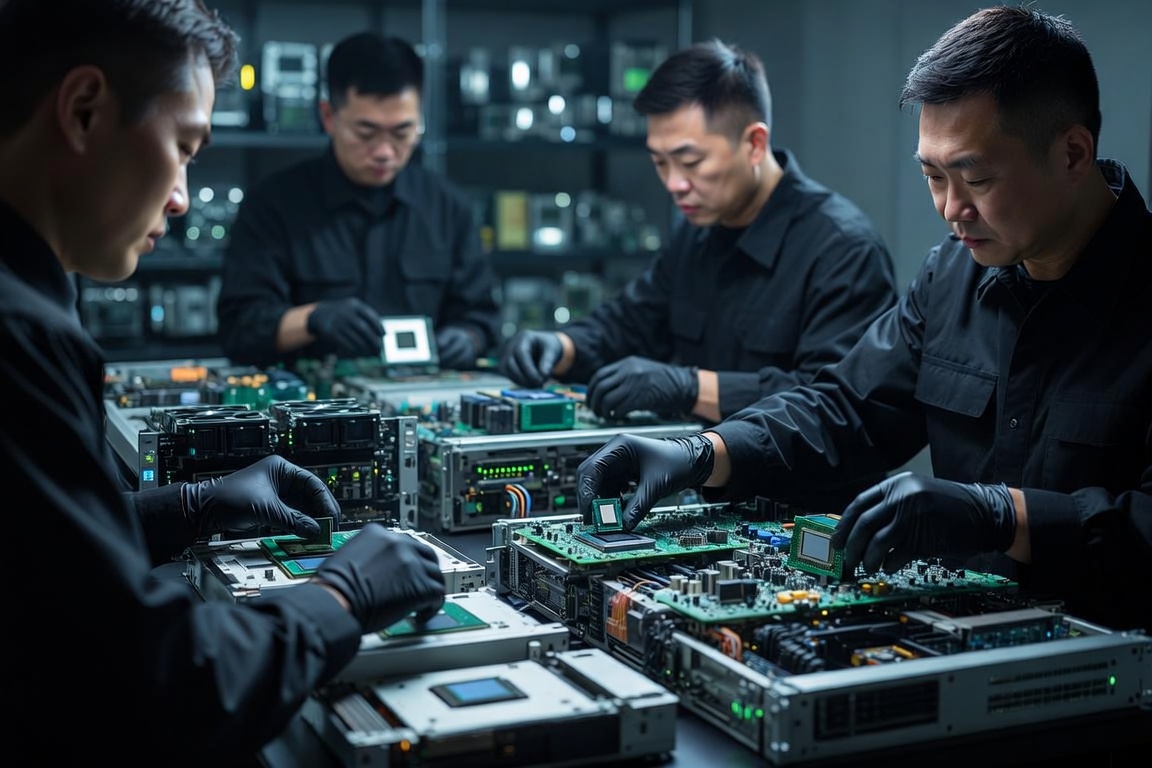
      There is a growing and largely underexamined risk emerging in the technology sector—one that doesn’t arrive with the spectacle of a cyberattack or the visibility of a trade war headline. Instead, it is being embedded quietly, piece by piece, into the hardware powering the next generation of artificial intelligence. As U.S. companies race to compete in AI, some are increasingly turning to chips and components developed in Communist China. That decision may offer short-term cost savings or supply chain flexibility, but it introduces long-term vulnerabilities that deserve serious scrutiny.

      At the heart of the issue is not simply where a chip is manufactured, but the system of control behind it. China’s technology sector operates under the authority of the Chinese Communist Party (CCP), which maintains sweeping legal powers over private companies. Under Chinese law, firms are required to cooperate with state intelligence services upon request. That means any company producing advanced AI chips—no matter how “private” it appears—exists within a framework where state interests can override corporate independence. When American companies integrate such components into their products, they are not just making a business decision; they are potentially introducing a foreign government’s influence into critical systems.

      This concern becomes more serious when considering the nature of AI chips themselves. Unlike traditional hardware, AI processors are designed to handle vast amounts of data, enable machine learning, and support autonomous decision-making. They are not passive components. They sit at the core of systems that interpret, analyze, and act on information. If there is even a remote possibility of hidden backdoors, data leakage pathways, or embedded vulnerabilities, the consequences extend far beyond a typical hardware defect. The risk is systemic.

      Some will argue that rigorous testing and verification processes can mitigate these concerns. In theory, that sounds reasonable. In practice, however, verifying the integrity of highly complex semiconductor designs is extraordinarily difficult. Modern chips contain billions of transistors and layers of firmware that are not easily audited. Even the most sophisticated security reviews cannot guarantee the absence of malicious design features—especially when dealing with opaque supply chains and limited transparency from foreign manufacturers.

      Beyond security, there is also the issue of strategic dependence. The United States has already seen the consequences of relying heavily on foreign supply chains in sectors like pharmaceuticals and rare earth minerals. AI is poised to become even more central to national power, influencing everything from economic productivity to military capability. Allowing a geopolitical competitor to play a foundational role in that ecosystem raises obvious concerns. If tensions escalate, supply disruptions—or worse, deliberate manipulation—could place American companies in a precarious position.

      There is also a subtler, longer-term implication: the erosion of domestic innovation capacity. When companies prioritize lower-cost foreign components over investing in domestic alternatives, they inadvertently weaken the incentive structure that supports American semiconductor development. The U.S. still leads in many aspects of chip design, but manufacturing and advanced packaging have increasingly shifted overseas. Integrating Chinese AI chips into American products accelerates that trend, making it harder to rebuild a resilient, self-sufficient technology base.

      To be clear, this is not an argument for isolationism or a blanket rejection of global trade. The modern economy is interconnected, and collaboration across borders has driven significant technological progress. But there is a difference between healthy interdependence and strategic vulnerability. AI infrastructure is not just another consumer product category; it is rapidly becoming critical infrastructure. Decisions about its components should be made with that reality in mind.

      What makes this issue particularly challenging is that the risks are not immediately visible. Products will function. Performance benchmarks may even improve. The costs will appear competitive. The downside, if it materializes, will likely do so years later—quietly, and with consequences that are difficult to trace back to a single decision. That lag between cause and effect makes it easy for companies to discount the risk in favor of short-term gains.

      A more prudent approach would involve a combination of stricter supply chain scrutiny, targeted investment in domestic semiconductor capabilities, and clear guidelines for what constitutes acceptable sourcing in sensitive technologies. Policymakers have begun moving in this direction, but the private sector ultimately plays a decisive role. Companies that position themselves as leaders in AI innovation should also lead in safeguarding the integrity of the systems they build.

      The integration of Chinese AI chips into American products is not, on its face, a dramatic or headline-grabbing development. But it is precisely the kind of incremental shift that can reshape strategic realities over time. In an era where technology and national security are increasingly intertwined, those shifts deserve careful attention. The question is not whether cooperation with global partners should continue—it should—but whether the United States is being sufficiently deliberate about where it draws the line.

      what happens after the ma

      Intel Manufacturing
      Share. Facebook Twitter Pinterest LinkedIn Tumblr Email
      Previous ArticleAI Is Rapidly Transforming Scientific Research, Supercharging the Next Generation of PhD Talent

      Related Posts

      AI Is Rapidly Transforming Scientific Research, Supercharging the Next Generation of PhD Talent

      July 2, 2026

      German Merck Acquires Us Biotech Firm In Major Life Sciences Deal

      July 2, 2026

      Bipartisan Coalition Targets AI Workforce Disruption with Massive Retraining Push

      July 2, 2026

      Anthropic Veterans Launch Startup to Empower Scientists with Custom AI Tools

      July 1, 2026
      Add A Comment
      Leave A Reply Cancel Reply

      Editors Picks

      Bipartisan Coalition Targets AI Workforce Disruption with Massive Retraining Push

      July 2, 2026

      BlackBerry Accelerates Into AI-Driven Embedded Software Growth

      July 1, 2026

      Google’s AI Talent Drain Triggers Historic Market Selloff

      July 1, 2026

      Cisco Layoffs Underscore AI-Era Workforce Realignment Despite Record Revenue

      June 30, 2026
      Popular Topics
      Stocks Series A Series B Sundar Pichai Taiwan Tech SpaceX Satellite Software Viral spotlight Tesla Samsung Space Satya Nadella UAE Tech starlink Startup Tim Cook Tesla Cybertruck trending
      Major Tech Companies
      • Apple News
      • Google News
      • Meta News
      • Microsoft News
      • Amazon News
      • Samsung News
      • Nvidia News
      • OpenAI News
      • Tesla News
      • AMD News
      • Anthropic News
      • Elbit News
      AI & Emerging Tech
      • AI Regulation News
      • AI Safety News
      • AI Adoption
      • Quantum Computing News
      • Robotics News
      Key People
      • Sam Altman News
      • Jensen Huang News
      • Elon Musk News
      • Mark Zuckerberg News
      • Sundar Pichai News
      • Tim Cook News
      • Satya Nadella News
      • Mustafa Suleyman News
      Global Tech & Policy
      • Israel Tech News
      • India Tech News
      • Taiwan Tech News
      • UAE Tech News
      Startups & Emerging Tech
      • Series A News
      • Series B News
      • Startup News
      Tallwire
      Facebook X (Twitter) LinkedIn Threads Instagram RSS
      • Tech
      • Entertainment
      • Business
      • Government
      • Academia
      • Transportation
      • Legal
      • Press Kit
      © 2026 Tallwire. Optimized by ARMOUR Digital Marketing Agency.

      Type above and press Enter to search. Press Esc to cancel.