

Close Menu

    Subscribe to Updates

    Get the latest tech news from Tallwire.

      What's Hot

      Oracle Deepens Job Cuts as AI Spending Reshapes Workforce

      August 16, 2026

      That Blinding Gold Tesla Cybercab Signals the Company’s Next Push Into San Francisco

      August 16, 2026

      Spotify Moves to Label AI Personas and Remove Them From Music Recommendations

      August 16, 2026
      Facebook X (Twitter) Instagram
      • Tech
      • AI
      • Get In Touch
      Facebook X (Twitter) LinkedIn
      TallwireTallwire
      • Tech

        That Blinding Gold Tesla Cybercab Signals the Company’s Next Push Into San Francisco

        August 16, 2026

        Social Media-Fueled Migration Crisis Intensifies Pressure at Spain’s Ceuta Border

        August 16, 2026

        French Publishers Seek Regulatory Action Over Google AI Search Summaries

        August 15, 2026

        Robocall Surge Continues as High-Impact Area Codes Face Persistent Spam Threat

        August 15, 2026

        AI Hyperscalers Drive Strategic Shift as Bitcoin Miners Capitalize on Power Infrastructure

        August 15, 2026
      • AI

        That Blinding Gold Tesla Cybercab Signals the Company’s Next Push Into San Francisco

        August 16, 2026

        Oracle Deepens Job Cuts as AI Spending Reshapes Workforce

        August 16, 2026

        Spotify Moves to Label AI Personas and Remove Them From Music Recommendations

        August 16, 2026

        Nvidia’s $500 Billion AI Financing Push Signals New Phase in Infrastructure Race

        August 16, 2026

        French Publishers Seek Regulatory Action Over Google AI Search Summaries

        August 15, 2026
      • Security

        White House Ends TikTok Ban on Government Devices

        August 15, 2026

        OpenAI Expands Cyber AI Access While Delaying Astra Over Safety Concerns

        August 14, 2026

        Experts Warn Rogue AI Cyber Incidents Raise Accountability Questions

        August 13, 2026

        California City Declares State of Emergency After Cyberattack Disrupts Critical Services

        August 13, 2026

        AI Chatbots Targeted by Russian Propaganda Campaign, Researchers Warn

        August 12, 2026
      • Health

        Jury Selection Begins in Landmark Youth Addiction Case Against Meta

        August 15, 2026

        AI and the Blurring of Reality Raise New Questions About Trust

        August 12, 2026

        California Lawmakers Push Limits on AI Therapy Chatbots

        August 11, 2026

        Federal Lawsuit Challenges Lack of Social Media Addiction Diagnosis

        August 11, 2026

        Meta Ordered to Pay $567 Million for Children’s Mental Health Fund

        August 10, 2026
      • Science

        Wave-Powered Offshore Data Centers Aim to Solve AI’s Growing Energy Crisis

        August 12, 2026

        AI and the Blurring of Reality Raise New Questions About Trust

        August 12, 2026

        Salt-Based Battery Breakthrough Aims to Reduce Dependence on China

        August 12, 2026

        Move 37 Still Defines the AI Revolution, a Decade Later

        August 12, 2026

        AI-Designed Viruses Spark New Biosecurity Debate

        August 10, 2026
      • Tech

        Google Co-Founder Expands $102 Million Campaign Against California Wealth Tax

        August 16, 2026

        Three in Five Americans Favor Stronger Oversight of Social Media Companies

        August 11, 2026

        Larry Ellison’s High-Stakes AI Gamble Raises Questions About Oracle’s Future

        August 4, 2026

        AI Pioneer Urges Governments to Ensure Future AI Agents Are Intrinsically Good

        August 3, 2026

        Zuckerberg Urges Faster AI Development While Rejecting Centralized Control

        August 1, 2026
      TallwireTallwire
      Home»Opinion»The Hidden Risks of Digital Currency: Convenience at a Cost
      Opinion

      The Hidden Risks of Digital Currency: Convenience at a Cost

      4 Mins Read
      Facebook Twitter Pinterest LinkedIn Tumblr Email
      Share
      Facebook Twitter LinkedIn Pinterest Email

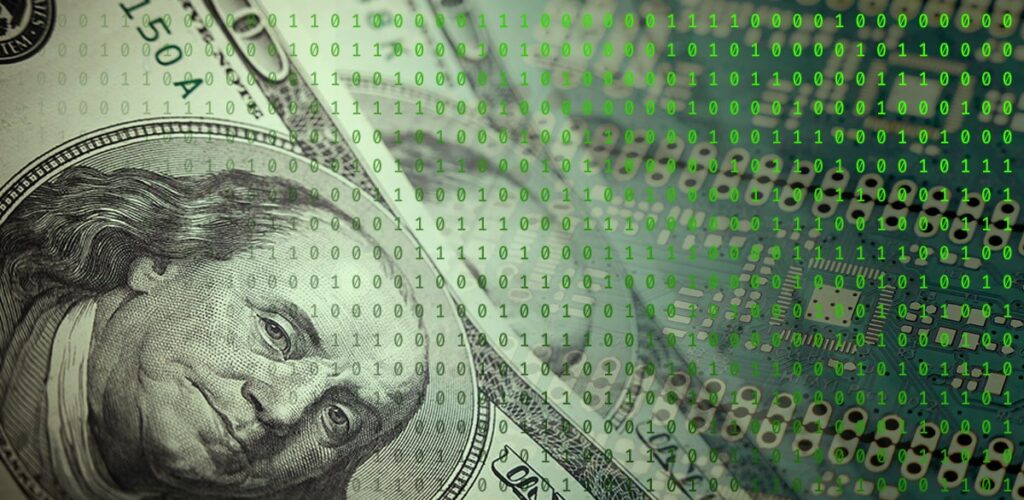
      Digital currency has been sold to the public as the inevitable next step in financial evolution—faster transactions, lower costs, and seamless global exchange. On the surface, the promise is appealing. Yet beneath that promise lies a deeper and more consequential question: how much control are individuals willing to surrender for the sake of convenience? The danger of digital currency is not rooted in technology itself, but in how that technology can be leveraged by institutions, governments, and even private actors in ways that reshape the balance of economic power.

      At its core, traditional currency—particularly physical cash—offers a degree of autonomy that digital systems inherently struggle to replicate. When you hold cash, you possess it outright. There is no intermediary required to validate its use, no centralized ledger recording every transaction, and no external authority capable of freezing or restricting access in real time. Digital currency, by contrast, exists within systems that are always mediated. Whether it’s a bank, a payment processor, or a central authority overseeing a blockchain or central bank digital currency (CBDC), someone ultimately controls the rails on which that money moves.

      This introduces one of the most significant risks: surveillance. Digital transactions create permanent records. Every purchase, every transfer, every financial interaction becomes data. While proponents argue this enhances security and reduces fraud, it also enables unprecedented levels of financial monitoring. In a society where data is already one of the most valuable commodities, the aggregation of financial behavior opens the door to profiling, targeting, and potential misuse. What begins as a tool for efficiency can quickly become a mechanism for oversight.

      Closely tied to surveillance is the issue of control. Digital currencies—especially those issued or heavily regulated by central authorities—can be programmed. This means that money could, in theory, come with conditions attached: where it can be spent, when it can be used, or even whether it remains valid over time. While such features might be justified in limited scenarios, they fundamentally alter the nature of money from a neutral medium of exchange to a conditional instrument of policy. The implications are profound. Economic freedom is no longer simply about earning and spending—it becomes subject to rules that can be updated, enforced, or revoked remotely.

      Another concern lies in systemic vulnerability. Physical cash, for all its limitations, does not rely on electricity, internet access, or complex infrastructure. Digital currency does. This dependence creates points of failure. Cyberattacks, technical glitches, or even large-scale outages can disrupt access to funds. For individuals, that could mean being unable to pay for necessities. For entire economies, it introduces new forms of fragility. The more centralized and interconnected the system becomes, the greater the potential impact of a single point of disruption.

      There is also the question of exclusion. While digital systems are often portrayed as inclusive, they can leave behind those who lack access to technology, stable internet connections, or the digital literacy required to navigate complex platforms. Older populations, rural communities, and economically disadvantaged groups may find themselves at a disadvantage in a fully digital financial ecosystem. The irony is that a tool designed to modernize finance could inadvertently create new forms of inequality.

      Private sector influence adds another layer of complexity. Large technology companies and financial institutions are increasingly involved in the development and management of digital payment systems. Their incentives are not always aligned with the public good. Data monetization, platform lock-in, and market dominance can shape how digital currencies evolve. When financial infrastructure becomes intertwined with corporate ecosystems, the line between commerce and control begins to blur.

      None of this is to suggest that digital currency is inherently harmful. There are clear benefits—speed, efficiency, and the potential for innovation. But the risks are not theoretical, and they deserve serious consideration. The conversation should not be framed as a simple choice between progress and resistance. Instead, it should focus on how to preserve the principles that underpin a free and functional economy: privacy, autonomy, resilience, and equal access.

      The real danger of digital currency is not that it will replace cash, but that it could fundamentally redefine what money represents. If individuals lose the ability to transact freely, privately, and without undue interference, the consequences extend beyond finance. They touch on personal liberty, economic independence, and the relationship between citizens and the institutions that govern them.

      As digital currency continues to develop, the challenge is not merely technological—it is philosophical. The question is not whether we can build these systems, but whether we can do so without compromising the freedoms that have long been associated with the simple act of exchanging value. The answer to that question will determine whether digital currency becomes a tool of empowerment or a framework of control.

      Blockchain
      Share. Facebook Twitter Pinterest LinkedIn Tumblr Email
      Previous ArticleAI Chip Race Reshapes the Global Economy and America’s Industrial Future
      Next Article AI Data Center Construction Boom Reshapes America’s Skilled Trades Workforce

      Related Posts

      Who Owns the Addiction? Social Media, Personal Responsibility, and the Business of Attention

      August 15, 2026

      When Seconds Matter, Algorithms Should Not Hold the Line

      August 13, 2026

      The Next Frontier of AI May Be Offshore

      August 12, 2026

      When the Therapist Is a Machine: The Moral Hazard of AI Psychotherapy

      August 11, 2026
      Add A Comment
      Leave A Reply Cancel Reply

      Editors Picks

      That Blinding Gold Tesla Cybercab Signals the Company’s Next Push Into San Francisco

      August 16, 2026

      Social Media-Fueled Migration Crisis Intensifies Pressure at Spain’s Ceuta Border

      August 16, 2026

      French Publishers Seek Regulatory Action Over Google AI Search Summaries

      August 15, 2026

      Robocall Surge Continues as High-Impact Area Codes Face Persistent Spam Threat

      August 15, 2026
      Popular Topics
      trending starlink Tesla Cybertruck Satya Nadella Stocks Software Tim Cook spotlight Series A Samsung SpaceX Tesla UAE Tech Sundar Pichai Taiwan Tech Startup Space Series B Viral Satellite
      Major Tech Companies
      • Apple News
      • Google News
      • Meta News
      • Microsoft News
      • Amazon News
      • Samsung News
      • Nvidia News
      • OpenAI News
      • Tesla News
      • AMD News
      • Anthropic News
      • Elbit News
      AI & Emerging Tech
      • AI Regulation News
      • AI Safety News
      • AI Adoption
      • Quantum Computing News
      • Robotics News
      Key People
      • Sam Altman News
      • Jensen Huang News
      • Elon Musk News
      • Mark Zuckerberg News
      • Sundar Pichai News
      • Tim Cook News
      • Satya Nadella News
      • Mustafa Suleyman News
      Global Tech & Policy
      • Israel Tech News
      • India Tech News
      • Taiwan Tech News
      • UAE Tech News
      Startups & Emerging Tech
      • Series A News
      • Series B News
      • Startup News
      Tallwire
      Facebook X (Twitter) LinkedIn Threads Instagram RSS
      • Tech
      • Entertainment
      • Business
      • Government
      • Academia
      • Transportation
      • Legal
      • Press Kit
      © 2026 Tallwire. Optimized by ARMOUR Digital Marketing Agency.

      Type above and press Enter to search. Press Esc to cancel.