

The rapid advance of artificial intelligence is no longer a distant concern—it’s an immediate economic force reshaping the American workforce in real time. From customer service chatbots to automated logistics systems and generative content platforms, AI is steadily encroaching on tasks once thought to require a human touch. For many workers, this shift brings understandable anxiety. Yet beneath the surface of disruption lies a more nuanced reality—one where the very same technology threatening traditional employment may also unlock unprecedented opportunity, particularly for creators willing to adapt.
At its core, AI’s appeal to businesses is straightforward: efficiency. Machines don’t demand salaries, benefits, or time off. They can operate around the clock and, in many cases, perform repetitive or data-driven tasks faster and more accurately than humans. In industries like manufacturing, transportation, and administrative support, automation has already reduced the need for large human workforces. Now, AI is pushing into white-collar territory—drafting emails, analyzing legal documents, writing code, and even producing marketing content.
For employers, the upside is obvious: lower costs and higher productivity. For workers, however, the picture is more complicated. The displacement effect is real. Jobs that rely heavily on routine tasks—whether physical or cognitive—are increasingly vulnerable. Entry-level positions, often the first rung on the career ladder, are especially at risk. When companies can rely on AI to handle basic functions, they may hire fewer junior employees, creating a bottleneck that limits upward mobility.
There’s also a broader societal concern. Work is more than just a paycheck; it provides structure, purpose, and identity. A widespread erosion of job opportunities could lead to economic instability and a sense of dislocation among those who feel left behind by technological progress. Policymakers have floated ideas ranging from retraining programs to universal basic income, but none offer a complete solution to the scale of disruption AI may bring.
Yet it would be a mistake to frame AI solely as a job destroyer. History shows that technological revolutions tend to eliminate some roles while creating others. The transition from an industrial to a digital economy followed a similar pattern. The difference now is the speed and breadth of change, which makes adaptation more challenging—but not impossible.
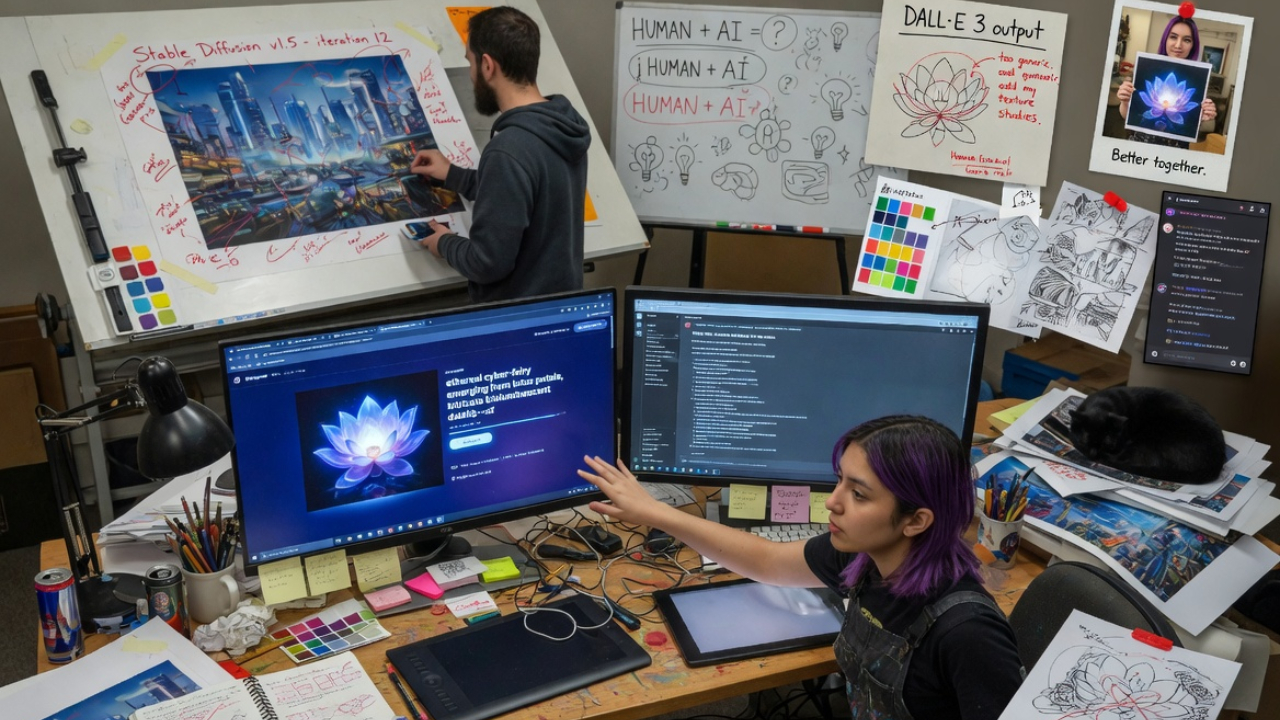
Where AI becomes particularly interesting is in its potential to level the playing field for individual creators. In the past, producing high-quality content—whether written, visual, or audio—often required significant resources. You needed specialized skills, expensive tools, or access to professional networks. Today, AI tools can assist with everything from writing and editing to graphic design and video production. A single individual can now accomplish what once required an entire team.
This shift has profound implications. For independent journalists, podcasters, and digital entrepreneurs, AI can act as a force multiplier. It reduces the barrier to entry and accelerates the production process, allowing creators to focus more on ideas and less on execution. In a media landscape already fragmented by the internet, AI may further decentralize content creation, giving rise to a new generation of voices that might otherwise have gone unheard.
Of course, this democratization comes with its own challenges. If everyone has access to powerful creation tools, the volume of content will explode. Standing out in an already crowded marketplace becomes even more difficult. Quality, authenticity, and trust will matter more than ever. Audiences will gravitate toward creators who offer distinct perspectives and demonstrate credibility—traits that cannot be easily replicated by machines.
There’s also the question of originality. AI systems are trained on vast amounts of existing data, which raises concerns about intellectual property and creative ownership. If a machine generates content based on patterns derived from human work, who truly owns the result? This is an issue that courts and regulators are only beginning to address, and it will likely remain a point of contention for years to come.
Still, for those willing to embrace it, AI offers a strategic advantage. The key is not to compete against the technology, but to integrate it into one’s workflow. Workers who develop complementary skills—critical thinking, creativity, interpersonal communication—will be better positioned to thrive. These are areas where human judgment still holds a clear edge.
In practical terms, that means a shift in mindset. Instead of viewing AI as a replacement, it can be seen as an augmentation tool. A writer can use AI to generate drafts or brainstorm ideas, then refine the output with a personal voice. A marketer can analyze data more efficiently while focusing on strategy and storytelling. A small business owner can automate routine tasks and devote more energy to growth and customer relationships.
The workforce of the future will likely be smaller in some sectors, but more specialized and adaptable overall. The individuals who succeed will be those who understand how to leverage technology rather than resist it. That’s not a comforting message for everyone, but it’s an honest one.
Ultimately, the rise of AI forces a fundamental question: what is uniquely human in the age of intelligent machines? The answer isn’t found in speed or efficiency—areas where AI excels—but in creativity, judgment, and the ability to connect with others on a meaningful level. Those qualities will define the value of human work moving forward.
The transition won’t be painless. There will be winners and losers, as there always are in periods of technological upheaval. But for creators, in particular, the opportunity is real. AI may reshape the workforce, but it also hands individuals the tools to build something of their own. The challenge—and the responsibility—lies in how those tools are used.