

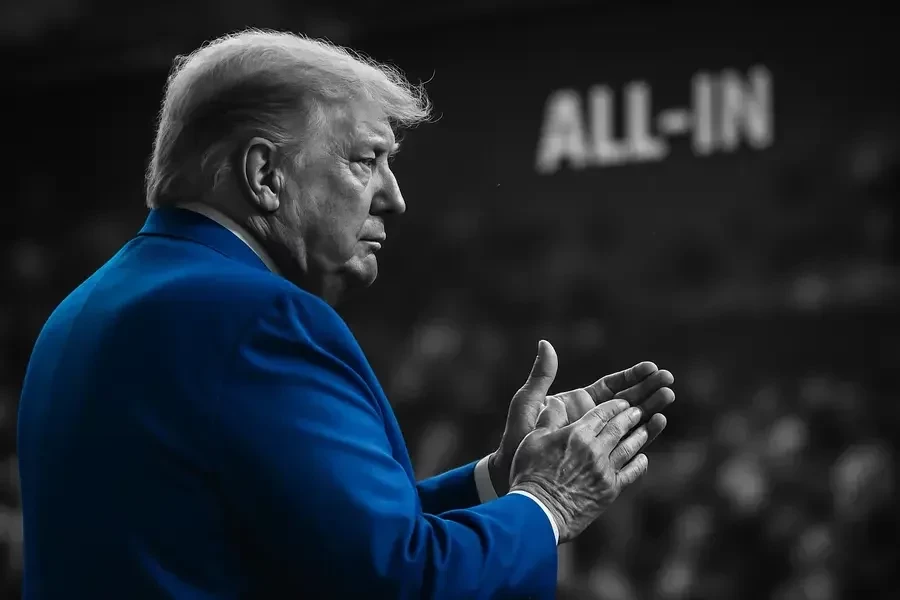
President Donald Trump announced a package of investments exceeding $2 billion aimed at expanding America’s critical minerals and mining sector, with the stated objective of reducing U.S. reliance on China for strategically important materials used in defense systems, advanced manufacturing, batteries, and electronics. The initiative includes financing for domestic mining, mineral processing, advanced battery technology, magnet production, and workforce development while streamlining permitting for new mining projects. Administration officials characterized the effort as part of a broader strategy to rebuild domestic industrial capacity, strengthen national security, and establish resilient supply chains for materials that have become increasingly dominated by Chinese production and processing.
Sources
- https://www.theepochtimes.com/us/trump-announces-more-than-2-billion-mining-investment-to-counter-china-6072608
- https://www.reuters.com/business/aerospace-defense/trump-host-mining-ceos-administration-seeks-minerals-defense-supply-chains-2026-08-07
- https://www.wsj.com/politics/national-security/trump-administration-to-award-2-billion-to-battery-materials-companies-58b023a7
Key Takeaways
- The administration is directing more than $2 billion toward domestic mining, mineral processing, battery materials, and magnet manufacturing to reduce strategic dependence on Chinese-controlled supply chains.
- Critical minerals are increasingly viewed as national security assets because they are essential for advanced weapons systems, semiconductors, electric vehicles, aerospace manufacturing, and modern consumer electronics.
- Beyond financing projects, the initiative includes efforts to accelerate mine permitting and expand mining education to address long-term workforce shortages that have constrained American mineral production.
In-Depth
For decades, the United States allowed much of its mining, refining, and rare-earth processing capacity to migrate overseas while China steadily built an overwhelming position across nearly every stage of the critical minerals supply chain. That imbalance has evolved from an economic concern into a strategic vulnerability. The Trump administration’s latest investment package reflects a growing recognition that America cannot remain dependent on a geopolitical rival for materials essential to military readiness, advanced manufacturing, and technological innovation.
The funding extends beyond simply opening new mines. It supports battery technology, magnet manufacturing, mineral processing, and workforce development—areas where the United States has historically lagged despite possessing significant natural resources. By encouraging private-sector investment while reducing regulatory obstacles, the administration is attempting to rebuild an integrated domestic supply chain capable of competing globally rather than exporting raw materials for foreign processing.
Critics will undoubtedly question the government’s role in supporting private industry, but national security has long justified strategic investments in sectors vital to defense. Rare earth elements and other critical minerals underpin everything from fighter aircraft and missile guidance systems to communications equipment and advanced computing. Allowing a strategic competitor to dominate those supply chains creates leverage that could prove costly during future geopolitical crises.
Whether these investments ultimately achieve their intended goals will depend upon execution, permitting reform, and sustained private investment. Nevertheless, the initiative represents a significant shift toward restoring American industrial capability and recognizing that economic strength and national security are inseparable. If successful, it could mark an important step in reversing decades of strategic dependence on foreign-controlled critical mineral supplies.