

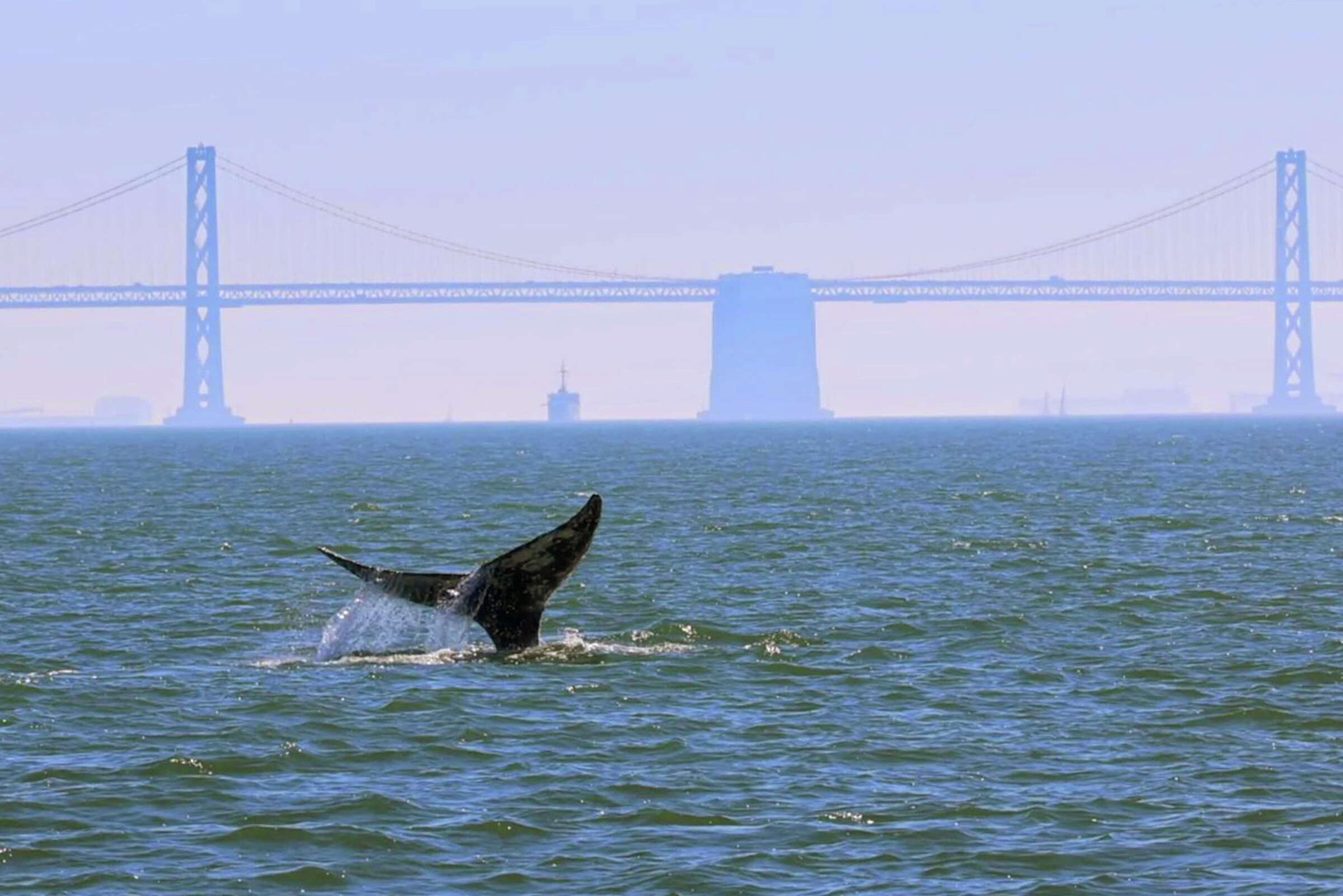
California officials and marine researchers are increasingly turning to artificial intelligence technology in an attempt to reduce a disturbing rise in gray whale deaths around the San Francisco Bay, where climate-driven migration disruptions and heavy maritime traffic are creating a deadly collision course between massive commercial vessels and increasingly vulnerable whale populations. The new “WhaleSpotter” AI system uses thermal cameras and automated detection software to identify whale blows and movement patterns in real time, alerting ships to slow or alter course before deadly strikes occur. The push comes after at least 21 gray whales were found dead in the Bay Area last year, with experts estimating a significant percentage were killed by vessel collisions. The crisis underscores how environmental policy failures, overindustrialized coastal shipping corridors, and years of politically fashionable but poorly managed climate strategies are now colliding with practical realities in America’s busiest maritime regions. Supporters argue the AI system represents an innovative conservation tool, while critics point out that California’s regulatory culture often reacts only after preventable damage has already occurred.
Sources
https://www.washingtontimes.com/news/2026/may/20/california-turning-ai-whale-deaths-spike
https://apnews.com/article/5a12ce2ad68929a54ebac84ef2824ac0
https://www.wsj.com/us-news/san-franciscos-latest-traffic-headache-huge-hungry-whales-174ae49b
https://www.sfchronicle.com/climate/article/whales-ships-speed-22206154.php
Key Takeaways
- Artificial intelligence systems are now being deployed in the San Francisco Bay area to detect whale activity in real time and warn ships before deadly collisions occur.
- Gray whale deaths have surged dramatically in recent years as changing ocean conditions and disrupted Arctic feeding patterns push whales closer to heavily trafficked coastal shipping routes.
- California’s expanding maritime commerce, environmental pressures, and slow-moving regulatory responses are exposing the growing conflict between industrial activity and marine conservation efforts.
In-Depth
The sudden embrace of artificial intelligence to protect whales in California waters reveals a larger truth that government officials are often reluctant to admit: modern environmental problems are increasingly the product of policy contradictions that politicians themselves helped create. San Francisco Bay has become a perfect example. Massive commercial shipping traffic continues expanding while marine ecosystems are simultaneously being destabilized by changing ocean conditions, leaving gray whales trapped between shrinking feeding grounds and some of the busiest shipping lanes in North America.
The new WhaleSpotter AI system is designed to identify whale blows and thermal signatures around the clock, even in darkness and fog. Researchers hope the technology can provide ship operators with enough warning to slow down before impact. That matters because large commercial vessels moving at high speed often cannot stop quickly enough once a whale is spotted manually. In practical terms, the technology is attempting to compensate for a maritime infrastructure system that was never designed to coexist with increasingly erratic whale migration behavior.
At the same time, the whale deaths themselves are becoming harder to dismiss as isolated incidents. Scientists have linked the rise in whale strandings and unusual migration patterns to deteriorating food availability in Arctic feeding regions, pushing hungry whales farther into coastal waters and directly into shipping corridors. Some whales have reportedly appeared emaciated, while others were confirmed victims of vessel strikes.
What makes the situation politically revealing is that California now finds itself relying on advanced private-sector technology to mitigate consequences that years of ideological environmental policymaking failed to prevent. AI may help reduce collisions, but it also highlights how reactive governance has become. Instead of preventing ecological disruption upstream, officials are increasingly managing downstream crises with emergency technological fixes. In the end, the whales are simply the latest victims of a system where economic expansion, environmental activism, and bureaucratic inertia have all been allowed to collide in the same crowded waters.