

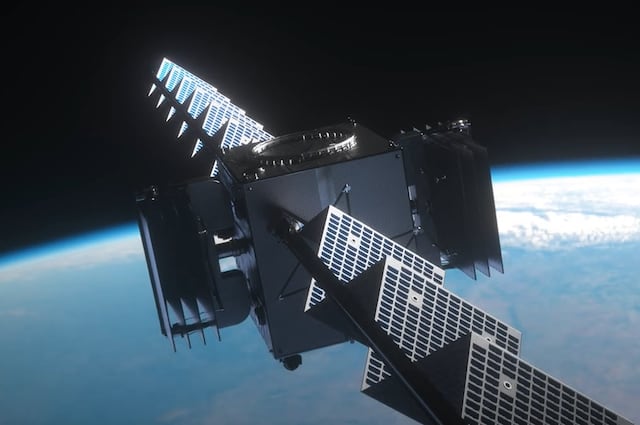
The explosive growth of artificial intelligence is forcing technology companies to confront a simple reality: Earth may not have enough readily available power, land, cooling capacity, and permitting flexibility to support the next generation of massive data centers. As a result, several companies and startups are now seriously exploring orbital data centers—computer facilities placed in space and powered by near-constant solar energy. Advocates argue that space-based facilities could solve mounting energy and cooling challenges while avoiding terrestrial land-use conflicts. Skeptics counter that launch costs, maintenance difficulties, heat management, and economic feasibility remain significant obstacles. Still, as AI investment surges into the trillions of dollars and data-center demand strains electrical grids around the world, what once sounded like science fiction is increasingly being discussed as a potential long-term solution for the computing infrastructure of the AI age.
Sources
- https://www.ajc.com/video/news/2026/05/ai-demand-is-soaring-could-space-be-the-next-data-center-hub
- https://www.wsj.com/tech/ai/data-centers-in-space-a-pipe-dream-or-ais-next-big-thing-c13bb184
- https://www.techradar.com/pro/big-tech-eyes-orbital-data-centers-for-near-continuous-solar-power
- https://www.forethought.org/research/will-we-really-put-data-centers-in-space
Key Takeaways
- AI’s extraordinary computing demands are rapidly outpacing the availability of terrestrial power, land, and cooling infrastructure, prompting serious consideration of orbital data centers.
- Space-based data centers could leverage near-continuous solar power and the cold environment of space, potentially reducing some of the bottlenecks facing traditional facilities.
- Despite growing interest from major technology and aerospace players, significant economic and engineering hurdles must be overcome before orbital data centers become commercially viable.
In-Depth
The artificial intelligence revolution is beginning to reveal a challenge that few anticipated even a decade ago: where will all the computing power come from? AI systems require enormous amounts of processing capacity, and the facilities that house that computing power are consuming unprecedented amounts of electricity. Across the United States and around the world, communities are increasingly pushing back against large-scale data-center construction because of concerns about energy consumption, water usage, environmental impacts, and strain on local infrastructure.
Faced with these constraints, some innovators are looking upward. The concept of orbital data centers would place computing infrastructure in space, where solar panels could receive sunlight nearly continuously and where operators would avoid many of the permitting, land-use, and power-generation challenges found on Earth. Proponents argue that the combination of abundant solar energy and reduced dependence on terrestrial infrastructure could make orbital computing an attractive option as AI demand continues to skyrocket.
From a conservative perspective, the appeal is obvious. Innovation has historically thrived when entrepreneurs were allowed to pursue bold ideas rather than being constrained by bureaucratic obstacles and regulatory bottlenecks. The market is responding to a genuine need: AI requires more computing power than existing infrastructure can comfortably support. Rather than accepting stagnation, innovators are seeking entirely new frontiers.
Yet optimism should be tempered with realism. Launching, maintaining, and upgrading sophisticated computing hardware in orbit remains extraordinarily expensive. Engineers must solve challenges involving radiation exposure, heat dissipation, communications bandwidth, and long-term servicing. While the physics appear feasible, the economics remain uncertain. For now, orbital data centers are better viewed as a potential supplement to terrestrial facilities rather than a replacement. Still, if AI growth continues on its current trajectory, the idea of moving part of humanity’s digital infrastructure into space may evolve from an ambitious experiment into a practical necessity.