

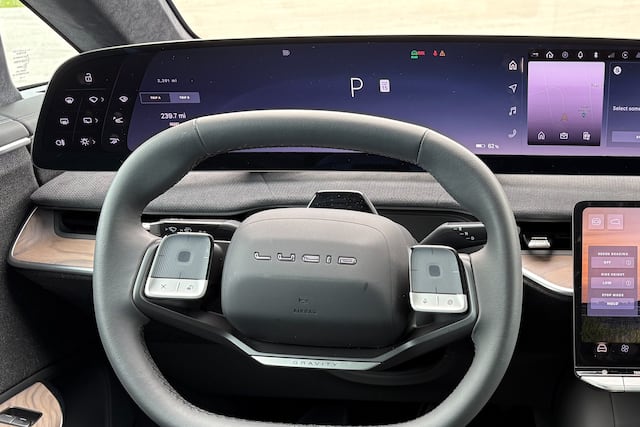
The traditional steering wheel, long the defining symbol of personal transportation, is increasingly being challenged by rapid advances in autonomous vehicle technology and evolving federal regulations. As automakers and technology companies push toward fully driverless transportation, vehicles designed without steering wheels or pedals are moving from concept to reality. While proponents argue that removing human controls could improve safety and mobility, skeptics contend that regulatory, technological, and public-trust hurdles remain substantial. The debate highlights a broader question: whether Americans are ready to surrender direct control of their vehicles to artificial intelligence and automated systems.
12Sources
- https://www.ajc.com/news/2026/06/reinventing-the-steering-wheel
- https://www.reuters.com/technology/us-seeks-comment-zoox-petition-deploy-robotaxis-without-steering-wheels-2026-03-10
- https://www.theregreview.org/2026/05/31/spotlight-the-road-ahead-for-autonomous-vehicle-regulation/
- https://www.weforum.org/stories/2025/05/autonomous-vehicles-technology-future
Key Takeaways
- Federal regulators are actively considering rules and exemptions that would allow commercial deployment of vehicles with no steering wheels, pedals, or other traditional human controls.
- Despite significant technological progress, widespread adoption of fully autonomous vehicles remains constrained by safety, regulatory, liability, and consumer-confidence concerns.
- The transition from driver-operated vehicles to AI-controlled transportation could fundamentally reshape personal mobility, employment, infrastructure planning, and public policy.
In-Depth
For more than a century, the steering wheel has represented freedom, independence, and personal control. Today, however, that symbol is facing its most significant challenge since the automobile first became a fixture of American life. Advances in autonomous vehicle technology are driving a movement toward vehicles that may eventually eliminate the steering wheel altogether, replacing human decision-making with sophisticated artificial intelligence systems.
Supporters of the technology argue that removing human error from the driving equation could dramatically reduce accidents, improve traffic flow, and expand transportation options for the elderly and disabled. Federal regulators are increasingly being asked to adapt safety standards written for human drivers to accommodate vehicles specifically designed without traditional controls. Recent petitions from autonomous vehicle developers illustrate how quickly the industry is pushing toward commercial deployment of steering-wheel-free transportation.
Yet conservatives and many everyday drivers have legitimate reasons to remain cautious. While the technology has improved considerably, even industry experts acknowledge that fully autonomous operation across all roadways and conditions remains elusive. Regulatory frameworks are still evolving, liability questions remain unresolved, and public confidence has not kept pace with technological ambition. Americans have long valued personal responsibility and control behind the wheel, making the prospect of surrendering those responsibilities to software a significant cultural shift.
The steering wheel may not disappear tomorrow, or even within the next decade. But the fact that regulators, manufacturers, and policymakers are seriously discussing a future without one demonstrates how profoundly transportation is changing. Whether that future ultimately proves safer and more efficient—or merely more dependent on technology—will depend on whether autonomous systems can earn the trust of the American public.