

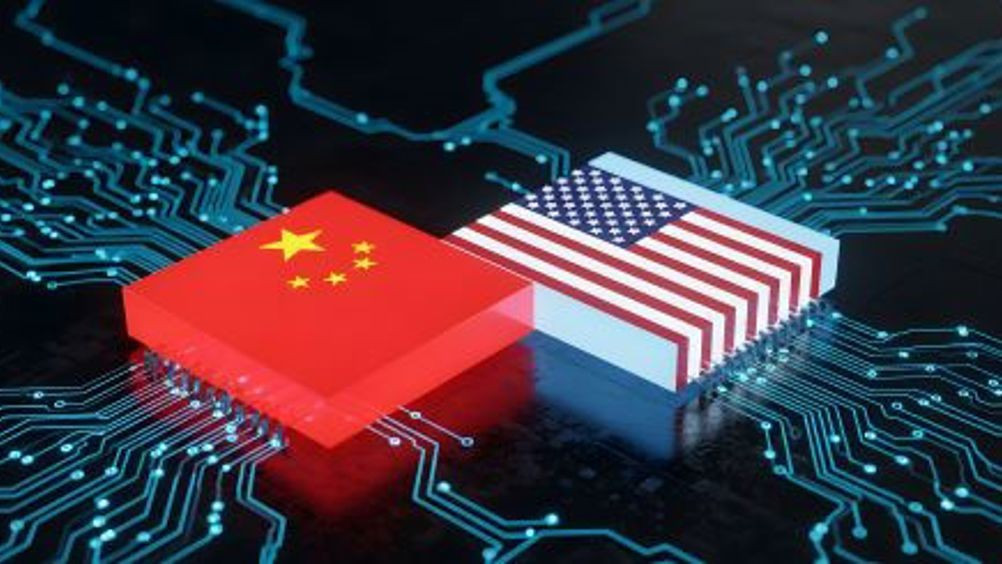
China’s artificial intelligence sector is increasingly challenging the conventional assumption that winning the AI race requires ever-larger investments in computing infrastructure and capital expenditure. Recent analysis suggests that Chinese AI developers are pursuing a strategy centered on cost efficiency, algorithmic optimization, and open-source deployment rather than brute-force spending. This approach, exemplified by companies such as DeepSeek, has produced models that compete closely with leading American systems while operating at significantly lower cost. The result is a growing debate over whether the future AI leader will be determined by who spends the most money or by who delivers the most capability per dollar invested. As Chinese firms gain market share among developers and enterprises seeking affordable AI solutions, the contest between the United States and China increasingly appears to be shifting from a race of scale to a race of efficiency.
Sources
- https://www.zerohedge.com/technology/answering-trillion-dollar-question-how-chinas-ai-models-compete-cost-effieiency
- https://www.wsj.com/tech/ai/deepseek-becomes-chinas-most-valuable-ai-startup-after-over-7-4-billion-fundraise-78ef64c0
- https://fortune.com/2026/06/16/china-ai-deepseek-open-source-efficiency-global-expansion-strategy
- https://www.reuters.com/world/china/chinas-deepseek-says-its-hit-ai-model-cost-just-294000-train-2025-09-18
- https://www.fdiintelligence.com/content/2307db46-ba73-4fd9-8ba2-31365c14e06b
Key Takeaways
- China’s leading AI companies are focusing on maximizing performance per dollar spent, allowing them to compete with American models despite operating under tighter hardware and capital constraints.
- Lower-cost Chinese models are gaining adoption among developers and enterprises worldwide, creating pricing pressure on premium American AI providers and accelerating commoditization of AI services.
- The long-term AI competition may depend less on who builds the largest data centers and more on who can deliver the greatest real-world utility at the lowest operational cost.
In-Depth
For years, the dominant assumption in artificial intelligence was that victory would belong to whoever spent the most money. Silicon Valley embraced a strategy of massive capital expenditures, gigantic data centers, and ever-growing computational demands. That model has produced remarkable advances, but China is demonstrating that there may be another path.
Chinese AI firms have been forced to innovate under restrictions that limit access to the most advanced American semiconductors. Rather than concede defeat, many companies shifted their focus toward efficiency. The result has been the emergence of AI models that deliver competitive performance while consuming fewer resources and costing substantially less to deploy. DeepSeek’s rise has become the most visible example of this trend, challenging long-held assumptions about the relationship between spending and capability.
This development should concern policymakers and investors who have assumed that America’s advantage in capital markets automatically guarantees dominance in AI. Markets ultimately reward value. If businesses can obtain comparable results at a fraction of the cost, many will choose affordability over prestige. Evidence already suggests that Chinese models are gaining global adoption because they offer compelling economics for developers and enterprises.
That does not mean the United States has lost its technological edge. American firms continue to lead in many advanced capabilities, frontier research, and overall ecosystem strength. However, China’s efficiency-focused strategy is proving that innovation is not solely a function of spending. In business, as in geopolitics, the side that can achieve similar outcomes with fewer resources often gains a lasting advantage. The trillion-dollar question is no longer who can spend the most on AI. It is who can produce the greatest return on every dollar invested.