

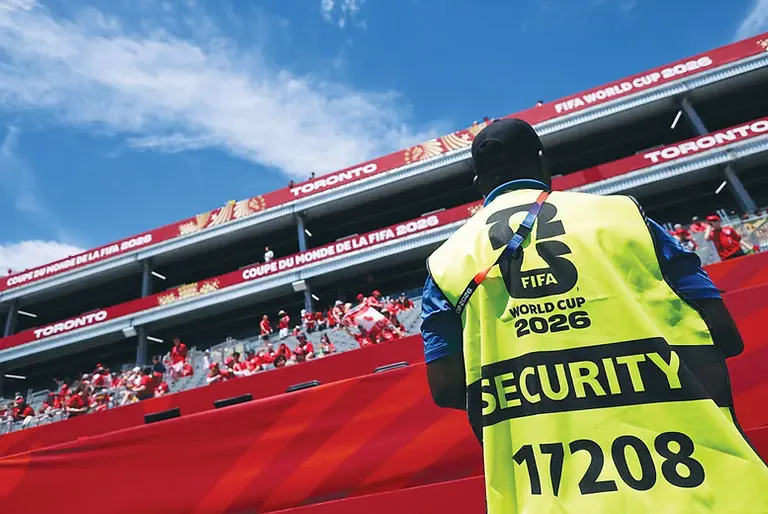
As the 2026 FIFA World Cup unfolds across the United States, Mexico, and Canada, Israeli cybersecurity and defense firms are playing a largely unseen but critical role in protecting the tournament from cyberattacks, ticketing fraud, infrastructure disruptions, and potential drone threats. According to recent reporting, Israeli companies are working closely with authorities to monitor dark-web activity, identify malicious actors, track phishing campaigns, and help secure telecommunications and transportation networks that could be targeted by hostile states, criminal organizations, or politically motivated hackers. The effort underscores how modern security challenges increasingly extend beyond the stadium gates and into cyberspace, where sophisticated adversaries seek to exploit major international events. The story also highlights the growing global reliance on Israeli defense and cybersecurity expertise, developed through years of confronting real-world threats and refined into technologies now deployed to protect critical infrastructure and major public gatherings worldwide.
Sources
- https://www.jpost.com/defense-and-tech/article-899890
- https://www.jpost.com/defense-and-tech/article-899072
- https://www.jpost.com/israel-news/defense-news/article-897768
Key Takeaways
- Israeli cybersecurity firms are actively monitoring dark-web activity, phishing campaigns, fraudulent ticket sales, and hostile cyber actors targeting the 2026 FIFA World Cup.
- Critical infrastructure, including telecommunications, transportation networks, and public communications systems, is increasingly viewed as a prime target for state-backed hackers and cybercriminals during major international events.
- Israel’s growing role in global security reflects the international demand for battle-tested technologies and expertise developed through years of confronting cyber, drone, intelligence, and military threats.
In-Depth
The 2026 FIFA World Cup is being marketed as the largest sporting event in history, but behind the excitement of packed stadiums and international competition lies a growing concern over security in an increasingly dangerous digital age. While fans focus on the action on the field, security professionals are focused on a different contest entirely: stopping cybercriminals, hostile foreign actors, and technologically sophisticated bad actors from disrupting the tournament.
One of the more noteworthy aspects of this effort is the prominent role being played by Israeli technology firms. These companies are helping authorities identify threats ranging from fraudulent ticketing schemes to attempts to penetrate telecommunications networks and critical infrastructure. Their work reportedly includes monitoring dark-web forums, tracking hacktivist activity, and sharing intelligence with government agencies responsible for protecting the event.
For conservatives who have long argued that strong national security requires both technological superiority and proactive defense, this development serves as a reminder that modern warfare is no longer confined to battlefields. A determined adversary can create chaos without firing a single shot by targeting communications systems, transportation networks, or digital services that millions rely upon. Major public events present attractive targets precisely because disruption generates maximum publicity.
The broader story is that Israel’s security sector continues to expand its global influence. From advanced cyber capabilities to electronic warfare systems and counter-drone technologies, nations and organizations increasingly seek out Israeli expertise because it has been tested under real-world conditions rather than laboratory simulations. As international threats evolve, the World Cup’s security architecture offers another example of how technological preparedness and vigilance remain essential components of public safety in the twenty-first century.