

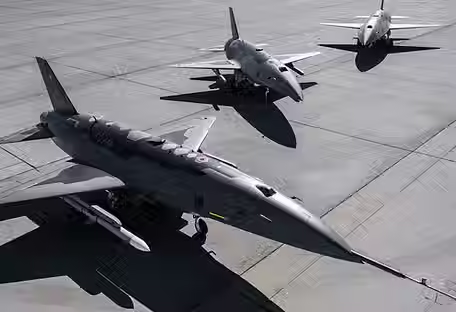
The U.S. Air Force has awarded production contracts to defense firms Anduril Industries and General Atomics for its first operational fleet of semi-autonomous Collaborative Combat Aircraft (CCA), marking a significant step toward integrating artificial intelligence and unmanned systems into frontline air combat. The program, which moved from prototype development to manufacturing in just over two years, is intended to create drone “wingmen” that can accompany manned fighters, conduct reconnaissance, absorb enemy fire, perform electronic warfare missions, and expand combat power without placing additional pilots at risk. Air Force officials say the initiative is advancing ahead of schedule and could eventually grow to roughly 1,000 aircraft, reflecting a broader transformation in modern warfare toward human-machine teaming and AI-enabled battlefield decision-making. Supporters argue the program will help maintain American air superiority against peer competitors such as China while reducing costs and increasing operational flexibility.
Sources
- https://www.jpost.com/defense-and-tech/article-899781
- https://www.jpost.com/tags/defense-tech
- https://www.aipac.org/memos/america-israel-defense-ndaa
Key Takeaways
- The U.S. Air Force has moved the Collaborative Combat Aircraft program from prototype testing to production far faster than traditional fighter acquisition programs.
- AI-enabled drone wingmen are expected to work alongside advanced fighters such as the F-35 and future next-generation aircraft, extending combat reach while reducing risks to pilots.
- Defense planners increasingly view artificial intelligence, autonomous systems, cybersecurity, and counter-drone technologies as central components of future military superiority.
In-Depth
The Air Force’s decision to award production contracts for the Collaborative Combat Aircraft program represents far more than another defense procurement milestone. It signals a fundamental shift in how the United States intends to fight future wars. For decades, airpower revolved around increasingly sophisticated manned aircraft that became more capable but also dramatically more expensive. The emergence of AI-enabled drone wingmen offers a different path—one that combines advanced technology with greater battlefield mass and flexibility.
Under the program, autonomous aircraft will operate alongside manned fighters, carrying sensors, conducting surveillance, jamming enemy systems, and even engaging hostile targets when directed. The concept allows commanders to place unmanned systems in the most dangerous environments while preserving scarce pilot resources. Just as importantly, the relatively lower cost of these aircraft could enable the United States to field larger numbers of combat platforms in a conflict against a near-peer adversary.
From a conservative perspective, the rapid progress of the program demonstrates what can happen when military acquisition focuses on capability and speed rather than bureaucratic delay. The Air Force’s decision to push the project into production ahead of schedule suggests confidence that the technology is mature enough to begin fielding operational capability now rather than years from now.
The broader strategic implication is unmistakable. Military competition is increasingly becoming a contest of artificial intelligence, autonomous systems, cyber capabilities, and advanced defense technologies. Nations that successfully integrate these technologies into their armed forces will possess a decisive advantage on tomorrow’s battlefield. The CCA program indicates that the United States intends to remain at the forefront of that race.