

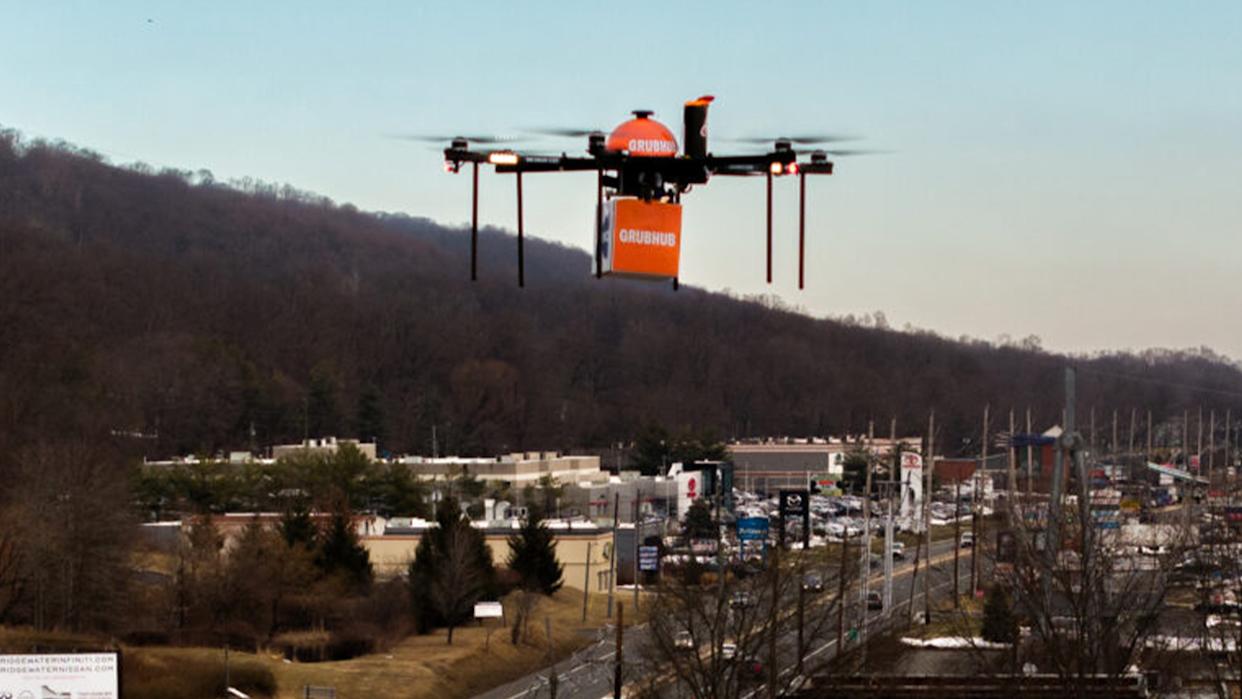
Wonder, the parent company of Grubhub, is accelerating the commercialization of drone-delivered meals by launching service in the Dallas area beginning in January, with broader expansion planned across Texas through 2027. The initiative will rely on autonomous aircraft operated by Zipline, a company with an established record in medical and retail drone logistics, to transport meals directly from Wonder food halls to customers’ homes. The move highlights the intensifying competition among food-delivery companies seeking faster, lower-cost, and more efficient last-mile delivery solutions while reducing dependence on traditional drivers. While supporters argue that autonomous delivery can improve speed and food quality, the expansion also raises familiar questions regarding airspace management, neighborhood acceptance, regulatory oversight, and the long-term impact on delivery employment. As private-sector innovation continues to outpace government regulation, the Texas rollout will serve as a significant test of whether consumers are ready to embrace drones as a routine part of everyday commerce.
Sources
- https://www.dallasnews.com/business/technology/article/grubhub-owner-launch-drone-food-delivery-dallas-22327430.php
- https://www.reuters.com/world/us/wonder-launch-drone-food-delivery-texas-january-2026-06-30/
- https://dronelife.com/2026/06/30/restaurant-drone-delivery-wonder-zipline-texas/
Key Takeaways
- • Texas is becoming a leading testing ground for large-scale commercial drone delivery, with food, grocery, and retail services increasingly adopting autonomous aircraft.
- • Wonder’s partnership with Zipline reflects an industry-wide race among food delivery companies to reduce delivery times while lowering long-term operating costs through automation.
- • The expansion demonstrates how private innovation is rapidly advancing, even as policymakers and regulators continue working through questions involving safety, privacy, airspace management, and workforce disruption.
In-Depth
Wonder’s decision to introduce drone food delivery in Dallas represents another milestone in the growing effort to automate America’s last-mile delivery economy. By partnering with Zipline, whose technology has already demonstrated success in medical and retail logistics, the company is betting that customers will increasingly value speed and convenience over traditional delivery methods. If successful, the model could reshape expectations for restaurant delivery throughout Texas and beyond.
From a free-market perspective, this development illustrates how competition continues to drive innovation without waiting for government direction. Companies are investing heavily in technologies capable of reducing delivery times while improving efficiency and lowering operating costs. Consumers ultimately benefit when businesses compete to provide faster, higher-quality service, particularly in an industry where delivery speed directly affects product quality.
At the same time, the transition will not be without challenges. Local governments, regulators, and residents will inevitably debate issues involving airspace congestion, neighborhood noise, privacy, and safety standards. There are also legitimate concerns about how increasing automation may affect traditional delivery jobs over time. Those questions deserve careful consideration, but they should not become excuses to unnecessarily delay technological progress.
Texas has built a reputation as one of America’s most business-friendly states, making it an ideal proving ground for innovations like autonomous delivery. If the rollout succeeds, drone-delivered meals could quickly evolve from a novelty into an everyday service, demonstrating once again that private enterprise—not bureaucracy—often moves fastest in bringing new technologies to consumers.