

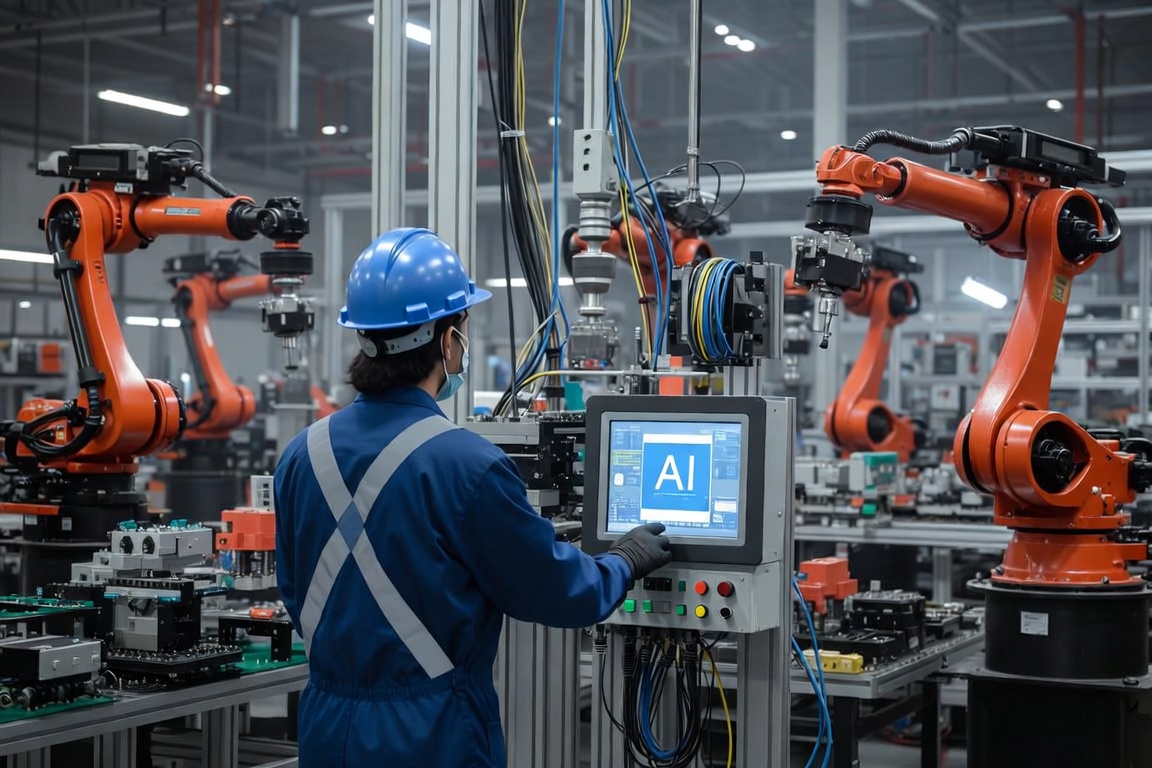
The rise of artificial intelligence is no longer a distant concern debated in academic circles or Silicon Valley boardrooms. It is here, it is accelerating, and it is beginning to redraw the boundaries of the American workforce in ways that demand serious attention. While technological disruption has always been part of economic evolution, the speed and scope of AI-driven change present a challenge unlike anything seen since the Industrial Revolution. The central question is no longer whether AI will replace jobs, but which ones, how quickly, and what comes next.
The most vulnerable careers are those rooted in repetition, predictability, and rules-based outputs. Administrative assistants, data entry clerks, customer service representatives, and even paralegals face significant exposure. These roles rely heavily on structured processes—exactly the type of work AI systems now perform with increasing efficiency and accuracy. White-collar professions once considered insulated from automation are no longer safe havens. Entry-level journalists, basic financial analysts, and junior programmers are already competing with AI tools capable of producing competent work in seconds. In many cases, companies are beginning to question why they should pay a salary for tasks that software can execute at a fraction of the cost.
By contrast, the safest careers tend to involve human judgment, physical presence, and emotional intelligence. Skilled trades—electricians, plumbers, mechanics—remain resilient because they require hands-on problem-solving in unpredictable environments. Healthcare roles such as nurses, physical therapists, and caregivers also retain a strong advantage, as they depend on human interaction and trust. Leadership positions, too, are less susceptible to full automation, not because AI cannot assist decision-making, but because accountability, vision, and responsibility still rest with people. Ironically, the further a job moves away from abstract digital work and closer to tangible human engagement, the more secure it becomes.
One of the undeniable benefits of AI is the dramatic increase in productivity. Tasks that once required hours can now be completed in minutes. Businesses can scale operations without proportionally increasing headcount. This efficiency has the potential to drive economic growth, lower costs, and improve services across industries. However, productivity gains are not evenly distributed. While companies benefit from reduced labor expenses, workers often bear the brunt of displacement. The historical promise that technology would create more jobs than it destroys is being tested in real time—and the transition period may prove painful.
Layoffs attributed to AI are already beginning to surface, often quietly and without explicit acknowledgment. Companies rarely announce that employees are being replaced by algorithms; instead, they cite “restructuring” or “efficiency improvements.” Yet the pattern is becoming clear. Tech firms, media organizations, and customer service operations have all reduced staff while simultaneously increasing reliance on automation tools. The concern is not just the number of jobs lost, but the pace at which displacement could accelerate as AI systems continue to improve.
At the same time, new categories of work are emerging. AI does not simply eliminate jobs; it transforms them and creates new ones. Roles such as AI trainers, prompt engineers, data curators, and model auditors are becoming increasingly important. Cybersecurity experts specializing in AI systems are in growing demand, as are professionals who can interpret and manage AI outputs within business contexts. These positions, however, require a different skill set—one that blends technical understanding with critical thinking and oversight.
This shift points directly to the most important question: what skills will define the future workforce? Adaptability will be paramount. Workers who can learn quickly, pivot across industries, and integrate new tools into their workflows will have a significant advantage. Technical literacy, even at a basic level, will become as essential as reading and writing. Equally important are uniquely human skills—communication, creativity, ethical judgment, and leadership. AI can generate content, but it cannot replace discernment. It can analyze data, but it cannot fully replicate wisdom.
The broader implication is that the American workforce is entering a period of recalibration. Policymakers, educators, and business leaders will need to confront uncomfortable realities about workforce readiness and economic displacement. Simply encouraging workers to “learn to code” is no longer a sufficient answer when coding itself is being automated. Instead, there must be a renewed focus on practical skills, vocational training, and lifelong learning.
Ultimately, AI will not eliminate work altogether, but it will redefine what work looks like. The challenge lies in ensuring that this transformation strengthens the economy without leaving large segments of the population behind. If approached wisely, AI could usher in a new era of prosperity and innovation. If ignored or mishandled, it risks deepening inequality and eroding the stability of the middle class. The outcome will depend not on the technology itself, but on how society chooses to respond.