

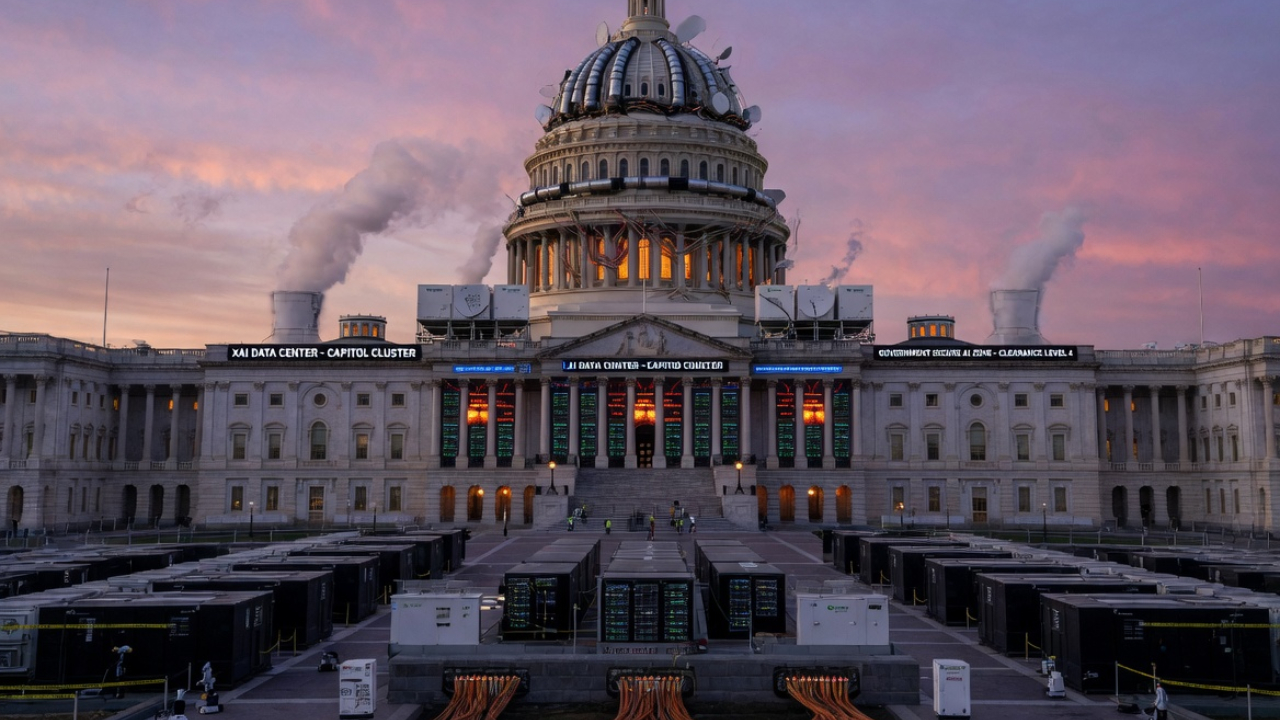
Artificial intelligence may prove to be one of the most consequential productivity tools since the personal computer. It can analyze mountains of information, summarize complicated documents, compare statutes, identify inconsistencies, and produce workable prose in seconds. There is every reason for government to explore those capabilities.
But there is an enormous difference between using AI to understand legislation and using AI to write it.
That distinction is rapidly becoming relevant. State legislative staffs already report using generative AI for research, editing, document preparation and even drafting bills, according to the National Conference of State Legislatures. Meanwhile, legislatures across the country are wrestling with AI policy itself; NCSL maintains a database tracking enacted and pending AI legislation nationwide.
The irony should be obvious. Government is attempting to determine how artificial intelligence should be governed while simultaneously experimenting with artificial intelligence as an instrument of governing.
That deserves far more scrutiny than it is receiving.
The first problem is accountability.
In the American constitutional system, laws are supposed to originate through human political judgment. Legislators introduce bills, committees examine them, witnesses testify, amendments are debated, and elected representatives ultimately put their names and votes behind the result. That process is often messy, frustrating and inefficient. It is also deliberately human.
If an elected official instructs an AI system to “write a bill regulating online misinformation,” “draft legislation restricting firearms near public buildings,” or “create a tax incentive for renewable energy,” who actually made the thousands of choices buried within the resulting language?
The legislator supplied the objective. The machine may have supplied the architecture.
That matters because legislation is not merely an expression of broad intentions. Words such as “shall,” “may,” “reasonable,” “knowingly,” “substantial,” and “public interest” can determine whether a citizen receives a benefit, loses a license, pays a fine or faces criminal prosecution.
An AI system can generate those words effortlessly. It cannot be held politically responsible for them.
There is another problem: artificial intelligence can produce information that sounds authoritative while being inaccurate. Legislative offices are already developing AI-use policies partly because of concerns about inaccuracies and exposure of sensitive information. A fabricated citation in a college essay is embarrassing. A fabricated precedent, nonexistent statutory cross-reference or subtly incorrect definition incorporated into legislation could have consequences extending across an entire state or nation.
Then comes transparency.
Citizens have a legitimate interest in knowing who wrote the laws governing them. Legislative drafting has never been performed exclusively by elected officials; staff attorneys, committees, executive agencies, lobbyists and outside organizations have long contributed language. But those are identifiable human actors whose interests, affiliations and reasoning can potentially be examined.
An AI model introduces something fundamentally different: an enormous computational intermediary whose training data, weighting, system instructions and internal processes may be largely invisible to both the legislator and the public.
New York lawmakers have already proposed requiring legislators to disclose when floor statements or debate remarks were drafted wholly or partly with generative AI. Whatever one thinks of that particular proposal, the underlying question is legitimate: Should citizens know when their representatives are speaking—or legislating—with words substantially generated by a machine?
They should.
The danger is not that AI will suddenly seize control of Congress. The more plausible danger is considerably less dramatic and therefore easier to ignore: intellectual dependency.
Once AI can produce a 40-page bill in minutes, the temptation will be enormous to let it do so. Legislative staffs are overworked. Deadlines are short. Policy subjects are increasingly technical. The machine is fast, inexpensive and always available.
Convenience has a way of becoming dependence.
Eventually, legislators could find themselves voting on machine-generated language that few people in the building fully understand. Government would become more efficient at producing legislation while becoming less capable of explaining precisely why that legislation says what it says.
For conservatives especially, this should raise a familiar concern. Limited government depends upon accountable government. The exercise of state power should be traceable to identifiable human beings who can be questioned, challenged, voted out of office and held responsible for their decisions.
AI can be an extraordinary legislative research assistant. Let it compare statutes. Let it summarize testimony. Let it search regulatory histories. Let it identify contradictory provisions. Let it help legislative counsel discover problems.
But the final language carrying the coercive authority of government should remain unmistakably the product and responsibility of human beings.
Technology should help lawmakers think.
It should never relieve them of the obligation to do so.