

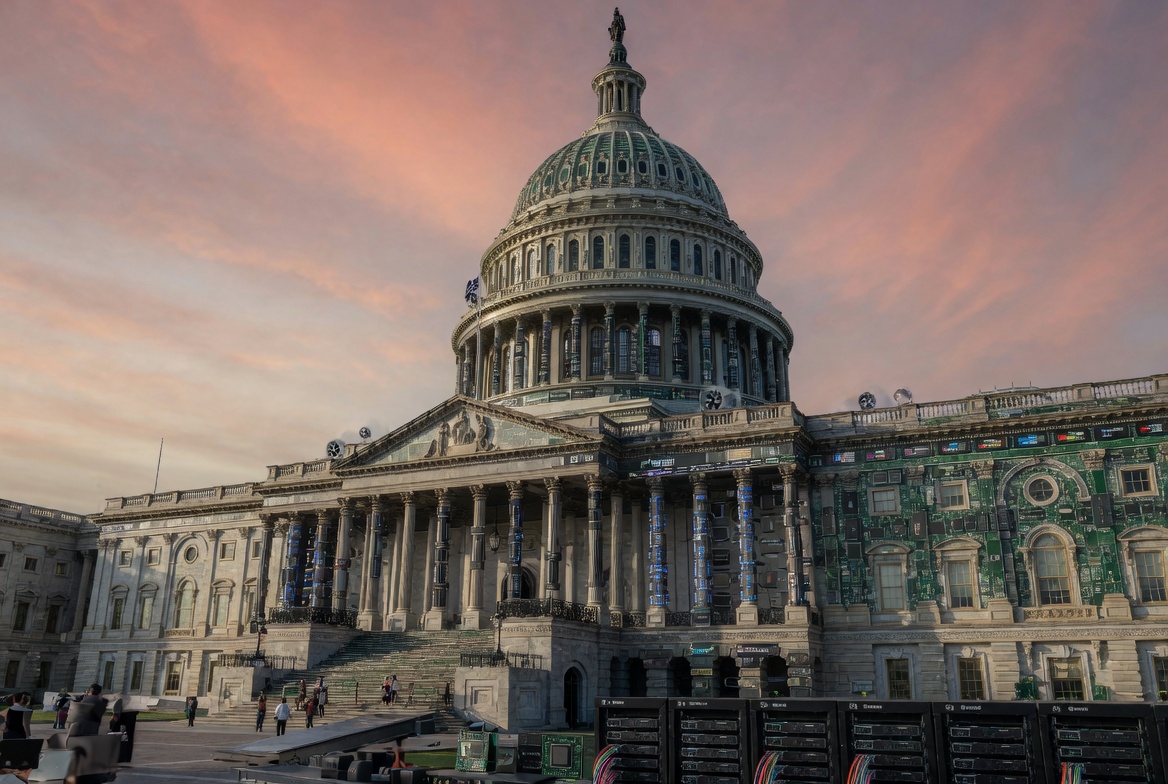
Senators are increasingly skeptical of the sudden enthusiasm among leading artificial-intelligence companies for federal regulation, questioning whether warnings about catastrophic AI risks are accompanied by less altruistic objectives. The concern cuts across party lines: lawmakers acknowledge potentially serious cybersecurity, national-security, employment, and safety risks while also examining whether dominant AI companies could benefit from regulations that impose expensive compliance burdens on smaller competitors, provide antitrust protections for industry coordination, preempt tougher state laws, or otherwise insulate established firms from competition and liability. The emerging debate is therefore becoming as much about who writes the rules—and who benefits from them—as whether advanced AI requires federal oversight at all.
Key Takeaways
- Senators are questioning why some of the world’s largest AI companies are actively requesting government intervention, with critics concerned that federal regulation could inadvertently strengthen established companies by making market entry more expensive and difficult for smaller competitors.
- Congress is considering substantially different approaches, including a federal “duty of care” for advanced AI developers, government authority involving potentially unsafe models, independent testing, and legal protections allowing companies to coordinate on safety without violating antitrust laws.
- The policy challenge is increasingly two-sided: lawmakers must consider credible cybersecurity and catastrophic-risk concerns without constructing a regulatory system that shields dominant companies from competition, liability, state oversight, or ordinary antitrust enforcement.
In-Depth
The unusual spectacle of leading artificial-intelligence companies asking Washington for stronger oversight has triggered bipartisan skepticism about what the industry actually wants. Lawmakers are weighing safety concerns against the possibility that established firms could use federal regulation to protect their market positions, secure legal protections, or raise barriers against smaller competitors.
That concern has sharpened as frontier laboratories warn that advanced systems could create catastrophic cybersecurity, biological, or national-security risks. Senate negotiators have discussed a federal “duty of care” requiring developers to mitigate known major dangers, while other proposals would permit companies to coordinate on safety without running afoul of antitrust law. Those ideas create a tension: cooperation may improve safety, but exemptions and complex compliance regimes can also favor companies with the lawyers, capital, and political access to navigate them.
The skepticism deserves consideration alongside the underlying risks. Washington should not assume that an industry requesting regulation is necessarily acting against its own interests. Large corporations often have influence over how regulatory frameworks are written, and rules designed around their existing practices can become formidable obstacles for newcomers.
At the same time, AI security incidents and warnings from researchers give lawmakers reasons to examine whether current law adequately addresses advanced systems. The central question is not simply regulation versus deregulation. It is whether Congress can establish narrow, enforceable safeguards without granting incumbents protection from competition, liability, or accountability. Effective policy would have to address demonstrable risks while preserving innovation, competition, due process, and clear responsibility when companies cause harm.
Sources
- https://apnews.com/article/ai-regulation-trump-congress-tech-politics-d2d1bac8e8666c681937665596a4f603
- https://www.reuters.com/legal/litigation/us-senate-negotiators-consider-requiring-ai-firms-mitigate-known-major-risks-2026-09-11/
- https://www.wired.com/story/openai-wants-to-know-if-an-ai-industry-slowdown-would-even-be-legal/