

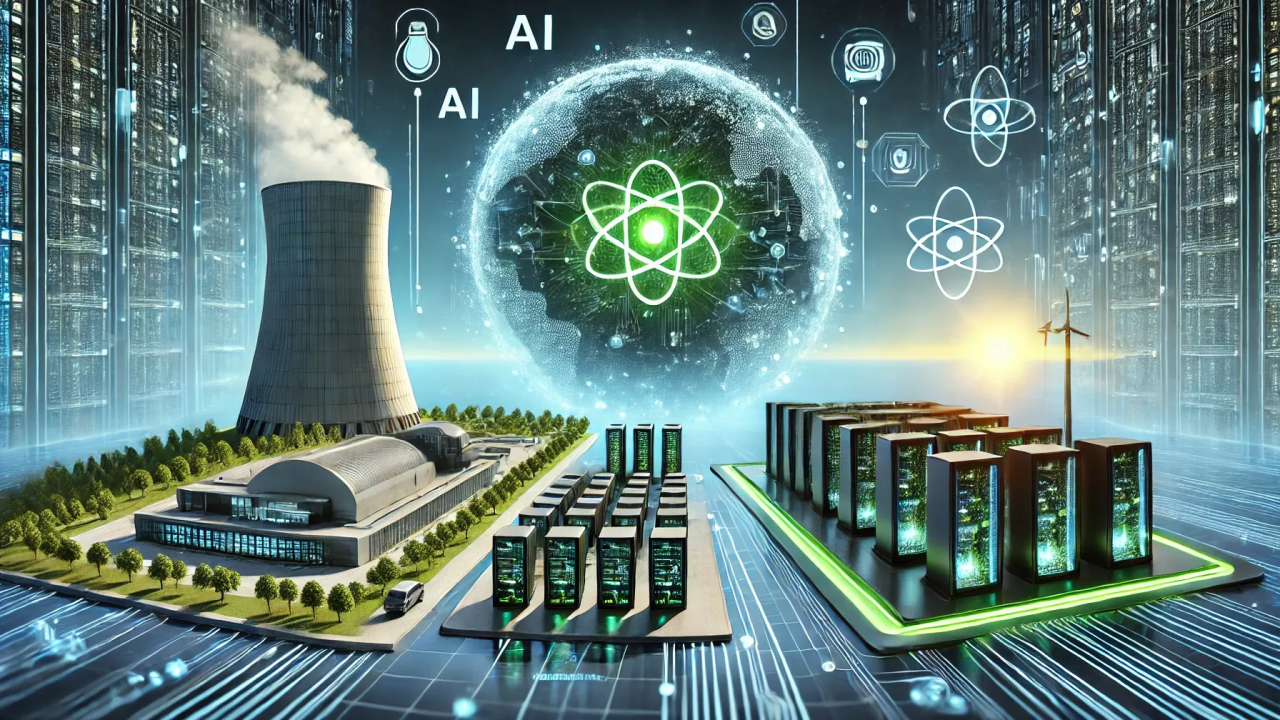
Tech giants are pouring unprecedented capital into AI infrastructure, with deals and projects pushing the envelope of scale and complexity. Microsoft‘s early investment in OpenAI paved the way, but now Oracle has inked a gargantuan $300 billion compute contract starting in 2027, and Meta is gearing up to spend as much as $600 billion in U.S. infrastructure through 2028, with “Hyperion” (Louisiana) alone aiming for 5 gigawatts of compute capacity. At the same time, Nvidia has committed $100 billion in support for OpenAI, and CoreWeave extended its OpenAI contract to $6.5 billion, raising the total to $22.4 billion. These mammoth investments are colliding head-on with constraints in electric grids, environmental permitting, and regulatory complexities. Some data centers are being paired with nuclear or gas power plants, but critics warn of air quality and grid strain risks. The sheer scope of these deals underscores both the ambition and the peril in the race to scale next-generation AI.
Sources: Data Center Frontier, Reuters
Key Takeaways
– The AI infrastructure arms race is now heavily capitalized: cloud providers, chip makers, and tech platforms are committing hundreds of billions (or more) to build compute capacity at scale.
– Power supply, grid constraints, and environmental permitting are emerging as the bottlenecks—companies are pairing data centers with nuclear or gas plants, or relying on private generation to manage load.
– Hybrid strategies are common: major players build their own superclusters (e.g. Meta’s Hyperion) while also securing cloud partnerships to meet demand during build-out phases.
In-Depth
In the fast-moving world of AI, ambition is increasingly measured in gigawatts, not just models. What once were bold forecasts are now active megaprojects: Nvidia CEO Jensen Huang estimates $3 to $4 trillion will be spent on AI infrastructure by 2030. TechCrunch lays out how Microsoft’s original $1 billion OpenAI investment evolved into a massive symbiosis; OpenAI later diversified its cloud partnerships, and Oracle recently landed a headline $300 billion compute deal beginning in 2027. Meanwhile, Meta has boldly committed to spending up to $600 billion on U.S. infrastructure through 2028, with its Louisiana “Hyperion” site alone planned to deliver as much as 5 GW of compute capacity. To sustain that power demand, Hyperion is being tied to a local nuclear plant and large gas generation, while a sister project in Ohio (“Prometheus”) is slated for natural gas. As one detailed analysis of Meta’s strategy notes, the company is blending ownership of compute campuses with supplemental cloud arrangements such as a $10 billion agreement with Google Cloud.
On the OpenAI front, partnerships with infrastructure providers have grown rapidly. CoreWeave recently expanded its deal to $6.5 billion, bringing the cumulative OpenAI-CoreWeave relationship to $22.4 billion. Nvidia, in turn, has committed $100 billion to support OpenAI’s compute ambitions. But these grand ambitions run smack into constraints: U.S. power grids are under stress, and new high-demand data centers require upgrades in transmission and generation capacity. Experts warn that meeting energy demand is becoming the “silent bottleneck” for scaling AI infrastructure. Environmental compliance, local permitting, and political friction further complicate timelines. For example, Meta’s Louisiana project reportedly involved multi-billion dollar gas plants and transmission investments, and critics have raised questions about air quality and public burden of infrastructure costs.
What emerges is a layered, hybrid strategy: build massive, vertically integrated compute campuses for long-term control and efficiency, but lean on external cloud capacity in the interim. The race is now not just about AI models or algorithms, but who can orchestrate the physical infrastructure—land, power, permitting, capital—to sustain next-gen compute at scale. The risks are high, but so are the stakes in the AI era.