

Close Menu

    Subscribe to Updates

    Get the latest creative news from FooBar about art, design and business.

    What's Hot

    Global Memory Shortage Set to Push Up Prices on Phones, Laptops, and More

    February 27, 2026

    Uber Rolls Out “Uber Autonomous Solutions” To Support Third-Party Robotaxi Partners

    February 27, 2026

    Discord Ends Persona Age Verification Trial Amid Privacy Backlash

    February 27, 2026
    Facebook X (Twitter) Instagram
    • Tech
    • AI
    • Get In Touch
    Facebook X (Twitter) LinkedIn
    TallwireTallwire
    • Tech

      Global Memory Shortage Set to Push Up Prices on Phones, Laptops, and More

      February 27, 2026

      OpenAI’s Stargate Data Center Ambitions Hit Major Roadblocks

      February 27, 2026

      Large Hadron Collider Enters Third Shutdown For Major Upgrade

      February 26, 2026

      Stellantis Faces Massive Losses and Strategic Shift After Misjudging EV Market Demand

      February 26, 2026

      AI’s Persistent PDF Parsing Failure Stalls Practical Use

      February 26, 2026
    • AI

      Uber Rolls Out “Uber Autonomous Solutions” To Support Third-Party Robotaxi Partners

      February 27, 2026

      Global Memory Shortage Set to Push Up Prices on Phones, Laptops, and More

      February 27, 2026

      OpenAI’s Stargate Data Center Ambitions Hit Major Roadblocks

      February 27, 2026

      Anthropic Raises Alarm Over Chinese AI Model Distillation Practices

      February 26, 2026

      AI’s Persistent PDF Parsing Failure Stalls Practical Use

      February 26, 2026
    • Security

      Discord Ends Persona Age Verification Trial Amid Privacy Backlash

      February 27, 2026

      FBI Issues Alert on Outdated Wi-Fi Routers Vulnerable to Cyber Attacks

      February 25, 2026

      Wikipedia Blacklists Archive.Today After DDoS Abuse And Content Manipulation

      February 24, 2026

      Admissions Website Bug Exposed Children’s Personal Information

      February 23, 2026

      FBI Warns ATM Jackpotting Attacks on the Rise, Costing Hackers Millions in Stolen Cash

      February 22, 2026
    • Health

      Social Media Addiction Trial Draws Grieving Parents Seeking Accountability From Tech Platforms

      February 19, 2026

      Portugal’s Parliament OKs Law to Restrict Children’s Social Media Access With Parental Consent

      February 18, 2026

      Parents Paint 108 Names, Demand Snapchat Reform After Deadly Fentanyl Claims

      February 18, 2026

      UK Kids Turning to AI Chatbots and Acting on Advice at Alarming Rates

      February 16, 2026

      Landmark California Trial Sees YouTube Defend Itself, Rejects ‘Social Media’ and Addiction Claims

      February 16, 2026
    • Science

      Large Hadron Collider Enters Third Shutdown For Major Upgrade

      February 26, 2026

      Google Phases Out Android’s Built-In Weather App, Replacing It With Search-Based Forecasts

      February 25, 2026

      Microsoft’s Breakthrough Suggests Data Could Be Preserved for 10,000 Years on Glass

      February 24, 2026

      NASA Trials Autonomous, AI-Planned Driving on Mars Rover

      February 20, 2026

      XAI Publicly Unveils Elon Musk’s Interplanetary AI Vision In Rare All-Hands Release

      February 14, 2026
    • Tech

      Zuckerberg Testifies In Landmark Trial Over Alleged Teen Social Media Harms

      February 23, 2026

      Gay Tech Networks Under Spotlight In Silicon Valley Culture Debate

      February 23, 2026

      Google Co-Founder’s Epstein Contacts Reignite Scrutiny of Elite Tech Circles

      February 7, 2026

      Bill Gates Denies “Absolutely Absurd” Claims in Newly Released Epstein Files

      February 6, 2026

      Informant Claims Epstein Employed Personal Hacker With Zero-Day Skills

      February 5, 2026
    TallwireTallwire
    Home»Tech»Electroflow Eyes U.S. Battery Dominance by Targeting 40% Lower LFP Costs vs. China
    Tech

    Electroflow Eyes U.S. Battery Dominance by Targeting 40% Lower LFP Costs vs. China

    Updated:December 25, 20254 Mins Read
    Facebook Twitter Pinterest LinkedIn Tumblr Email
    Electroflow Eyes U.S. Battery Dominance by Targeting 40% Lower LFP Costs vs. China
    Electroflow Eyes U.S. Battery Dominance by Targeting 40% Lower LFP Costs vs. China
    Share
    Facebook Twitter LinkedIn Pinterest Email

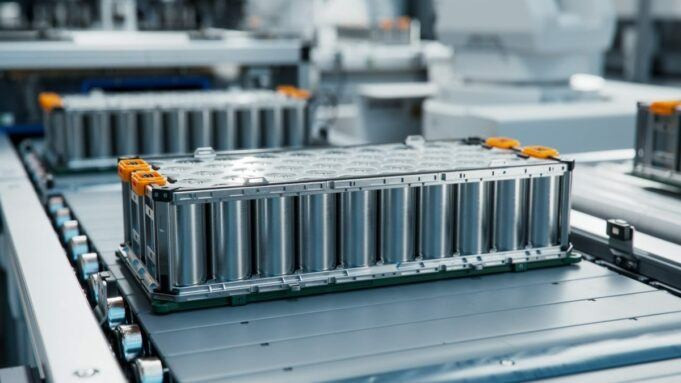
    Electroflow, a U.S. startup, unveiled plans to manufacture lithium iron phosphate (LFP) cathode material at around 40 percent lower cost than leading Chinese producers, relying on a streamlined three-step electrochemical extraction process that converts lithium brine to battery-grade chemicals. According to the company, their first-generation “V1” system aims for ~$5,000 per metric ton cost, and with scale hopes to push that below $2,500 per ton — undercutting Chinese benchmark pricing of ~$4,000 per ton. They recently secured $10 million in seed funding led by Union Square Ventures and Voyager, further backing their ambition to build a domestic supply chain. Their process reportedly operates in a containerized, modular format, consumes modest energy (comparable to a U.S. household for ~50 ton output), recycles water, and sidesteps many of the traditional extraction and refinement steps. While the promise is bold, practical challenges around scaling, securing brine feedstocks, regulatory approvals, and ensuring consistency at industrial throughput remain substantial.

    Sources: Wall Street Journal, CleanTechnica

    Key Takeaways

    – Electroflow’s approach compresses what normally is a ~10-step lithium extraction and refinement chain into just three electrochemical operations, aiming for radical cost cuts and minimal energy and water usage.

    – Its modular, containerized design is intended to deploy close to lithium brine sources, reducing transport overhead and enabling localized U.S. supply, thus challenging China’s dominance in battery materials.

    – While the funding and technological promise are compelling, scaling up operations, assuring consistent yield and purity, navigating permitting, and securing feedstock access are significant hurdles ahead.

    In-Depth

    Electroflow is staking a bold claim in the battery materials arena: to make LFP cathode material (a key component in many EV batteries) about 40 percent cheaper than what current Chinese producers offer. That’s not a small margin — it’s aggressive. China currently enjoys economies of scale, vertically integrated supply chains, and established refining capacity, which make it hard for new entrants to compete. The fact that nearly 99 percent of LFP production today happens under China’s shadow only heightens the ambition (and risk) behind Electroflow’s project.

    At the core of their pitch is a novel electrochemical process that draws lithium directly from brines using anodes that absorb lithium ions when current is applied one way, then release them into a carbonate medium when reversed. That gives lithium carbonate, which is then combined with phosphate and iron to yield LFP powder. By collapsing the usual multi-stage refining workflows into just three operations, Electroflow aims to save time, energy, capital, and chemical overhead. In lab or pilot contexts, the startup claims the energy demand to generate 50 metric tons of lithium carbonate is about equal to what a typical U.S. household uses annually, and much of the process’s water use can be recovered or recycled. That design also lets them package a full system inside a 20-foot container capable of producing ~100 metric tons of LFP material per year when fully scaled.

    To get traction, Electroflow recently raised $10 million in a seed round, with Union Square Ventures and Voyager leading and support from existing backers like Fifty Years and Harpoon. The capital will support scale-up, continued prototyping, deployment of test systems, and forming partnerships with battery manufacturers. TechCrunch reported that the company already operated a demonstration on brine sourced from a geothermal site in California to show real-world viability.

    If successful, the implications are big. American automakers and battery firms would gain access to a domestic, lower-cost LFP supply, weakening China’s chokehold on the supply chain. The cost savings could cascade: LFP cathodes are a substantial component of EV material cost, so a cheaper cathode feed could translate to lower battery and vehicle prices — perhaps 10–20 percent lower battery costs depending on how far the savings ripple downstream.

    Yet the road is steep. Scaling from lab to commercial volumes is notoriously difficult in battery chemistry. Ensuring consistency, high purity, and yield at industrial throughput is nontrivial. Moreover, sourcing adequate brine volumes with suitable lithium concentration and managing regulatory, environmental, and permitting challenges will be vital. Deploying container units is clever, but aggregation, operations, maintenance, and quality control over many distributed units is logistically complex.

    On balance, Electroflow’s idea is bold and potentially transformative. If they deliver, they could rewrite the map of global battery materials and undercut China’s dominance. But the venture’s success depends on engineering scale, reliable feedstock sourcing, financial stability, and execution across distributed systems. We’ll have to watch whether their first full-scale systems can deliver on the claim of “40 percent cheaper LFP from U.S. soil.”

    Share. Facebook Twitter Pinterest LinkedIn Tumblr Email
    Previous ArticleEight Sleep Secures $100 Million to Bring AI-Enhanced ‘Sleep Fitness’ into the Bedroom
    Next Article Elon Musk’s xAI Launches New AI Software Firm “Macrohard” to Challenge Microsoft

    Related Posts

    Global Memory Shortage Set to Push Up Prices on Phones, Laptops, and More

    February 27, 2026

    OpenAI’s Stargate Data Center Ambitions Hit Major Roadblocks

    February 27, 2026

    Large Hadron Collider Enters Third Shutdown For Major Upgrade

    February 26, 2026

    Stellantis Faces Massive Losses and Strategic Shift After Misjudging EV Market Demand

    February 26, 2026
    Add A Comment
    Leave A Reply Cancel Reply

    Editors Picks

    Global Memory Shortage Set to Push Up Prices on Phones, Laptops, and More

    February 27, 2026

    OpenAI’s Stargate Data Center Ambitions Hit Major Roadblocks

    February 27, 2026

    Large Hadron Collider Enters Third Shutdown For Major Upgrade

    February 26, 2026

    Stellantis Faces Massive Losses and Strategic Shift After Misjudging EV Market Demand

    February 26, 2026
    Top Reviews
    Tallwire
    Facebook X (Twitter) LinkedIn Threads Instagram RSS
    • Tech
    • Entertainment
    • Business
    • Government
    • Academia
    • Transportation
    • Legal
    • Press Kit
    © 2026 Tallwire. Optimized by ARMOUR Digital Marketing Agency.

    Type above and press Enter to search. Press Esc to cancel.