

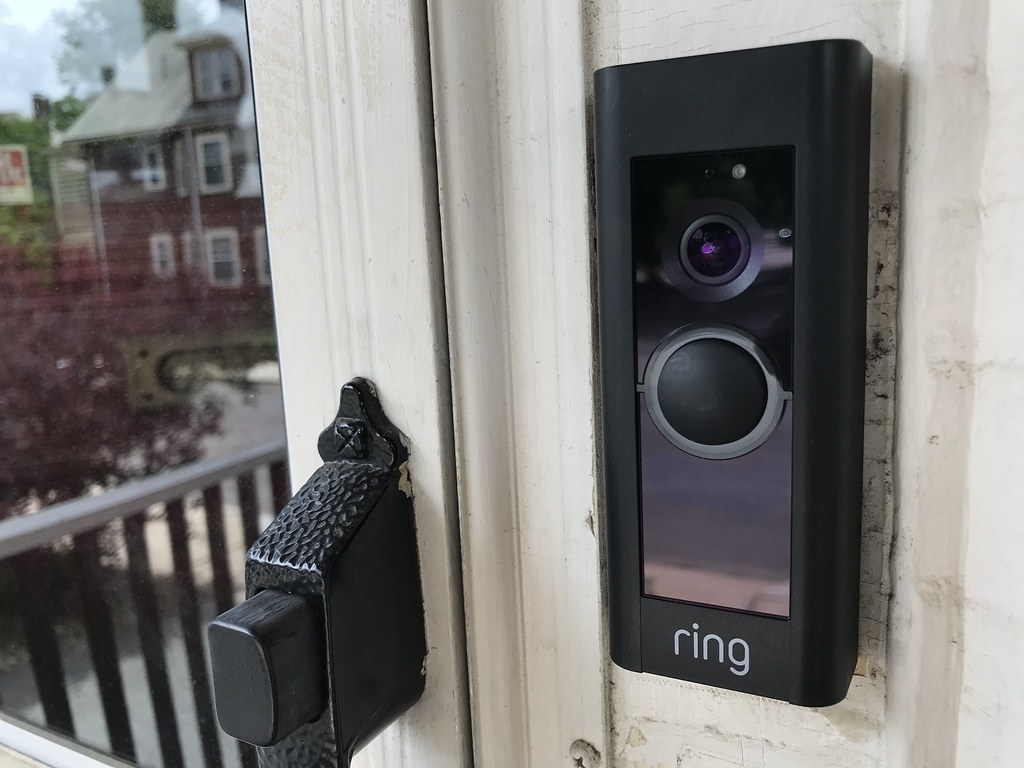
A leaked internal email from Ring founder Jamie Siminoff shows that the company’s new AI-driven “Search Party” feature, initially marketed as a tool to help find lost dogs through a Super Bowl advertisement, was always intended to evolve into a broader neighborhood surveillance capability that could help “zero out crime” and potentially assist with other public safety objectives, raising significant privacy and civil liberties concerns as critics warn the technology’s networked camera searches may be repurposed for law enforcement use and other surveillance beyond its heroic pet-finding premise.
Sources
https://www.theverge.com/tech/880906/ring-siminoff-email-leak-search-party-expansion
https://www.404media.co/leaked-email-suggests-ring-plans-to-expand-search-party-surveillance-beyond-dogs/
https://www.techbuzz.ai/articles/ring-s-search-party-ai-targets-crime-zero-out-plan
Key Takeaways
• Internal communications from Ring indicate “Search Party” was framed as phase one of a broader AI surveillance strategy aimed at reducing crime in neighborhoods, not just locating missing pets.
• Privacy advocates and critics warn that linking Ring cameras in a default neighborhood network could create pervasive surveillance infrastructure that far exceeds its advertised use case.
• Public backlash accelerated after Ring’s Super Bowl marketing raised alarm about potential misuse of AI-enabled features for law enforcement or other tracking beyond the voluntary pet search.
In-Depth
Ring’s rollout of its AI-powered “Search Party” feature has shifted from a feel-good narrative about reuniting families with lost pets to a broader debate over consumer surveillance and civil liberties. At its launch in late 2025, Ring, owned by Amazon, presented the technology as a way for users to search multiple networked home cameras for sightings of missing dogs through object recognition. This concept was widely publicized during a high-profile Super Bowl commercial, one of the most prominent advertising spots of the year, where viewers saw the system in action helping to locate a lost pet. However, a leaked internal email from Ring’s founder Jamie Siminoff obtained by independent outlets reveals a different trajectory for the technology, one aimed at harnessing the same AI and interconnected camera network to “zero out crime” across neighborhoods.
According to that email, the dog-finding use case was merely the initial stage of the broader capabilities Ring envisions. The leaked message, sent to employees shortly after the feature’s October rollout, conveys that Search Party is the foundation for future expansion into other forms of threat detection and public safety utility. Internal language suggesting the company saw the technology as a stepping stone to more comprehensive community surveillance has alarmed privacy advocates, who point out that automatically linking Ring cameras in a neighborhood creates an infrastructure that could be repurposed for more invasive uses.
The controversy deepened as critics raised concerns on social media and in comment threads that Ring’s networked AI scanning could, over time, be adapted to track people or behaviors beyond pet identification, potentially aligning with law enforcement interests or other surveillance use cases. Earlier features downstream from Ring, such as the Community Requests system—which lets police request footage from camera owners—have already drawn scrutiny for the precedent they set in allowing third parties to access user-generated video. While Ring maintains that sharing footage remains under the camera owner’s control and that its current Search Party system does not process human biometrics, the leaked internal vision for the platform paints a picture of a surveillance ecosystem that could outgrow its original pet-centric purpose. As public debate continues, questions about privacy, consent, and the future direction of consumer surveillance technology remain at the forefront of discussions surrounding Ring’s evolving portfolio.