

Close Menu

    Subscribe to Updates

    Get the latest creative news from FooBar about art, design and business.

    What's Hot

    Panasonic Strikes Partnership to Reclaim TV Market Share in the West

    February 26, 2026

    Large Hadron Collider Enters Third Shutdown For Major Upgrade

    February 26, 2026

    Stellantis Faces Massive Losses and Strategic Shift After Misjudging EV Market Demand

    February 26, 2026
    Facebook X (Twitter) Instagram
    • Tech
    • AI
    • Get In Touch
    Facebook X (Twitter) LinkedIn
    TallwireTallwire
    • Tech

      Large Hadron Collider Enters Third Shutdown For Major Upgrade

      February 26, 2026

      Stellantis Faces Massive Losses and Strategic Shift After Misjudging EV Market Demand

      February 26, 2026

      AI’s Persistent PDF Parsing Failure Stalls Practical Use

      February 26, 2026

      Solid-State Battery Claims Put to the Test With Record Fast Charging Results

      February 26, 2026

      Intel Signals Return To Unified Core Design, Phasing Out Performance And Efficiency Split

      February 26, 2026
    • AI

      Anthropic Raises Alarm Over Chinese AI Model Distillation Practices

      February 26, 2026

      AI’s Persistent PDF Parsing Failure Stalls Practical Use

      February 26, 2026

      Tech Firms Push “Friendlier” Robot Designs to Boost Human Acceptance

      February 26, 2026

      Samsung Expands Galaxy AI With Perplexity Integration for Upcoming S26 Series

      February 25, 2026

      Meta AI Safety Director’s Email Deletion Blunder Sparks Industry Scrutiny

      February 25, 2026
    • Security

      FBI Issues Alert on Outdated Wi-Fi Routers Vulnerable to Cyber Attacks

      February 25, 2026

      Wikipedia Blacklists Archive.Today After DDoS Abuse And Content Manipulation

      February 24, 2026

      Admissions Website Bug Exposed Children’s Personal Information

      February 23, 2026

      FBI Warns ATM Jackpotting Attacks on the Rise, Costing Hackers Millions in Stolen Cash

      February 22, 2026

      Microsoft Admits Office Bug Exposed Confidential Emails to Copilot AI

      February 22, 2026
    • Health

      Social Media Addiction Trial Draws Grieving Parents Seeking Accountability From Tech Platforms

      February 19, 2026

      Portugal’s Parliament OKs Law to Restrict Children’s Social Media Access With Parental Consent

      February 18, 2026

      Parents Paint 108 Names, Demand Snapchat Reform After Deadly Fentanyl Claims

      February 18, 2026

      UK Kids Turning to AI Chatbots and Acting on Advice at Alarming Rates

      February 16, 2026

      Landmark California Trial Sees YouTube Defend Itself, Rejects ‘Social Media’ and Addiction Claims

      February 16, 2026
    • Science

      Large Hadron Collider Enters Third Shutdown For Major Upgrade

      February 26, 2026

      Google Phases Out Android’s Built-In Weather App, Replacing It With Search-Based Forecasts

      February 25, 2026

      Microsoft’s Breakthrough Suggests Data Could Be Preserved for 10,000 Years on Glass

      February 24, 2026

      NASA Trials Autonomous, AI-Planned Driving on Mars Rover

      February 20, 2026

      XAI Publicly Unveils Elon Musk’s Interplanetary AI Vision In Rare All-Hands Release

      February 14, 2026
    • Tech

      Zuckerberg Testifies In Landmark Trial Over Alleged Teen Social Media Harms

      February 23, 2026

      Gay Tech Networks Under Spotlight In Silicon Valley Culture Debate

      February 23, 2026

      Google Co-Founder’s Epstein Contacts Reignite Scrutiny of Elite Tech Circles

      February 7, 2026

      Bill Gates Denies “Absolutely Absurd” Claims in Newly Released Epstein Files

      February 6, 2026

      Informant Claims Epstein Employed Personal Hacker With Zero-Day Skills

      February 5, 2026
    TallwireTallwire
    Home»Tech»Microsoft’s Breakthrough Suggests Data Could Be Preserved for 10,000 Years on Glass
    Tech

    Microsoft’s Breakthrough Suggests Data Could Be Preserved for 10,000 Years on Glass

    3 Mins Read
    Facebook Twitter Pinterest LinkedIn Tumblr Email
    Microsoft Elevates Enterprise AI Agent Oversight with Foundry Overhaul
    Microsoft Elevates Enterprise AI Agent Oversight with Foundry Overhaul
    Share
    Facebook Twitter LinkedIn Pinterest Email

    Microsoft researchers say they’ve made a major step in long-term digital preservation by encoding data in borosilicate glass—a common, durable material—using laser etching that could keep information readable for an estimated 10,000 years, far longer than traditional storage media like hard drives or magnetic tape, and potentially reduce the need for frequent data migration in archival systems. The advance, detailed in a scientific paper published in the journal Nature, builds on Microsoft’s Project Silica efforts and demonstrates that ordinary glass plates can hold terabytes of data stably through accelerated aging tests, although practical, high-speed, production-ready solutions remain a work in progress as researchers explore cost, speed, and manufacturing challenges.

    Sources

    https://www.semafor.com/article/02/20/2026/microsoft-says-it-can-store-data-for-10000-years-on-glass
    https://www.microsoft.com/en-us/research/blog/project-silicas-advances-in-glass-storage-technology/
    https://www.livescience.com/technology/computing/microsoft-can-now-store-data-for-10-000-years-on-everyday-glass-thanks-to-laser-breakthrough
    https://www.computerworld.com/article/4134559/data-stored-in-glass-could-last-over-10000-years-microsoft-says-2.html
    https://www.techrepublic.com/article/news-microsoft-project-silica-5tb-glass-data-storage/

    Key Takeaways

    • Microsoft’s Project Silica has encoded significant amounts of data on borosilicate glass with accelerated testing suggesting durability lasting at least 10,000 years, outlasting current archival media by orders of magnitude.
    • The breakthrough relies on femtosecond laser etching to write data into ordinary glass plates, potentially lowering costs versus earlier exotic materials and improving future accessibility.
    • While promising for preserving digital heritage and reducing energy and maintenance demands of current storage tech, commercialization and practical scaling to production systems are still unresolved.

    In-Depth

    Microsoft’s latest research into long-term digital storage marks a striking milestone in the ongoing struggle to preserve humanity’s vast and ever-growing digital footprint. Traditional storage media like hard drives and magnetic tape degrade over decades, forcing companies to constantly back up and migrate data at significant cost and environmental impact. In contrast, Microsoft’s Project Silica has now etched data directly into common borosilicate glass—a material familiar from kitchenware and laboratory equipment—using ultrafast laser pulses in a process that embeds information across hundreds of microscopic layers. According to detailed reporting and the company’s own research blog, this technique has shown through accelerated aging tests that data could remain intact and readable for at least 10,000 years, significantly outpacing any archival solution currently in widespread use.

    The implications are substantial. Regular storage systems require ongoing maintenance, energy consumption, and periodic rewrites as media degrade, which in turn imposes logistical burdens on organizations tasked with maintaining valuable records over long periods. By contrast, glass storage does not require a climate-controlled environment once data is written; it resists heat, moisture, and dust, and the physical etching cannot be altered or hacked. The move from rarefied fused silica to everyday borosilicate glass represents a meaningful step toward making this technology practical and more cost-effective, addressing earlier concerns about scalability and material availability. Researchers have demonstrated that a single thin plate of glass can store terabytes of data—the equivalent of millions of printed books—suggesting that glass storage could one day house critical archives, historical records, and massive datasets in a stable medium that future generations could access without the burdensome overhead of current systems.

    Yet, key challenges remain. The laser writing and reading processes are slower than modern hard drives and solid-state storage, and widespread adoption would require advances in speed, automated manufacturing, and affordable reader technology. While the research published in Nature signals genuine progress, commercial deployment on a global scale will take further engineering, investment, and time. Nonetheless, this glass-based archival approach offers a compelling vision of a future where digital history isn’t lost to decay, obsolescence, or the relentless turnover of storage formats, and where preserving information for millennia isn’t merely theoretical but achievable with the right technological breakthroughs.

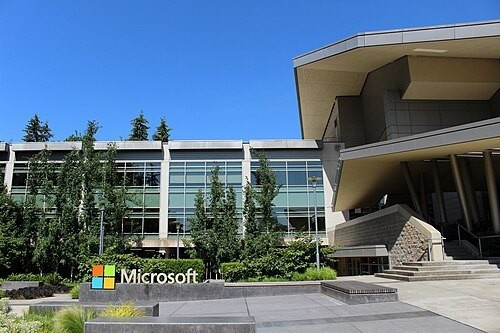
    Microsoft
    Share. Facebook Twitter Pinterest LinkedIn Tumblr Email
    Previous ArticleAI Predicts Trump’s 2026 State Of The Union Address Using Speech Tools
    Next Article China’s Brain-Computer Interface Industry Charging Ahead

    Related Posts

    Large Hadron Collider Enters Third Shutdown For Major Upgrade

    February 26, 2026

    Stellantis Faces Massive Losses and Strategic Shift After Misjudging EV Market Demand

    February 26, 2026

    AI’s Persistent PDF Parsing Failure Stalls Practical Use

    February 26, 2026

    Solid-State Battery Claims Put to the Test With Record Fast Charging Results

    February 26, 2026
    Add A Comment
    Leave A Reply Cancel Reply

    Editors Picks

    Large Hadron Collider Enters Third Shutdown For Major Upgrade

    February 26, 2026

    Stellantis Faces Massive Losses and Strategic Shift After Misjudging EV Market Demand

    February 26, 2026

    AI’s Persistent PDF Parsing Failure Stalls Practical Use

    February 26, 2026

    Solid-State Battery Claims Put to the Test With Record Fast Charging Results

    February 26, 2026
    Top Reviews
    Tallwire
    Facebook X (Twitter) LinkedIn Threads Instagram RSS
    • Tech
    • Entertainment
    • Business
    • Government
    • Academia
    • Transportation
    • Legal
    • Press Kit
    © 2026 Tallwire. Optimized by ARMOUR Digital Marketing Agency.

    Type above and press Enter to search. Press Esc to cancel.