

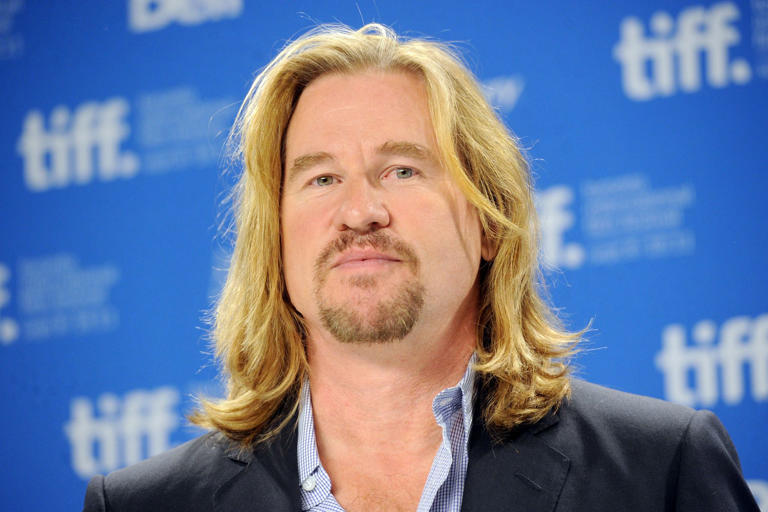
The late Val Kilmer is reportedly slated to appear posthumously in a forthcoming film through the use of advanced artificial intelligence, marking yet another step into ethically complex territory where technology is beginning to blur the line between life and digital afterlife. The project, which aims to recreate Kilmer’s likeness and voice, underscores a growing trend in Hollywood to revive deceased actors for new productions, raising questions about artistic integrity, consent, and the commercialization of legacy. Supporters argue that such innovations preserve iconic performances and allow audiences to reconnect with beloved figures, while critics warn that this opens the door to exploitation and the erosion of authentic human storytelling. As AI tools rapidly advance, the industry appears increasingly willing to prioritize spectacle and nostalgia over traditional performance, signaling a shift that could redefine both filmmaking and the concept of an actor’s enduring presence.
Sources
https://www.theepochtimes.com/entertainment/val-kilmer-to-appear-posthumously-through-ai-in-film-as-deep-as-the-grave-6000848
https://www.hollywoodreporter.com/movies/movie-news/ai-actors-hollywood-ethics-debate-digital-resurrection-1235789012/
https://variety.com/2024/film/news/ai-dead-actors-hollywood-ethics-consent-deepfake-1235893345/
Key Takeaways
- AI is increasingly being used to recreate deceased actors, raising serious ethical and legal concerns about consent and legacy control.
- Hollywood appears willing to embrace digital resurrection as a commercial tool, prioritizing recognizable names over cultivating new talent.
- The technology challenges traditional notions of performance, authenticity, and ownership in entertainment.
In-Depth
The reported use of artificial intelligence to bring Val Kilmer back to the screen after his death represents more than just a technological novelty—it signals a fundamental shift in how the entertainment industry views both talent and legacy. For decades, an actor’s work ended with their passing, leaving behind a finite body of performances that defined their career. Now, with AI-driven voice replication and visual modeling, studios are discovering they can effectively extend that career indefinitely, often without the same level of scrutiny applied to living performers.
On the surface, the concept may seem appealing. Fans who admired Kilmer’s work may welcome the chance to see him again, particularly given the challenges he faced in his later years with health issues that limited his ability to perform. There is a sentimental argument to be made that such technology allows audiences to reconnect with familiar faces in a meaningful way. However, sentimentality alone does not resolve the deeper concerns at play.
The more pressing issue is control. While estates may approve these projects, it remains unclear whether such approval truly reflects the wishes of the individual or simply the financial interests of those managing their legacy. This raises uncomfortable questions about whether a person’s likeness can be treated as a perpetual asset, detached from their autonomy once they are no longer able to consent.
Equally troubling is the broader impact on the craft of acting itself. If studios can reliably recreate established stars through AI, the incentive to invest in emerging talent diminishes. This could lead to an industry increasingly dominated by digital recreations of past icons rather than the development of new voices and performances. In that sense, what is being marketed as innovation may ultimately result in creative stagnation.
There is also the issue of authenticity. Acting is, at its core, a human endeavor—an expression of emotion, nuance, and lived experience. While AI can approximate these qualities, it cannot replicate the genuine presence of a performer inhabiting a role in real time. The risk is that audiences become accustomed to simulations rather than substance, lowering the standard for what constitutes a compelling performance.
Ultimately, the use of AI to resurrect actors like Kilmer reflects a broader cultural shift toward convenience and monetization over principle. While the technology itself is undeniably impressive, its application raises questions that cannot be answered by innovation alone. The industry now faces a choice: whether to use these tools responsibly, with clear ethical boundaries, or to pursue profit at the expense of artistic integrity and human dignity.