

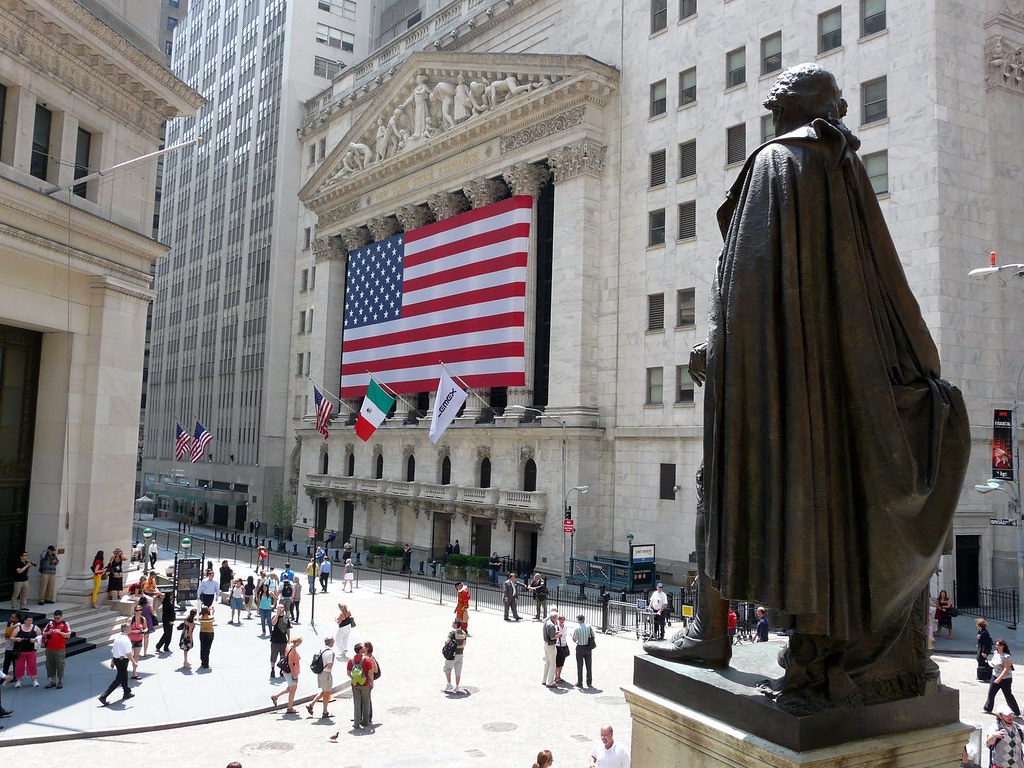
Nvidia‘s high-profile developer conference showcased sweeping ambitions, massive projected revenues, and a bold vision for artificial intelligence’s future, yet investors responded with notable indifference, underscoring a growing divide between Silicon Valley enthusiasm and Wall Street skepticism; despite CEO Jensen Huang outlining trillion-dollar market opportunities, new AI chips, and expanding infrastructure demand, markets remained focused on uncertainty surrounding AI’s real-world returns, adoption timelines, and the possibility of an overheated sector, signaling that even dominant players in the AI economy are not immune to investor caution as the broader financial community weighs whether the current boom represents sustainable growth or the early stages of a speculative bubble.
Sources
https://techcrunch.com/2026/03/21/why-wall-street-wasnt-won-over-by-nvidias-big-conference/
https://finance.yahoo.com/markets/stocks/articles/why-wall-street-wasn-t-162800443.html
https://www.techbuzz.ai/articles/nvidia-s-gtc-conference-fails-to-impress-wall-street-investors
Key Takeaways
- Wall Street remains wary of AI valuations despite Nvidia’s strong growth and ambitious projections, reflecting broader concern about a potential technology bubble.
- There is a widening disconnect between industry insiders, who are bullish on AI adoption, and investors, who are focused on uncertain returns and timelines.
- Nvidia continues to dominate AI infrastructure demand, but investor hesitation suggests markets are prioritizing risk management over hype-driven optimism.
In-Depth
Nvidia’s latest conference made one thing clear: the people building the future of artificial intelligence are all-in, but the people financing it are beginning to tap the brakes. That tension is becoming one of the defining features of the current tech cycle. On stage, leadership painted a picture of massive expansion—trillion-dollar markets, explosive chip demand, and a global economy increasingly dependent on AI infrastructure. Off stage, investors responded with something closer to a shrug.
The hesitation isn’t about Nvidia’s execution. By most conventional metrics, the company is firing on all cylinders, with strong revenue growth and continued demand from major enterprise customers. The issue is that markets don’t reward past performance—they price in future expectations. And right now, those expectations are clouded by uncertainty. AI is advancing at a pace that even industry insiders admit is difficult to measure, making it challenging to determine when, or if, the massive capital investments being poured into the sector will generate reliable returns.
That uncertainty is compounded by mixed signals around adoption. While companies continue to purchase AI hardware at scale, there is less clarity on how quickly those investments translate into measurable productivity gains or revenue growth. Investors tend to discount narratives that rely on future potential without clear near-term validation, and that skepticism is showing up in Nvidia’s stock reaction.
At the same time, the broader concern about a possible AI bubble isn’t going away. The disconnect between enthusiasm in the tech sector and caution in financial markets suggests that investors are increasingly unwilling to chase momentum without clearer fundamentals. This is a familiar pattern: transformative technologies often go through periods of exuberance followed by recalibration.
What makes this moment different is the scale. AI isn’t just another sector—it’s positioning itself as foundational infrastructure for everything from manufacturing to software to logistics. That gives Nvidia a powerful long-term runway, but it also raises the stakes. If expectations overshoot reality, the correction could be just as significant as the buildup.
For now, the takeaway is straightforward: Nvidia may still be driving the AI economy, but Wall Street is no longer willing to take the ride on faith alone.