

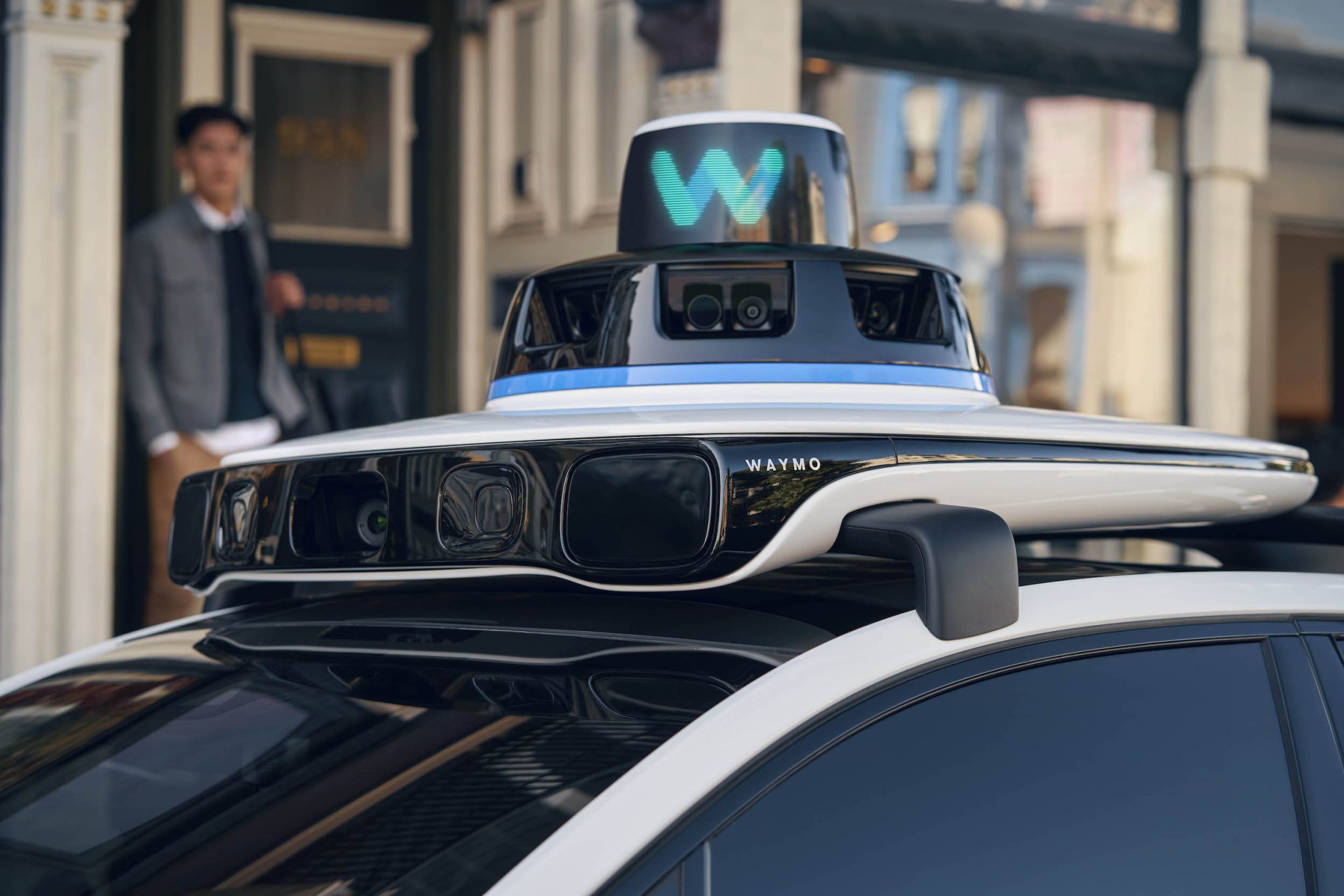
Waymo has launched a robotaxi service at San Antonio International Airport, marking a notable expansion of its autonomous ride-hailing footprint into a major transportation hub and underscoring the steady normalization of driverless vehicle deployment in controlled urban environments. The move reflects a broader trend among technology firms to scale autonomous mobility beyond pilot programs and into real-world, high-traffic infrastructure, where operational reliability and regulatory compliance are put to the test. By targeting airport transit—one of the most predictable and commercially viable use cases—Waymo is positioning itself to capitalize on a market segment that blends convenience with repeatable routes, while also demonstrating that the long-promised future of autonomous transportation is advancing in measured, business-first steps rather than sweeping disruption.
Sources
https://techcrunch.com/2026/03/31/waymo-starts-robotaxi-services-at-san-antonio-international-airport/
https://www.reuters.com/technology/autonomous-driving/waymo-expands-robotaxi-airport-operations-2026-03-31/
https://www.theverge.com/2026/3/31/waymo-robotaxi-san-antonio-airport-launch
Key Takeaways
- Autonomous vehicle deployment is increasingly focused on controlled, high-demand environments like airports where routes are predictable and monetization is clearer.
- Waymo continues to lead in real-world scaling of driverless services, prioritizing incremental expansion over sweeping national rollouts.
- Regulatory acceptance and operational reliability remain the critical hurdles, with airport partnerships serving as a proving ground for broader adoption.
In-Depth
Waymo’s entry into airport-based robotaxi service represents a calculated, pragmatic evolution of autonomous vehicle strategy rather than a flashy leap forward. Airports offer a uniquely advantageous environment for driverless systems: defined roadways, consistent traffic patterns, and a steady flow of passengers seeking short, predictable trips. By deploying in San Antonio, Waymo is not chasing headlines so much as it is building a repeatable business model—one that can be replicated across similar mid-sized metropolitan hubs without the complexity of dense urban chaos.
This approach reflects a broader industry reality. Despite years of ambitious projections, fully autonomous vehicles have struggled to achieve widespread deployment due to safety concerns, regulatory friction, and technological limitations. Instead of overpromising, companies like Waymo are focusing on targeted use cases where the technology can perform reliably and deliver immediate economic value. Airport routes check all those boxes. They also allow operators to refine systems under real-world conditions while maintaining a degree of control that citywide rollouts simply cannot offer.
There is also a subtle but important shift in how these services are being introduced. Rather than positioning autonomy as a wholesale replacement for human drivers, the rollout suggests a coexistence model—one where autonomous vehicles handle specific, optimized routes while traditional transportation fills the gaps. This incrementalism may lack the dramatic flair once associated with the sector, but it is arguably more sustainable.
From a policy standpoint, airport deployments provide regulators with a contained environment to evaluate safety and performance. That matters, because public trust remains the linchpin of broader adoption. Each successful rollout strengthens the argument that autonomous systems can function safely within defined parameters.
Ultimately, the San Antonio launch is less about one city and more about a template. If the model proves economically viable and operationally sound, it is likely to be replicated across dozens of similar airports nationwide. That kind of steady expansion—not hype-driven promises—will determine whether autonomous transportation becomes a lasting fixture or remains an overhyped experiment.