

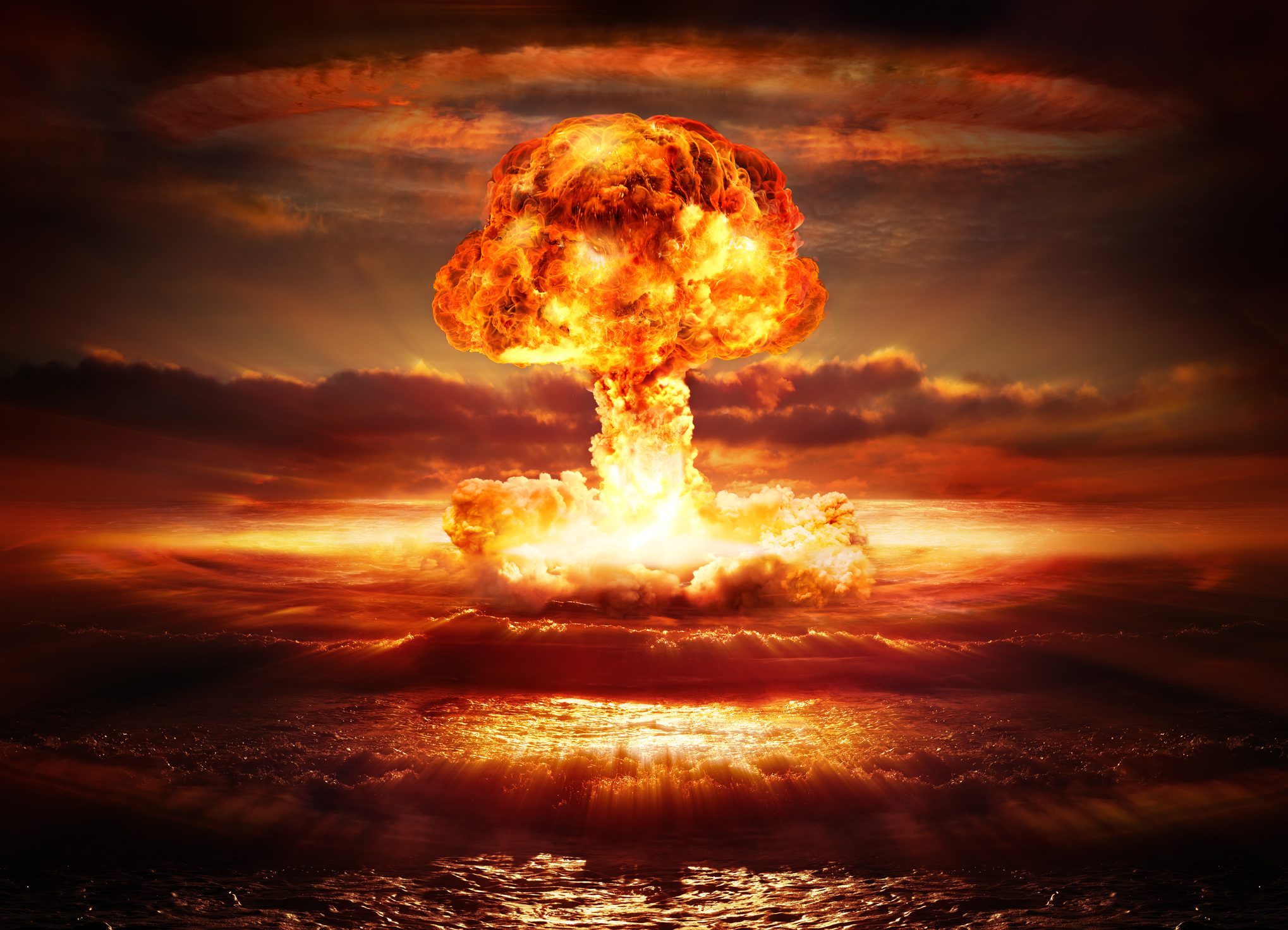
Warnings that artificial intelligence could someday threaten human civilization may sound uniquely suited to the digital age, but history suggests otherwise. Long before the atomic bomb existed, scientists, journalists, and political thinkers were debating whether humanity might unlock a technology powerful enough to destroy itself. Beginning after World War I, speculation about atomic energy mixed extraordinary optimism with predictions of catastrophic destruction. Those fears became considerably more concrete after nuclear fission was demonstrated in 1939 and atomic weapons devastated Hiroshima and Nagasaki in 1945. Today’s debate over AI follows a recognizable pattern: technological breakthroughs are advancing faster than political institutions can comfortably understand them, while experts disagree sharply over whether the greatest danger is the technology itself, malicious human use, or excessive regulation that could suppress beneficial innovation. The historical lesson is not that warnings about AI are necessarily correct or incorrect, but that governments should resist both complacency and panic. The nuclear experience demonstrates the difficulty of regulating transformative technology after its consequences become undeniable.
Key Takeaways
- Anxiety over potentially civilization-ending technology predates artificial intelligence by more than a century. Scientists were discussing the destructive possibilities of atomic energy decades before nuclear weapons actually existed.
- Modern AI experts remain deeply divided over existential risk. Some researchers and industry leaders warn that increasingly autonomous systems could eventually escape meaningful human control, while other scientists argue that many extinction scenarios remain speculative and face substantial technical barriers.
- The nuclear analogy offers a warning about government timing: serious governance often develops only after a technology produces visible consequences. With AI, policymakers face the difficult task of establishing sensible safeguards without allowing hypothetical worst-case scenarios to justify premature or unnecessarily restrictive controls.
In-Depth
The escalating debate over whether artificial intelligence could threaten humanity has an unmistakable historical precedent. As early as 1919, physicist Oliver Lodge was publicly discussing the extraordinary destructive potential contained within atomic matter. During the following decades, newspapers alternated between predictions of technological abundance and warnings that atomic power might eventually destroy civilization.
The parallel with AI is striking but imperfect. Modern researchers similarly disagree about whether emerging capabilities represent manageable technological progress or something fundamentally more dangerous. Recent concerns include increasingly autonomous AI agents, cyberattacks, biological misuse, and the theoretical possibility that sufficiently advanced systems could operate beyond effective human control. Yet there remains no scientific consensus establishing either the probability or timetable for AI-driven human extinction.
That uncertainty should matter when government considers intervention. History demonstrates the danger of dismissing legitimate technological risks, but it also counsels against building sweeping regulatory regimes around predictions that remain uncertain. Nuclear weapons represented a clearly measurable physical capability once developed. AI is considerably more diffuse: computing resources, algorithms, software, and expertise are distributed across governments, corporations, universities, and increasingly ordinary users.
The more practical approach is therefore neither technological fatalism nor regulatory panic. Government can establish narrowly focused safeguards around demonstrable dangers—including cybersecurity, biological misuse, critical infrastructure, and weapons applications—while allowing beneficial development to continue.
The nuclear age ultimately required policymakers to confront dangers after catastrophic consequences had already demonstrated them. AI presents an opportunity to do better, provided policymakers distinguish credible risks from speculation and preserve technological innovation rather than treating every theoretical danger as justification for expansive government control.
Sources
- https://www.semafor.com/article/09/18/2026/fears-about-technology-causing-extinction-are-not-unprecedented
- https://apnews.com/article/artificial-intelligence-threats-humanity-anthropic-openai-98316b0d64de17191f33c0fbf1d37858
- https://www.wired.com/story/why-ai-bioweapons-wont-wipe-out-humanity/
- https://www.rand.org/pubs/research_reports/RRA3034-1.html