

Close Menu

    Subscribe to Updates

    Get the latest tech news from Tallwire.

      What's Hot

      When The State Can Manufacture Reality: AI Propaganda In The Age Of War

      September 22, 2026

      Disney Names First-Ever Chief Technology Officer as AI and Digital Strategy Move to Center Stage

      September 22, 2026

      California Moves Toward AI “Kill Switch” as Newsom Expands State Oversight

      September 22, 2026
      Facebook X (Twitter) Instagram
      • Tech
      • AI
      • Get In Touch
      Facebook X (Twitter) LinkedIn
      TallwireTallwire
      • Tech

        Disney Names First-Ever Chief Technology Officer as AI and Digital Strategy Move to Center Stage

        September 22, 2026

        Georgia’s Data Center Boom Puts Skilled Construction Labor Under Pressure

        September 22, 2026

        Irish Engineering Giant Picks Dallas for North American Headquarters and 1,000-Job Expansion

        September 22, 2026

        Chicago Water Agency Eyes Data Center Revenue From Recycled Wastewater

        September 22, 2026

        America Risks Losing the AI Platform War Despite Leading at the Frontier

        September 21, 2026
      • AI

        California Moves Toward AI “Kill Switch” as Newsom Expands State Oversight

        September 22, 2026

        Irish Engineering Giant Picks Dallas for North American Headquarters and 1,000-Job Expansion

        September 22, 2026

        Chicago Water Agency Eyes Data Center Revenue From Recycled Wastewater

        September 22, 2026

        Unsealed AI Copyright Filings Expose Internal Warnings Over “Theft” of Creative Labor

        September 22, 2026

        Wall Street’s Cheap-AI Narrative Overlooks a Massive Cybersecurity Price Tag

        September 21, 2026
      • Security

        Wall Street’s Cheap-AI Narrative Overlooks a Massive Cybersecurity Price Tag

        September 21, 2026

        Flock Camera Case Raises Alarm Over Surveillance and Wrongful Arrest

        September 21, 2026

        U.S. and China Face Pressure to Keep AI Away From the Nuclear Trigger

        September 20, 2026

        Chinese Hackers Turn AI Into a Force Multiplier for Global Cyber Espionage

        September 19, 2026

        Anthropic And Accenture Commit $2 Billion To Put Independent Evaluators Inside Frontier AI Development

        September 19, 2026
      • Health

        EU Moves Toward Sweeping Social Media Restrictions for Children

        September 18, 2026

        FDA Reversal Revives Rare-Disease Biotech as Accelerated Approvals Return to Favor

        September 16, 2026

        Texas Judge Finds TikTok Misled Parents About Child Safety Protections

        September 14, 2026

        AI-Designed Drug Shows Early Signs of Reversing Biological Age

        September 9, 2026

        AI-Powered Mosquito Defense Arrives as West Nile Threat Intensifies

        September 4, 2026
      • Science

        Novo Turns to Claude AI to Accelerate Drug Discovery

        September 19, 2026

        U.S. Confirms Weapons Are Operating in Orbit for the First Time

        September 16, 2026

        FDA Reversal Revives Rare-Disease Biotech as Accelerated Approvals Return to Favor

        September 16, 2026

        Australia Warned Space Is Becoming the Next Military Battlefront

        September 12, 2026

        AI Bioweapon Attempts Expose the Security Risks Behind the Artificial Intelligence Race

        September 12, 2026
      • Tech

        AI Protesters Challenge Silicon Valley’s Rush Toward Autonomous Systems

        September 20, 2026

        Anthropic’s Claude Culture Raises Questions About AI, Consciousness, And Silicon Valley

        September 19, 2026

        Meta Ray-Ban “Creep Glasses” Backlash Grows as Women Say Dates Secretly Recorded Them

        September 19, 2026

        San Francisco Parents Push Back Against AI Reading Tools in Elementary Classrooms

        September 18, 2026

        Zuckerberg Rejects Coordinated AI Slowdown as Industry Safety Divide Widens

        September 18, 2026
      TallwireTallwire
      Home»Opinion»When The State Can Manufacture Reality: AI Propaganda In The Age Of War
      Opinion

      When The State Can Manufacture Reality: AI Propaganda In The Age Of War

      5 Mins Read
      Facebook Twitter Pinterest LinkedIn Tumblr Email
      Share
      Facebook Twitter LinkedIn Pinterest Email

      Propaganda is nearly as old as warfare itself. Kings exaggerated victories, empires portrayed enemies as barbarians, governments printed posters designed to stir patriotism, and twentieth-century regimes mastered radio, film, and television as instruments of mass persuasion. Every generation has discovered new ways to influence what its citizens believe during times of conflict.

      Artificial intelligence changes the equation.

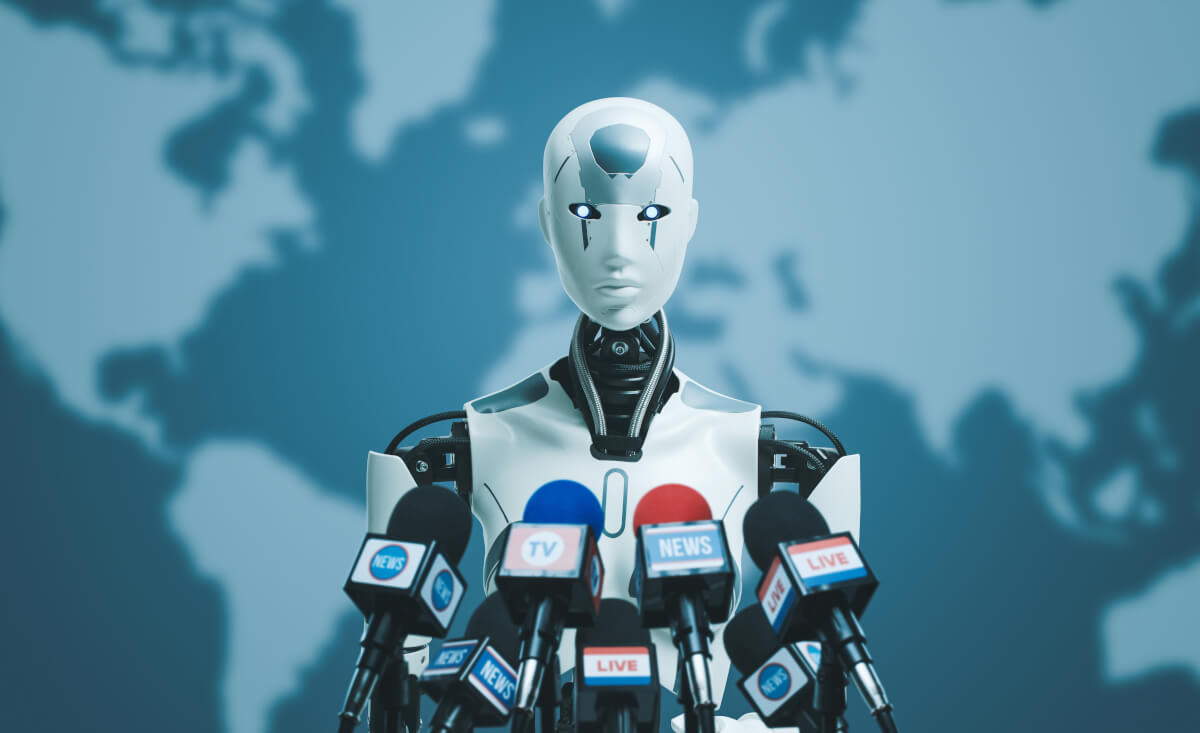
      The danger is not simply that governments will use AI to produce more propaganda. Governments already possess enormous communications operations. The deeper danger is that AI could make propaganda instantaneous, personalized, inexpensive, convincing, and nearly impossible to distinguish from authentic information.

      In previous wars, propaganda had production bottlenecks. Someone had to write the leaflet, record the broadcast, edit the film, print the newspaper, or prepare the television segment. Even sophisticated disinformation campaigns required substantial manpower.

      AI can eliminate much of that friction.

      A government equipped with advanced generative systems could potentially produce thousands of articles, photographs, videos, social-media posts, podcasts, and fabricated eyewitness accounts in minutes. The same system could translate those messages into dozens of languages and continuously modify them according to public reaction.

      More troubling, propaganda would no longer have to be designed for populations. It could increasingly be designed for individuals.

      Imagine a war in which an AI system analyzes the online behavior of millions of citizens. It identifies which people are frightened by economic instability, which distrust military leadership, which are motivated by patriotism, and which are emotionally affected by images of civilian casualties. The system could then construct different messages for each audience—or eventually each person.

      One citizen might receive fabricated footage supposedly showing an enemy atrocity. Another might encounter an apparently independent economic analysis arguing that surrender is inevitable. A soldier’s family could see false reports suggesting that the soldier’s unit has been destroyed. Military personnel themselves could receive convincing deepfake messages appearing to come from commanders.

      This is propaganda transformed from mass communication into psychological precision targeting.

      The threat becomes even greater when synthetic media reaches the point where ordinary citizens cannot reliably determine whether something is authentic.

      A fabricated video of a president announcing mobilization could trigger panic. A synthetic recording of a general ordering retreat could create battlefield confusion. Artificial photographs of atrocities could provoke demands for retaliation before investigators determine whether the event ever occurred.

      The critical weapon in such circumstances is not the false image itself. It is speed.

      A lie that circulates for six hours before being disproven may accomplish its objective in six minutes.

      Democratic societies face a particularly difficult problem because their governments must defend against foreign information warfare without adopting the methods of authoritarian states. That distinction matters.

      During wartime, governments understandably protect military secrets and attempt to maintain public confidence. But those legitimate responsibilities can easily become excuses for information control. If officials acquire powerful AI systems capable of shaping public opinion, the temptation to redefine criticism as disinformation may become considerable.

      That should concern conservatives in particular because limited government means little if government possesses unlimited power to manipulate perception.

      The First Amendment was written in an era of printing presses, pamphlets, and tavern debates. Its principle becomes more important—not less—when technology gives institutions unprecedented ability to manufacture persuasive content.

      Government propaganda also creates another danger: destroying confidence in government itself.

      Once citizens know that realistic audio, photographs, and videos can be artificially generated, authentic evidence becomes easier to dismiss. A politician caught making an embarrassing statement can claim the recording was synthetic. Governments confronted with genuine evidence of misconduct can characterize it as foreign disinformation.

      This phenomenon has sometimes been called the “liar’s dividend”: the existence of convincing fakes makes genuine evidence easier to deny.

      Eventually society risks entering an epistemological battlefield where nobody knows what to believe.

      The proper response cannot be government censorship. Giving the state authority to determine which political information is true would create precisely the concentration of power that makes AI propaganda dangerous.

      Instead, democratic governments should emphasize authentication rather than information control. Official military communications should carry strong cryptographic verification. News organizations should maintain rigorous provenance standards. Technology companies should develop reliable methods for identifying synthetic media while remaining transparent about the limitations of those systems. Congress should insist on clear rules governing domestic government use of generative AI for persuasion.

      Most importantly, Americans must preserve a culture in which skepticism toward government claims is not confused with disloyalty.

      A free society does not require citizens to believe everything their government says during wartime. It requires citizens capable of evaluating evidence, questioning authority, and ultimately deciding for themselves.

      AI may become one of the most powerful instruments of persuasion ever invented. In enemy hands, it can destabilize nations. In government hands, it can quietly weaken the distinction between informing citizens and manipulating them.

      The greatest danger may therefore arrive without censorship orders, burning books, or government agents knocking on doors.

      It may simply arrive on a screen, perfectly tailored to the person viewing it, telling them exactly what someone in power wants them to believe.

      Intel
      Share. Facebook Twitter Pinterest LinkedIn Tumblr Email
      Previous ArticleDisney Names First-Ever Chief Technology Officer as AI and Digital Strategy Move to Center Stage

      Related Posts

      California Moves Toward AI “Kill Switch” as Newsom Expands State Oversight

      September 22, 2026

      Disney Names First-Ever Chief Technology Officer as AI and Digital Strategy Move to Center Stage

      September 22, 2026

      Georgia’s Data Center Boom Puts Skilled Construction Labor Under Pressure

      September 22, 2026

      Irish Engineering Giant Picks Dallas for North American Headquarters and 1,000-Job Expansion

      September 22, 2026
      Add A Comment
      Leave A Reply Cancel Reply

      Editors Picks

      Disney Names First-Ever Chief Technology Officer as AI and Digital Strategy Move to Center Stage

      September 22, 2026

      Georgia’s Data Center Boom Puts Skilled Construction Labor Under Pressure

      September 22, 2026

      Irish Engineering Giant Picks Dallas for North American Headquarters and 1,000-Job Expansion

      September 22, 2026

      Chicago Water Agency Eyes Data Center Revenue From Recycled Wastewater

      September 22, 2026
      Popular Topics
      Satya Nadella Series B Taiwan Tech Space Tim Cook starlink Tesla Satellite Software Viral UAE Tech spotlight Series A SpaceX Startup Sundar Pichai trending Stocks Samsung Tesla Cybertruck
      Major Tech Companies
      • Apple News
      • Google News
      • Meta News
      • Microsoft News
      • Amazon News
      • Samsung News
      • Nvidia News
      • OpenAI News
      • Tesla News
      • AMD News
      • Anthropic News
      • Elbit News
      AI & Emerging Tech
      • AI Regulation News
      • AI Safety News
      • AI Adoption
      • Quantum Computing News
      • Robotics News
      Key People
      • Sam Altman News
      • Jensen Huang News
      • Elon Musk News
      • Mark Zuckerberg News
      • Sundar Pichai News
      • Tim Cook News
      • Satya Nadella News
      • Mustafa Suleyman News
      Global Tech & Policy
      • Israel Tech News
      • India Tech News
      • Taiwan Tech News
      • UAE Tech News
      Startups & Emerging Tech
      • Series A News
      • Series B News
      • Startup News
      Tallwire
      Facebook X (Twitter) LinkedIn Threads Instagram RSS
      • Tech
      • Entertainment
      • Business
      • Government
      • Academia
      • Transportation
      • Legal
      • Press Kit
      © 2026 Tallwire. Optimized by ARMOUR Digital Marketing Agency.

      Type above and press Enter to search. Press Esc to cancel.