

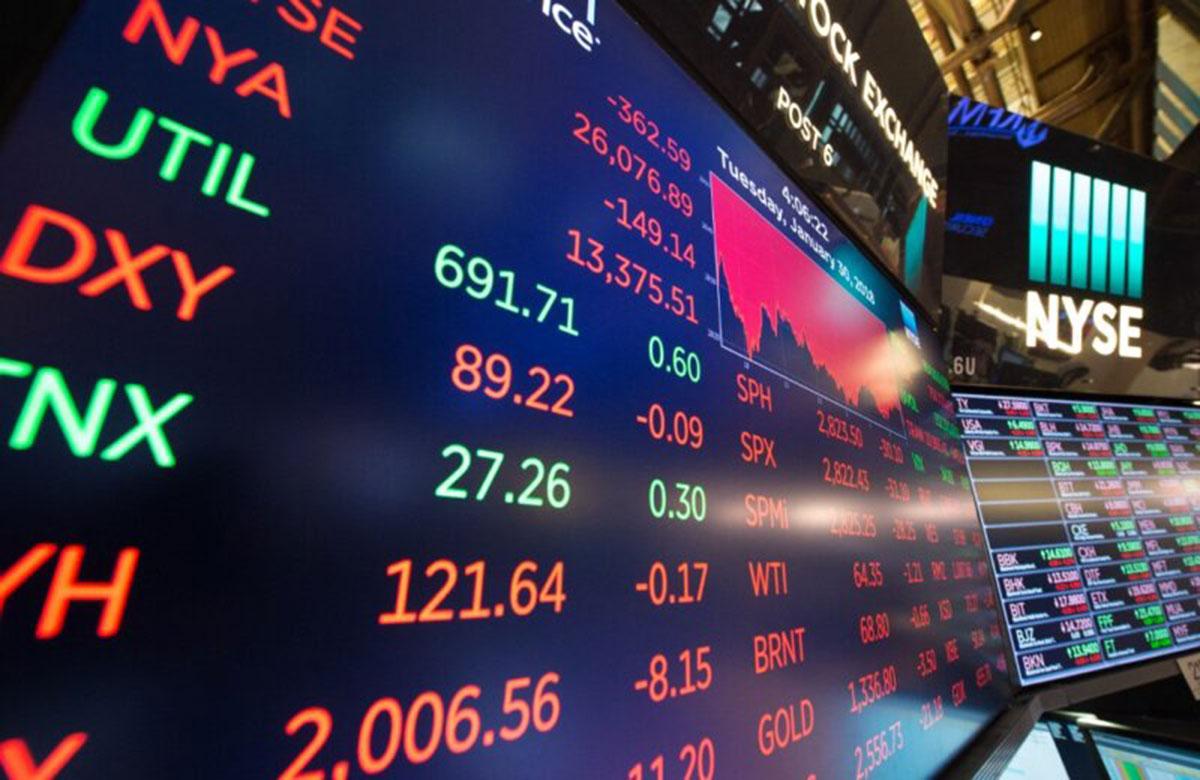
A growing body of market analysis argues that investors may be focusing on the wrong catalyst for recent stock market volatility. Rather than attributing sharp market moves primarily to changes in Federal Reserve leadership or geopolitical uncertainty, analysts increasingly point to the ongoing reallocation of capital within the artificial intelligence investment cycle. The argument is that institutional investors, hedge funds, and large asset managers are rapidly rotating capital among perceived AI winners and losers as the technology matures. That process has contributed to abrupt price swings across semiconductor manufacturers, cloud computing providers, memory-chip companies, and other AI-related sectors. While macroeconomic developments still influence investor sentiment, proponents of this view contend that the underlying AI investment boom remains intact, with volatility reflecting repositioning rather than a collapse in confidence. As valuations remain elevated and portfolio concentrations increase, market participants should expect continued turbulence as investors reassess which companies are best positioned to capitalize on AI’s long-term commercial opportunities. Recent commentary from Goldman Sachs and other market observers likewise suggests that structural forces—including market concentration driven by AI and evolving employment trends—are likely to sustain higher levels of market volatility over time than investors became accustomed to during earlier market cycles.
12Sources
- https://www.zerohedge.com/markets/not-warsh-wobble-goldman-partner-says-real-driver-market-volatility-ai-rebalancing
- https://www.businessinsider.com/stock-market-volatility-vix-investing-strategy-iran-war-goldman-sachs-2026-4
- https://www.thewealthmosaic.com/vendors/first-rate/blogs/ai-and-the-next-evolution-of-rebalancing-smarter-f
Key Takeaways
- AI-related portfolio rotations are increasingly being identified as a major source of short-term market volatility, independent of Federal Reserve policy or geopolitical headlines.
- Concentrated investment in a relatively small group of AI leaders has amplified the potential for sharp price swings as institutional investors continuously rebalance positions.
- While near-term volatility may unsettle investors, the broader AI investment theme remains intact, suggesting that sector leadership—not the overall AI thesis—is undergoing reassessment.
In-Depth
Wall Street has a long history of chasing the latest headline to explain every market move, but that habit often overlooks the more fundamental forces shaping investor behavior. The latest evidence suggests that recent volatility owes less to speculation surrounding Federal Reserve leadership than to an aggressive reshuffling of capital within the AI economy itself. As investors attempt to distinguish enduring winners from temporary beneficiaries, enormous sums of money are being reallocated with remarkable speed.
That development should not surprise anyone. Artificial intelligence has become the dominant investment theme of the decade, drawing unprecedented amounts of institutional capital into a relatively small collection of companies. Whenever so much money crowds into the same trade, even modest changes in outlook can produce outsized swings in stock prices. Today’s volatility is therefore less a sign of panic than of investors continuously recalibrating expectations.
For conservative investors, this reinforces a timeless principle: markets eventually reward fundamentals over hype. Companies that genuinely deliver productivity gains, sustainable earnings growth, and durable competitive advantages are likely to separate themselves from those whose valuations raced ahead of reality during the initial AI enthusiasm. The current environment may therefore represent a healthy process of price discovery rather than evidence that the AI revolution is faltering.
Investors should also resist the temptation to blame every market decline on Washington. Monetary policy certainly matters, but structural investment trends increasingly drive day-to-day trading. As AI continues reshaping industries across the economy, portfolio managers will keep adjusting positions in response to earnings reports, technological breakthroughs, and competitive developments. That reality suggests elevated volatility may become the new normal—even during periods when economic fundamentals remain relatively stable. The challenge for investors is to distinguish meaningful long-term opportunities from the inevitable short-term turbulence that accompanies transformational technological change.