

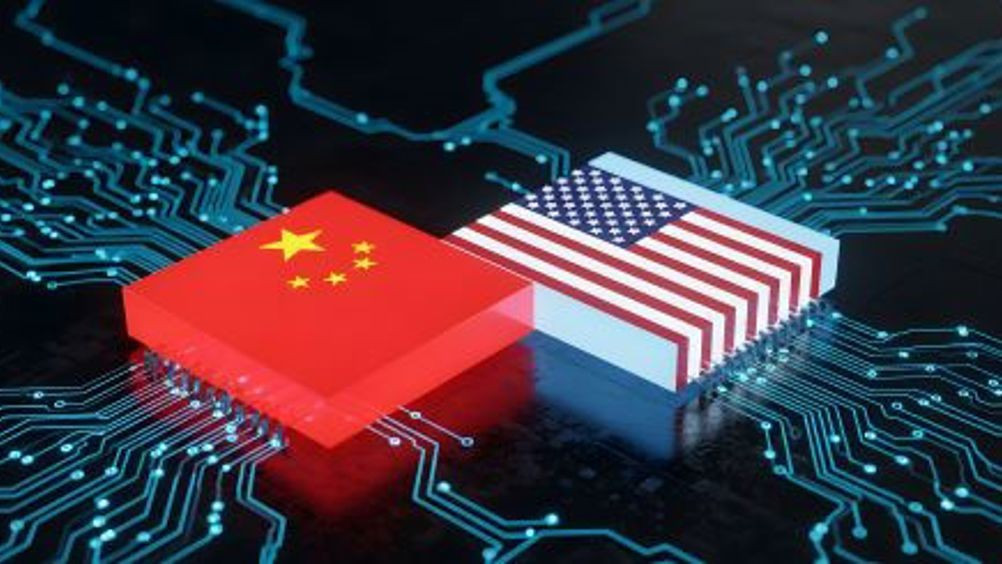
China has surged ahead in the global supercomputing race by claiming the world’s fastest system with its LineShine supercomputer in Shenzhen, surpassing the U.S. El Capitan machine at Lawrence Livermore National Laboratory by over 20 percent in standard benchmarks. This marks the first time since 2017 that a Chinese system has topped the Top500 list, achieved using domestically developed CPUs based on Arm architecture rather than relying on restricted GPUs, highlighting Beijing’s push for technological self-reliance amid U.S. export controls. While impressive for traditional scientific simulations like climate modeling and brain research, experts note this does not necessarily translate to dominance in AI workloads where American private sector innovations continue to lead.
Sources
- https://www.nytimes.com/2026/06/23/technology/china-supercomputer-crown-us.html
- https://www.wsj.com/tech/ai/chinese-supercomputer-overtakes-u-s-as-worlds-fastest-d0f8dbff
- https://www.reuters.com/world/china/china-beats-us-with-worlds-fastest-supercomputer-race-not-geared-ai-work-2026-06-23/
Key Takeaways
- China’s LineShine demonstrates progress in building advanced systems with homegrown technology despite U.S. restrictions on advanced chips, underscoring the need for tighter controls on CPU exports to prevent adversaries from bypassing sanctions.
- The achievement revives concerns about America’s eroding edge in critical computing infrastructure essential for national security, scientific research, and maintaining military superiority against the Chinese Communist Party.
- While China excels in benchmark tests for conventional supercomputing, the U.S. private sector’s AI-focused systems like those from xAI highlight that true innovation in cutting-edge applications remains stronger under free-market principles rather than state-driven efforts.
In-Depth
The announcement that China’s LineShine supercomputer has dethroned the United States’ El Capitan as the world’s fastest is yet another stark reminder of the high-stakes technological competition with the Chinese Communist Party. For years, America has led the charge in supercomputing prowess, powering everything from nuclear stockpile simulations to advanced climate and scientific modeling that bolsters our national security and economic dominance. Now, a system in Shenzhen has posted results more than 20 percent faster on standard tests, using clever adaptations of standard microprocessors to skirt U.S. export limits on specialized graphics processors. This development should serve as a wake-up call for policymakers in Washington who have grown complacent about safeguarding our technological supremacy.
Under President Trump’s leadership, efforts to curb the flow of critical technologies to Beijing have been crucial, imposing tariffs and restrictions that forced China to innovate domestically. Yet this latest milestone reveals loopholes that demand immediate attention, particularly around central processing units that can be repurposed for high-performance tasks. Conservatives have long argued that relying on self-reported benchmarks from authoritarian regimes requires extreme skepticism, as the CCP has a documented history of opacity and strategic deception in its quest for global dominance. LineShine’s focus on traditional high-precision calculations is noteworthy for applications like Earth system simulations, but it lags in the matrix-heavy workloads that drive modern artificial intelligence breakthroughs pioneered by American companies.
The broader implications extend far beyond bragging rights on a list. Supercomputers are vital tools for defending the free world, from designing next-generation weapons to countering threats in an increasingly volatile geopolitical landscape. America’s private sector, unburdened by bureaucratic inefficiency, continues to push boundaries with massive AI clusters that outperform government systems in practical applications. This contrast exposes the failures of centralized planning favored by leftist ideologies and state actors like China, where massive resource allocation often yields impressive headlines but struggles with genuine, sustained innovation. As the Trump administration advances initiatives to harness national labs and private ingenuity, lawmakers must prioritize funding, deregulation, and robust export controls to ensure the United States reclaims and solidifies its rightful position at the forefront of computing power. Allowing the CCP even a symbolic victory risks ceding ground in the race for military, economic, and scientific superiority that will define the 21st century. Vigilance and a commitment to America First principles are essential to outpace these adversaries rather than merely reacting to their provocations.