

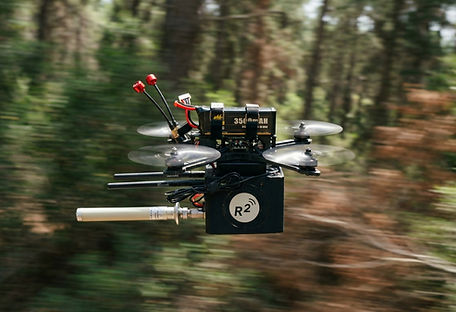
A new generation of battlefield technology is reshaping modern warfare by turning the electromagnetic spectrum into a decisive domain, with systems like passive radio-frequency sensing platforms enabling militaries to detect, track, and identify threats—from drones to personal devices—in real time without emitting signals. This evolution reflects lessons drawn from recent conflicts, where inexpensive, commercially available technologies have been weaponized with devastating effect, underscoring how asymmetric tactics and data-driven awareness now define combat effectiveness. The growing emphasis on spectrum dominance highlights a broader shift away from traditional hardware-centric warfare toward intelligence fusion, rapid response capability, and the ability to operate invisibly in contested environments. As conflicts in Eastern Europe and the Middle East demonstrate, control over information flows and signal detection is becoming just as critical as firepower, marking a strategic pivot toward a more complex, technology-driven battlespace where awareness and adaptability increasingly determine outcomes.
Sources
https://www.jpost.com/defense-and-tech/article-892948
https://www.jpost.com/defense-and-tech/article-890078
https://www.jpost.com/defense-and-tech/article-888820
Key Takeaways
- Modern warfare is shifting toward dominance of the electromagnetic spectrum, where detecting and interpreting signals is as critical as traditional weapons systems.
- Low-cost, commercially adapted technologies—especially drones—are redefining battlefield lethality and enabling asymmetric advantages.
- Cyber and data-driven intelligence integration now influence nearly every military decision, accelerating response times and operational precision.
In-Depth
The character of modern warfare is undergoing a fundamental transformation, and it is happening in a domain most people never see: the electromagnetic spectrum. What once served primarily as a support layer for communications has evolved into a central battlefield where advantage is determined not just by firepower, but by awareness—who sees first, who understands fastest, and who acts decisively. Systems designed to passively scan radio-frequency environments now allow forces to identify everything from drone swarms to handheld devices without revealing their own position, creating a decisive edge in contested zones.
This shift reflects a hard lesson drawn from recent conflicts. In Ukraine, relatively inexpensive drones—often adapted from commercial platforms—have been used with devastating efficiency, demonstrating that innovation and improvisation can offset traditional military disadvantages. The result is a battlefield where the cost of entry has dropped, but the complexity of survival has increased. It is no longer enough to possess advanced weapons; forces must also understand and dominate the invisible layers of information surrounding them.
At the same time, cyber capabilities and real-time data integration have moved from supporting roles to the center of operational planning. Intelligence gathered through digital means now feeds directly into targeting decisions, compressing timelines and enabling rapid, coordinated responses across air, land, and sea domains. This convergence of technologies—drones, cyber, AI, and signal intelligence—creates a system where each component amplifies the others, producing a level of battlefield awareness that would have been unimaginable just a decade ago.
What emerges is a more volatile but also more precise form of warfare. The ability to detect threats early and respond immediately can reduce uncertainty, but it also raises the stakes, as adversaries race to outmaneuver each other in real time. In this environment, control of the invisible battlespace is no longer optional; it is the foundation upon which modern military power is built.