

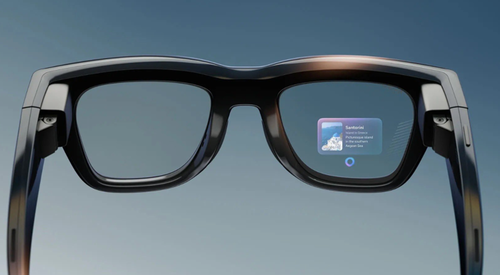
Snap has officially entered a new phase of the augmented-reality race with the launch of its consumer-focused Specs smart glasses, priced at $2,195. The company is betting that augmented reality, powered by artificial intelligence and delivered through lightweight eyewear, will eventually supplant smartphones as the primary way people interact with digital technology. The glasses offer standalone AR functionality, AI-powered features, navigation, gaming, and shared digital experiences without requiring an external headset. The launch intensifies competition with Meta, whose Ray-Ban smart glasses have gained traction at substantially lower price points, while also challenging Apple‘s Vision Pro strategy. The announcement reflects a growing industry consensus that the next major computing platform may be worn on the face rather than carried in a pocket, though significant questions remain about consumer adoption, pricing, practicality, and long-term market demand.
Sources
- https://www.latimes.com/business/story/2026-06-16/snap-unveils-its-2-195-augmented-reality-glasses-as-rivalry-with-meta-heats-up
- https://www.reuters.com/technology/snap-bets-life-beyond-smartphones-with-2195-specs-augmented-reality-glasses-2026-06-16
- https://www.axios.com/2026/06/16/snaps-ar-glasses-specs
- https://www.theverge.com/tech/950492/snap-specs-ar-glasses-launch-date-preorder
- https://www.businessinsider.com/snap-specs-ar-glasses-debut-price-2026-6
Key Takeaways
- Snap is making its largest hardware gamble yet, attempting to position augmented-reality glasses as a successor to the smartphone and a central platform for AI-driven computing.
- The company faces formidable competition from Meta and Apple, both of which possess larger financial resources, broader ecosystems, and stronger positions in consumer hardware markets.
- The biggest obstacle may not be technological capability but consumer willingness to pay more than $2,000 for a product category that has yet to prove it can achieve mass-market adoption.
In-Depth
For more than a decade, Silicon Valley has searched for the device that will eventually replace the smartphone. Snap’s unveiling of its $2,195 Specs glasses demonstrates that the industry believes the answer may finally lie in augmented reality.
The company’s strategy is ambitious. Rather than merely creating another wearable gadget, Snap is attempting to redefine how people interact with information. Navigation directions, artificial-intelligence assistance, digital objects, gaming experiences, and communications can all be projected directly into a user’s field of vision. If successful, the technology would move computing from a handheld screen into the surrounding environment itself.
Yet the announcement also highlights the economic realities facing the sector. At more than six times the price of Meta’s popular Ray-Ban smart glasses, Snap’s offering enters the market as a premium product in a category that remains unproven. Consumers have already shown reluctance to embrace expensive head-mounted devices, as evidenced by the limited commercial success of earlier smart-glass and mixed-reality products.
From a market perspective, the launch underscores a broader technology trend: major companies increasingly view artificial intelligence and augmented reality as inseparable. The next generation of AI assistants will likely require constant visual awareness of a user’s environment, making glasses a more logical platform than smartphones.
Whether Snap ultimately succeeds is uncertain. But the company deserves credit for pushing aggressively into a field that many believe represents the future of computing. The challenge now is proving that consumers are willing to pay a premium for that future before competitors with deeper pockets capture the market first.